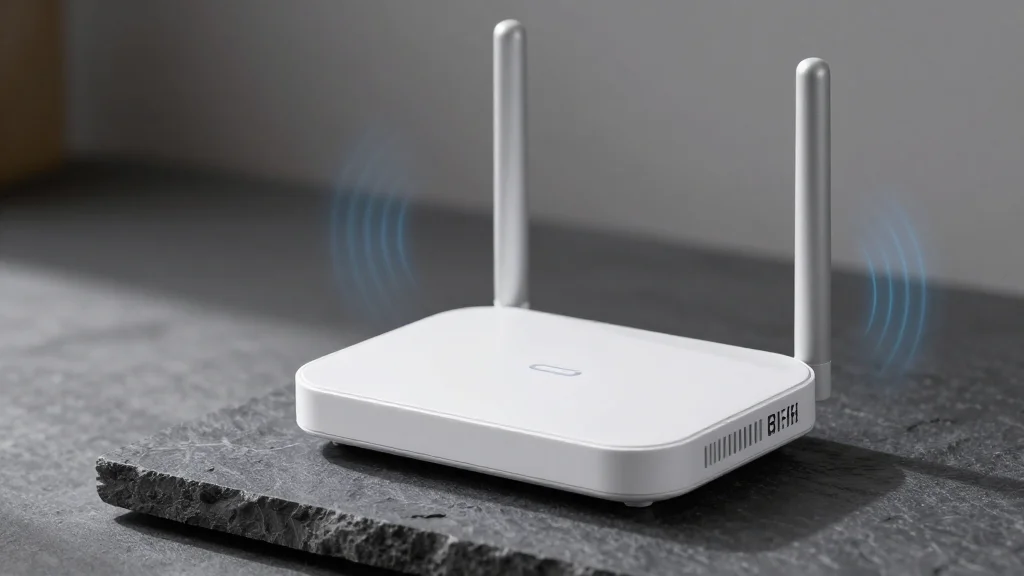
H3C Launches World’s First Wi‑Fi 8 Enterprise Access Point with US‑made Broadcom Chipset

Companies Mentioned
Why It Matters
The introduction of a Wi‑Fi 8 access point signals the next phase of enterprise wireless evolution, where predictability and low latency become as critical as raw bandwidth. For telecom operators and equipment vendors, the shift could reshape product roadmaps, pushing AI‑enabled network management to the forefront. Moreover, H3C’s reliance on a US‑made Broadcom chip highlights the growing importance of supply‑chain resilience, a factor that may influence procurement decisions across multinational enterprises. By delivering measurable gains—30% better spectral efficiency and 25% lower latency—H3C sets a new performance benchmark that could pressure rivals, including Huawei and Cisco, to accelerate their own Wi‑Fi 8 offerings. The move also nudges the broader Wi‑Fi ecosystem toward faster adoption, potentially spurring standards‑body activity, certification programs and a wave of compatible client devices.
Key Takeaways
- •H3C unveiled the first enterprise‑grade Wi‑Fi 8 access point, built on Broadcom’s BCM4918 US‑made chipset.
- •AI‑driven management claims up to 30% improvement in spectral efficiency and >25% throughput gains in weak‑signal zones.
- •Latency is reduced by roughly 25% through structured resource allocation for critical traffic.
- •Device supports 10‑Gb Ethernet backhaul and five‑band Wi‑Fi 8 architecture.
- •Transitional Wi‑Fi 7+ models introduced to ease early adoption before full ecosystem maturity.
Pulse Analysis
H3C’s Wi‑Fi 8 debut is less about raw speed and more about engineering reliability into dense, mission‑critical environments. The integration of AI for real‑time spectrum coordination mirrors a broader telecom trend where software‑defined networking is moving from the core to the edge. Operators that have traditionally focused on cellular upgrades now face a parallel race to deliver ultra‑reliable Wi‑Fi for private‑network use cases, from smart factories to campus health services.
The decision to source the silicon from Broadcom, a U.S. company, is a strategic hedge against the supply‑chain volatility that has plagued the industry since the pandemic and subsequent trade tensions. Enterprises are increasingly demanding provenance guarantees, and H3C’s move may set a precedent for other Chinese vendors seeking to reassure global customers.
From a market dynamics perspective, H3C’s early entry could compress the adoption curve for Wi‑Fi 8. Competitors will need to match not only the technical specs but also the AI‑centric management layer that H3C touts. If the promised latency and efficiency gains hold up in real‑world pilots, we could see a rapid shift in procurement budgets from legacy Wi‑Fi 6/6E gear to Wi‑Fi 8, especially in sectors where downtime translates directly to revenue loss. The next six months will be critical: successful deployments will validate the technology, while any performance gaps could give rivals an opening to re‑assert dominance.
Overall, H3C’s launch underscores a maturing Wi‑Fi ecosystem where hardware, AI, and supply‑chain considerations intersect, reshaping the telecom equipment market in ways that could reverberate through both enterprise and carrier networks.
H3C launches world’s first Wi‑Fi 8 enterprise access point with US‑made Broadcom chipset
Comments
Want to join the conversation?
Loading comments...