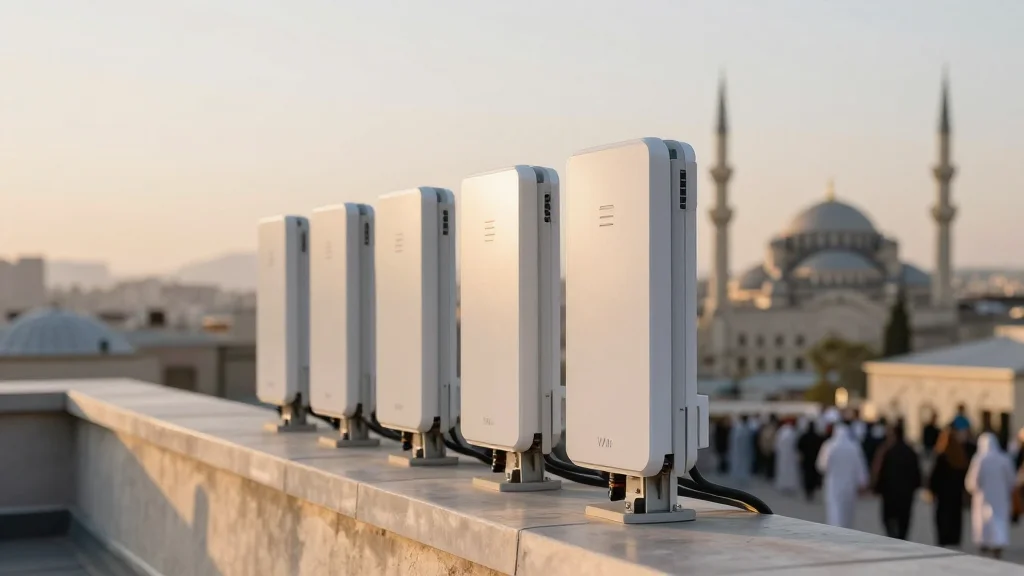
Hajj 2026 Wi-Fi Strategy: How Hotels Can Deliver 100+ Mbps Connectivity at Scale
Why It Matters
High‑speed hotel Wi‑Fi is becoming a critical differentiator for hospitality operators serving pilgrims, influencing occupancy, online reviews, and the success of digital services such as mobile check‑in and telemedicine.
Key Takeaways
- •Swissôtel Makkah topped 152 Mbps median speed
- •Only half of MENA luxury hotels hit 50 Mbps threshold
- •Wi‑Fi 6 and 5 GHz enable >100 Mbps performance
- •Limited backhaul causes sub‑15 Mbps speeds in large hotels
- •10th‑percentile speeds drop below 15 Mbps for many guests
Pulse Analysis
The Hajj pilgrimage’s rapid expansion under Saudi Vision 2030 is reshaping the region’s digital landscape. With more than 1.6 million pilgrims in 2025 and a target of 30 million annually, data consumption spikes to three times the global average. This surge forces telecom operators to install tens of thousands of Wi‑Fi access points and reinforce 4G/5G networks, while hotels become the final touchpoint where pilgrims expect seamless connectivity for everything from smart IDs to tele‑health services.
Technical performance hinges on three pillars: backhaul capacity, wireless standards, and spectrum allocation. Hotels that invest in gigabit‑grade fiber and redundant links consistently achieve 100 + Mbps, especially when paired with Wi‑Fi 6 (802.11ax) and aggressive 5 GHz band utilization. In contrast, properties still reliant on legacy copper or Wi‑Fi 4 struggle to break 15 Mbps, even with modern access points, underscoring that hardware alone cannot compensate for insufficient bandwidth. Effective band steering and dense AP placement further mitigate congestion in high‑density venues such as the Makkah Clock Royal Tower complex.
For hospitality operators, Wi‑Fi quality is no longer a peripheral amenity but a revenue‑impacting asset. Superior connectivity drives higher guest satisfaction scores, better online reviews, and smoother operation of digital check‑in, mobile keys, and point‑of‑sale systems. As the Hajj season approaches, hotels should prioritize upgrading ISP bandwidth, deploying multiple backhaul routes, and implementing dynamic traffic management to prioritize mission‑critical applications. Continuous performance monitoring and guest feedback loops will enable proactive adjustments, ensuring that the promised high‑speed experience translates into tangible competitive advantage in a market poised for unprecedented growth.
Hajj 2026 Wi-Fi Strategy: How Hotels Can Deliver 100+ Mbps Connectivity at Scale
Comments
Want to join the conversation?
Loading comments...