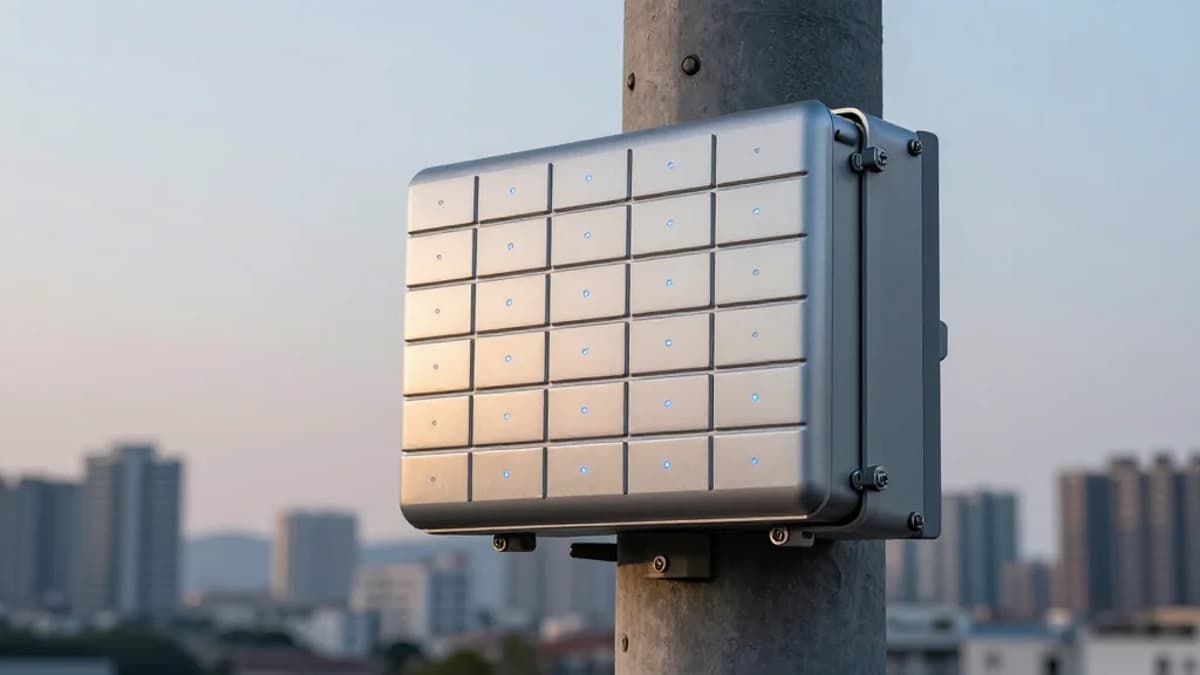
Huawei Unveils Full U6GHz Product Suite at MWC Barcelona 2026 to Power 5G-A and Accelerate 6G Evolution
•March 1, 2026
0
Companies Mentioned

Why It Matters
The launch positions Huawei to meet exploding AI traffic demands and gives operators a ready path from 5G‑Advanced to future 6G networks, strengthening its competitive edge in the global telecom equipment market.
Key Takeaways
- •Huawei unveils end‑to‑end U6GHz macro and micro solutions
- •256‑TRX AAU delivers up to 100 Gbps downlink capacity
- •U6GHz small cells support 400 MHz bandwidth for indoor AI
- •Full‑duplex microwave transport handles peak 5G‑A traffic
- •U6GHz slated for commercial devices worldwide by 2026
Pulse Analysis
The rapid expansion of mobile AI—now powering over half of new smartphone shipments and driving billions of monthly active users—has exposed the limits of existing sub‑6 GHz spectrum. Operators are scrambling for bands that can deliver both massive bandwidth and reliable coverage, and the U6GHz window, recently earmarked by the World Radiocommunication Conference, offers precisely that blend. By allocating wider contiguous channels, U6GHz can support the high‑throughput, ultra‑low‑latency links required for real‑time AI inference, multimodal interactions, and emerging edge‑centric services.
Huawei’s new U6GHz suite translates this spectrum potential into concrete hardware. Its 256‑TRX active antenna units combine a massive antenna array with hybrid digital‑analog beamforming, achieving downlink rates of up to 100 Gbps and uplink speeds beyond 10 Gbps—figures comparable to early C‑band deployments but with fewer sites. Complementary indoor small cells extend the same 400 MHz bandwidth indoors, ensuring seamless AI experiences across enterprise floors and public venues. Meanwhile, full‑duplex microwave transport solutions provide the backhaul capacity needed to move peak 5G‑Advanced traffic without bottlenecks, creating a scalable foundation for future 6G architectures.
The market impact is immediate. With U6GHz equipment slated for commercial release in 2026, operators in China, the UAE, Brazil, and Europe can begin deploying AI‑ready networks ahead of competitors still reliant on fragmented spectrum. Huawei’s end‑to‑end offering not only addresses current capacity crunches but also signals a strategic push to lock in ecosystem partners for the next generation of wireless. As AI integration deepens across consumer, industrial, and public sectors, the ability to deliver deterministic low‑latency connectivity will become a decisive factor in carrier differentiation and revenue growth.
Huawei Unveils Full U6GHz Product Suite at MWC Barcelona 2026 to Power 5G-A and Accelerate 6G Evolution
0
Comments
Want to join the conversation?
Loading comments...