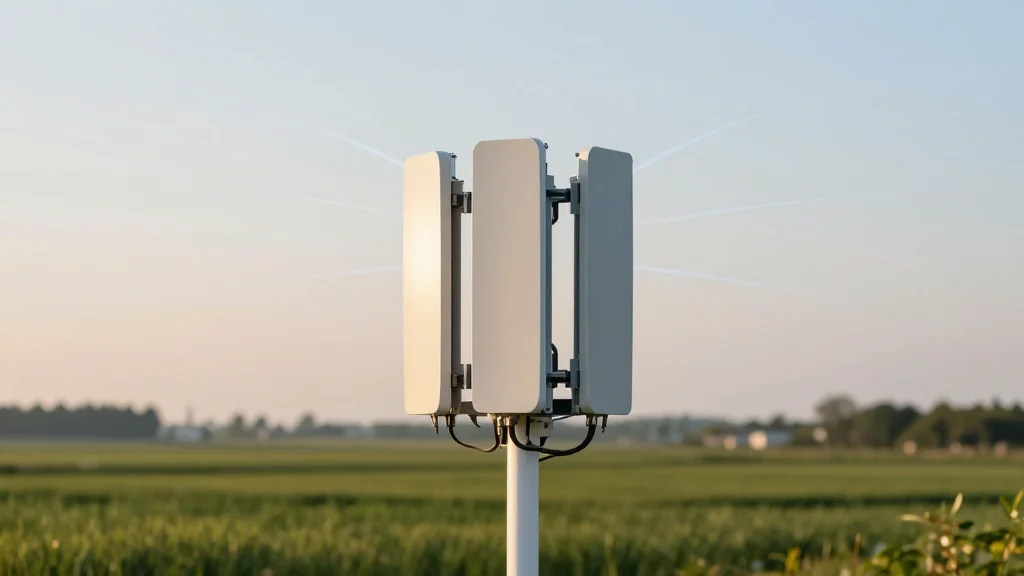
Huawei's PanoAAU Antenna Promises Lower 5G Coverage Costs in Rural Areas

Companies Mentioned
Why It Matters
The PanoAAU platform addresses a long‑standing barrier to rural 5G adoption: the high per‑site cost of dense sectorization. By expanding coverage per sector, Huawei offers a pathway for operators to achieve broader reach with fewer assets, potentially narrowing the digital divide between urban and rural consumers. The technology also aligns with the industry's shift toward 5G‑Advanced and 5.5G, where efficient uplink performance and AI‑enabled services will be critical. If the cost savings materialize as projected, operators could reallocate capital toward new services, edge computing infrastructure, or additional spectrum acquisition, accelerating overall network evolution. Competitors will need to respond with comparable wide‑angle solutions or alternative cost‑reduction strategies, intensifying innovation in the active antenna market.
Key Takeaways
- •PanoAAU provides 180-degree wide‑angle coverage versus the traditional 120-degree sector.
- •Two‑sector configurations can replace three‑sector sites, reducing equipment count per tower.
- •Lighter antenna materials and metamaterial elements mitigate weight and loss challenges.
- •MTN Zambia has partnered with Huawei to trial the PanoAAU solution in rural deployments.
- •Potential capex reduction of 30‑40% per site could make previously unviable locations commercially feasible.
Pulse Analysis
Huawei's PanoAAU arrives at a moment when operators are under pressure to justify 5G spend beyond dense urban cores. The platform's wide‑angle design is a pragmatic response to the economics of low‑density markets, where the traditional three‑sector model inflates both CAPEX and OPEX. By halving the sector count, Huawei not only cuts hardware costs but also reduces power draw and site‑rental fees—variables that directly affect the total cost of ownership.
Historically, the active antenna market has been dominated by incremental improvements in power output and beamforming precision. PanoAAU's shift toward a fundamentally broader coverage angle represents a strategic pivot: instead of squeezing more capacity into a fixed footprint, it expands the footprint itself. This could force rivals such as Nokia, Ericsson and Samsung to accelerate their own wide‑angle antenna programs or explore alternative deployment models like distributed antenna systems (DAS) and integrated access‑backhaul (IAB) to stay competitive.
The partnership with MTN Zambia signals early adoption in a market where cost constraints are acute. Successful trials could serve as a template for other emerging markets, prompting a cascade of deployments across Africa, South Asia and Latin America. However, the real test will be whether the sophisticated beam‑management software can maintain quality of service at scale, especially under the variable terrain and interference conditions typical of rural environments. If Huawei can demonstrate consistent performance, PanoAAU may become a cornerstone of the next wave of 5G expansion, reshaping the economics of coverage and accelerating the rollout of AI‑driven services that depend on robust uplink capacity.
Huawei's PanoAAU Antenna Promises Lower 5G Coverage Costs in Rural Areas
Comments
Want to join the conversation?
Loading comments...