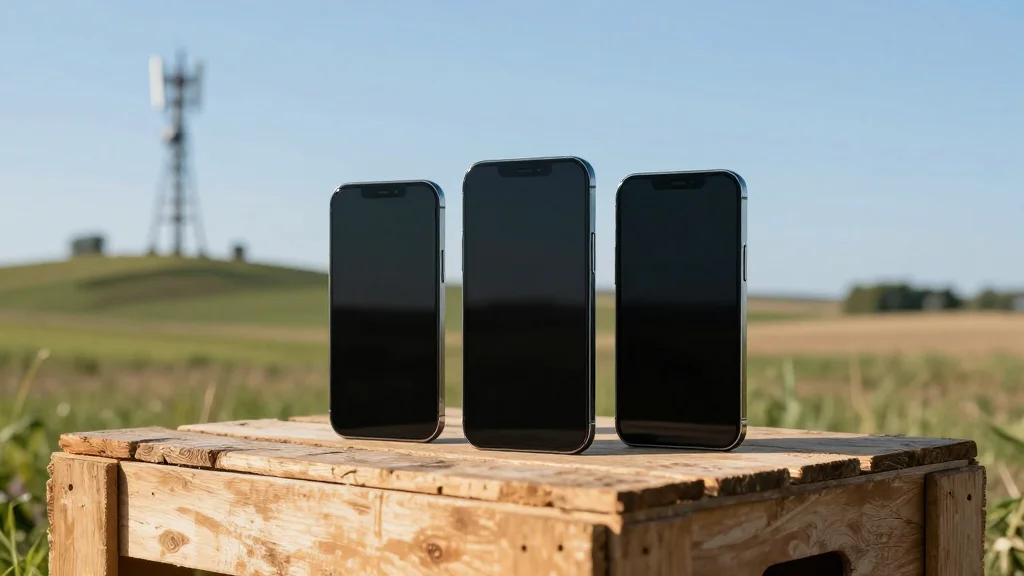
I Tested 5G Across Rural America During a 3-Day Roadtrip - and It Didn't Go Well

Why It Matters
The results expose a significant rural 5G gap, signaling that carriers must invest beyond highways to meet the connectivity needs of businesses and remote workers.
Key Takeaways
- •T‑Mobile logged standalone 5G on ~90% of rural data points
- •Verizon led in signal bars and strength, ~44% good signal
- •All three carriers struggled off interstates, many 1‑bar readings
- •Test used 52,000 data points from three Samsung S26 Ultra phones
- •Rural Wi‑Fi calling still unreliable; downtime ~20 minutes total
Pulse Analysis
The United States’ 5G rollout has largely been measured by city‑center speeds and highway corridors, yet a growing segment of the economy—farmers, remote offices, and small‑town retailers—relies on consistent connectivity far from those hubs. Doud’s three‑day road trip, equipped with identical Samsung Galaxy S26 Ultra devices on the three major carriers, generated a granular data set of 52,000 signal readings. By focusing on backroads and farmland rather than interstates, the study offers a rare look at how 5G performs where population density is low and infrastructure investment is minimal.
The findings paint a mixed picture. T‑Mobile emerged as the sole provider of true standalone 5G, detecting it in roughly nine‑tenths of the rural samples, but its overall signal level lagged, with a 1‑bar rating for more than half the journey. Verizon, by contrast, delivered the strongest signal strength and the highest bar count, though it rarely showed standalone 5G. AT&T trailed closely behind Verizon on signal strength and matched it on bar ratings. Across all networks, coverage gaps were evident, especially in southern Wisconsin where the author experienced complete internet loss for about 20 minutes.
For enterprises and remote workers, these gaps translate into lost productivity and higher operational risk. Carriers face regulatory pressure from the FCC to close the digital divide, and the data suggests that expanding fiber backhaul and deploying low‑band 5G nodes in rural zones will be essential. Meanwhile, consumers can mitigate outages by leveraging Wi‑Fi calling, satellite hotspots, or multi‑SIM strategies until the networks mature. The road‑test underscores that the promise of 5G remains uneven, and meaningful investment in rural infrastructure will be the key to unlocking its full economic potential.
I tested 5G across rural America during a 3-day roadtrip - and it didn't go well
Comments
Want to join the conversation?
Loading comments...