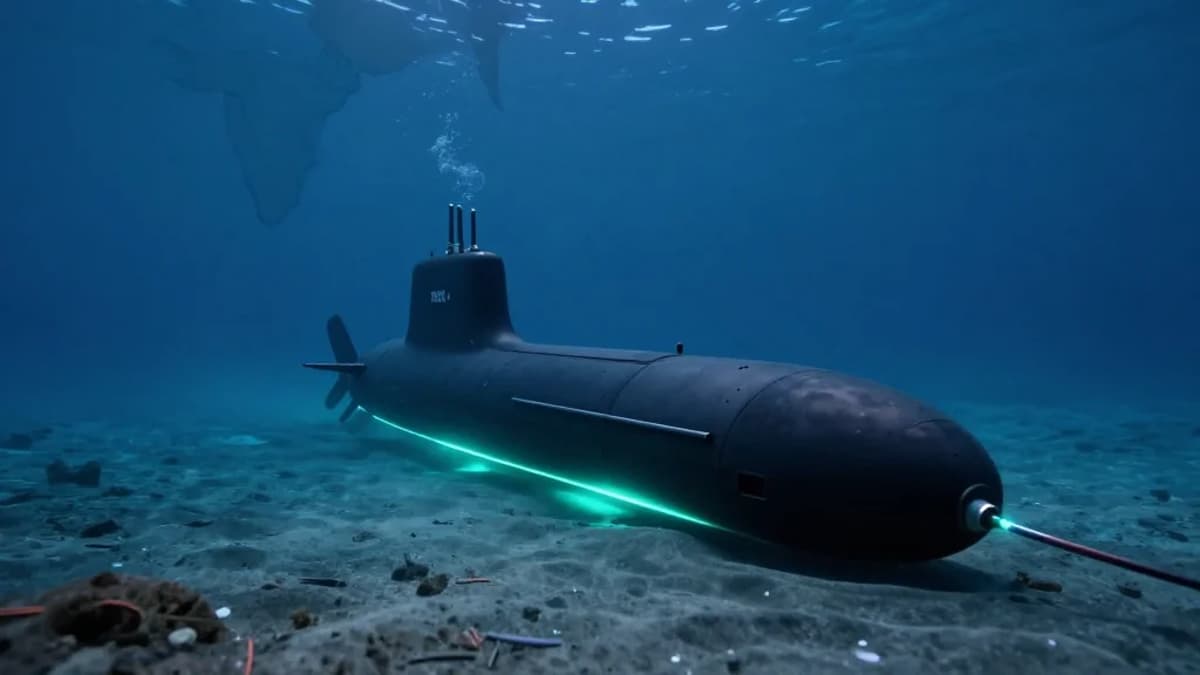
India Seeks to Create Conducive Environment for Submarine Cable Investments, Says TRAI’s AK Lahoti
•February 24, 2026
0
Why It Matters
Accelerated submarine cable capacity strengthens India's digital sovereignty, lowers latency for cloud and AI services, and attracts multibillion‑dollar private investment, positioning the country as a critical node in global internet infrastructure.
Key Takeaways
- •Lit capacity reached 309 Tbps, 60% YoY growth.
- •Activated capacity up 81% to 268 Tbps.
- •TRAI proposes streamlined licensing for cable landing stations.
- •Google, Meta, Amazon shifting to own subsea networks.
- •Submarine cable market $32.8B 2026, $60.5B 2036.
Pulse Analysis
India’s recent surge in submarine cable capacity reflects a broader strategic push to cement its role in the global digital backbone. By the end of 2025, total lit capacity hit 309 Tbps, driven by projects like India‑Asia‑Xpress and upcoming systems such as India‑Europe‑Xpress and Blue Raman. TRAI’s regulatory blueprint—categorising landing stations, easing dark‑fiber extensions, offering tax breaks, and supporting Indian‑flag repair vessels—aims to lower entry barriers and accelerate private‑sector participation, aligning with the Digital India and IndiaAI initiatives.
The involvement of tech giants signals a paradigm shift from mere bandwidth consumers to infrastructure owners. Google, Meta and Amazon are channeling billions into subsea networks to guarantee low‑latency pathways for AI workloads and cloud services, reducing reliance on third‑party capacity. This trend dovetails with market forecasts that place the global submarine cable industry at $32.8 billion in 2026, expanding to $60.5 billion by 2036, and suggests that India could capture a sizable share of the projected 7.4% CAGR in the region.
Beyond capacity, the regulatory emphasis on security, route diversity, and sustainability positions India to enhance digital sovereignty and economic resilience. Strengthening coastal depots, encouraging indigenous repair vessels, and treating cable landing stations as critical telecom infrastructure mitigate geopolitical risks and ensure continuity of service. As edge‑cloud convergence accelerates, robust subsea connectivity will be essential for latency‑sensitive applications, making India’s proactive stance a decisive factor in shaping the next era of global internet architecture.
India seeks to create conducive environment for submarine cable investments, says TRAI’s AK Lahoti
0
Comments
Want to join the conversation?
Loading comments...