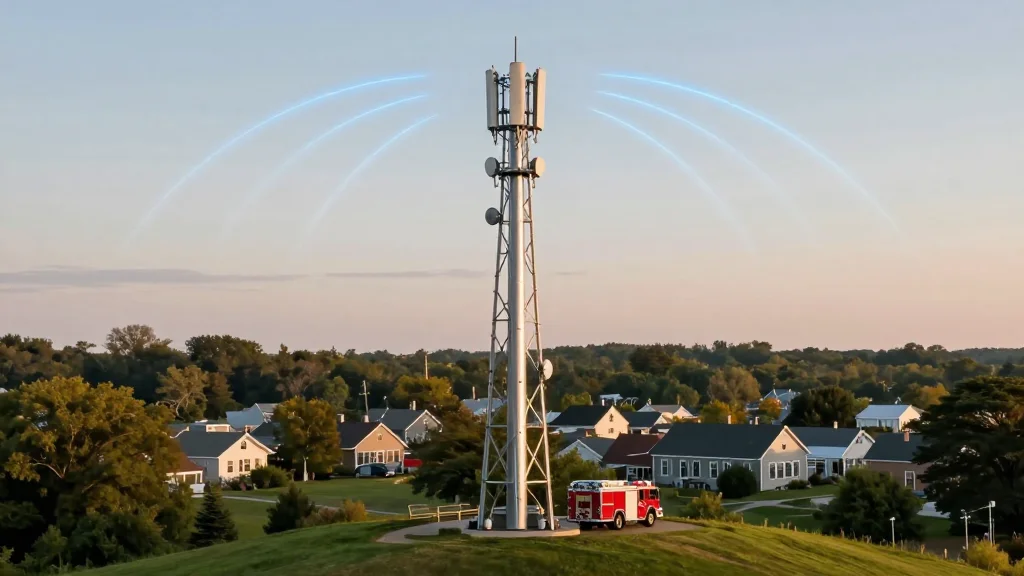
Lenox Town to Lease Public Safety Tower for Cellular Antennas, Aiming to Close Coverage Gap

Companies Mentioned
Why It Matters
The Lenox proposal highlights a growing trend of municipalities using existing public‑safety assets to address rural cellular deficiencies, a strategy that could reshape how underserved areas gain coverage. By sidestepping new zoning battles, towns can expedite network expansion, directly benefiting emergency response times and everyday connectivity for residents. If successful, Lenox’s model may inspire similar lease‑based collaborations across the United States, prompting carriers to explore cost‑effective ways to extend service without the expense of building new towers. Moreover, the initiative underscores the critical link between reliable cellular service and public‑safety operations. In an era where first responders increasingly depend on data‑rich applications, even modest improvements in signal strength can translate into faster dispatches, better situational awareness, and potentially lives saved. The outcome of Lenox’s vote will therefore serve as a barometer for how local governments balance community concerns with the pressing need for robust communications infrastructure.
Key Takeaways
- •Lenox town plans to lease space on its public safety tower to cellular carriers, pending a May 7 voter approval.
- •Town Administrator Jay Green says the lease will improve cell service; Selectman Neal Maxymillian notes no zoning variances are needed.
- •Police Chief Mark L. Smith calls better coverage "badly needed" for both residents and emergency responders.
- •The proposal could generate revenue for the town while providing a template for other rural municipalities.
- •If approved, carriers will submit lease bids, potentially closing the dead zone along Route 7/20.
Pulse Analysis
Lenox’s decision to monetize its public‑safety tower reflects a pragmatic shift in how small towns address the chronic under‑investment in rural telecom infrastructure. Historically, carriers have been reluctant to fund new sites in low‑density markets due to limited return on investment. By offering existing, government‑owned structures, municipalities lower capital costs and accelerate deployment timelines, effectively sharing the risk with carriers.
The move also signals a subtle but important realignment of public‑policy priorities. While community opposition to new towers remains potent, leveraging a tower already dedicated to emergency services sidesteps many of the health and aesthetic objections that have derailed projects like the 2023 Canyon Ranch proposal. This could embolden other towns to revisit dormant assets—fire stations, water towers, even school rooftops—as platforms for shared wireless use.
Looking ahead, the success of Lenox’s lease model may influence state regulators to formalize guidelines for public‑private antenna sharing, potentially unlocking billions of dollars in incremental coverage. However, the approach is not a panacea; a single tower cannot fully remedy coverage gaps in sprawling rural landscapes. Still, as a low‑cost, high‑impact step, it offers a replicable blueprint that balances fiscal prudence, community sentiment, and the urgent need for reliable communications in public‑safety contexts.
Lenox Town to Lease Public Safety Tower for Cellular Antennas, Aiming to Close Coverage Gap
Comments
Want to join the conversation?
Loading comments...