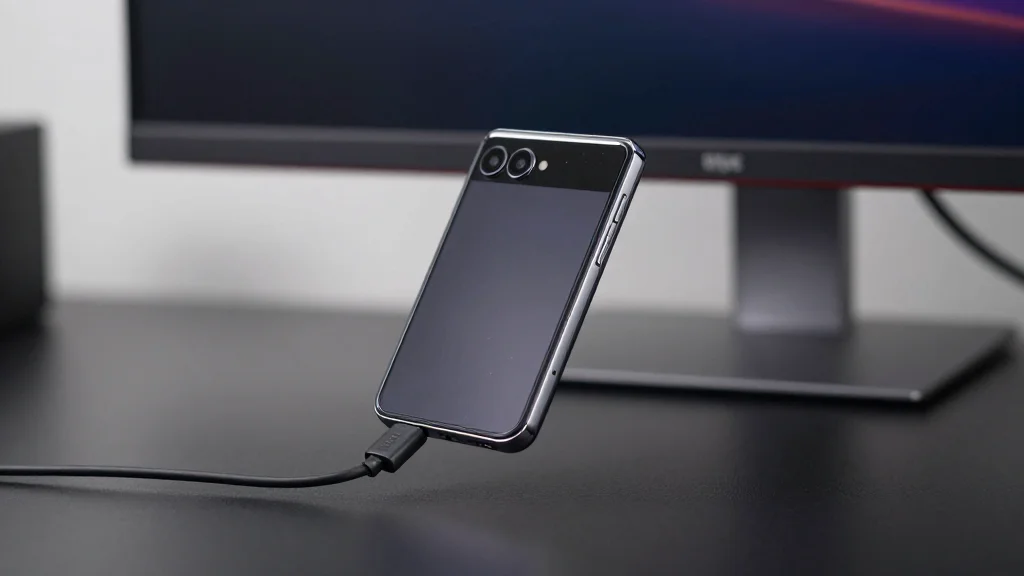
Motorola Razr Fold’s Wired Smart Connect Boosts Productivity, Sparks Carrier Interest

Companies Mentioned
Why It Matters
The Razr Fold’s wired Smart Connect changes the calculus for mobile productivity, offering a laptop‑replacement experience that runs on a single cellular connection. For carriers, this creates an opportunity to sell higher‑margin data plans and device‑financing packages tied to enterprise use cases, potentially boosting average revenue per user (ARPU). It also pressures rivals—Samsung, Google, and Apple—to accelerate their own desktop‑mode roadmaps, intensifying competition in the foldable and productivity‑device segments. From a broader telecom perspective, the feature highlights how hardware innovation can drive service‑level differentiation. As 5G networks mature, carriers will look for compelling device experiences that justify premium subscriptions. Motorola’s move may spur a wave of carrier‑backed productivity bundles, influencing network traffic patterns, device subsidies, and the rollout of edge‑computing services that support desktop‑grade workloads on mobile hardware.
Key Takeaways
- •Motorola Razr Fold adds wired Smart Connect desktop mode via USB‑C, eliminating wireless lag.
- •Native multi‑user profiles let users switch between work and personal Android accounts on the same device.
- •Powered by Snapdragon 8 Gen 5, 6,000 mAh battery, 6.6‑inch cover and 8.1‑inch inner displays.
- •Indian launch follows global debut in March, positioning the device for carrier‑driven enterprise adoption.
- •Competitors Samsung DeX and Google Pixel desktop remain wireless‑first, while Apple offers only screen mirroring.
Pulse Analysis
Motorola’s decision to double‑down on a wired desktop experience reflects a strategic pivot from pure form‑factor novelty to functional differentiation. The foldable market has been dominated by premium pricing and incremental hardware upgrades; the Razr Fold’s productivity edge could be the first true use‑case that justifies its cost for business users. By enabling seamless multi‑user switching, Motorola addresses a long‑standing Android limitation that has hampered enterprise adoption, especially in BYOD environments where data segregation is critical.
From a carrier standpoint, the device aligns with the next wave of 5G value propositions: high‑throughput, low‑latency connectivity that can support desktop‑class applications on a phone. Carriers that bundle the Razr Fold with premium data plans, edge‑compute services, or managed device‑security solutions could see a measurable lift in ARPU and churn reduction. This also forces rivals to reconsider their own desktop strategies; Samsung may need to re‑introduce multi‑user support in DeX, while Google must accelerate its Pixel desktop roadmap to stay competitive.
Looking forward, the success of the Razr Fold will hinge on software stability and ecosystem support. If Motorola can deliver regular Smart Connect updates that add virtual workspaces and tighter integration with carrier cloud platforms, the device could become a cornerstone of the emerging "mobile‑first" enterprise model. Conversely, without broad carrier endorsement and developer tooling, the feature risks remaining a niche advantage. The coming months will reveal whether this productivity‑focused hardware tweak reshapes the telecom value chain or simply adds another bullet point to the foldable checklist.
Motorola Razr Fold’s Wired Smart Connect Boosts Productivity, Sparks Carrier Interest
Comments
Want to join the conversation?
Loading comments...