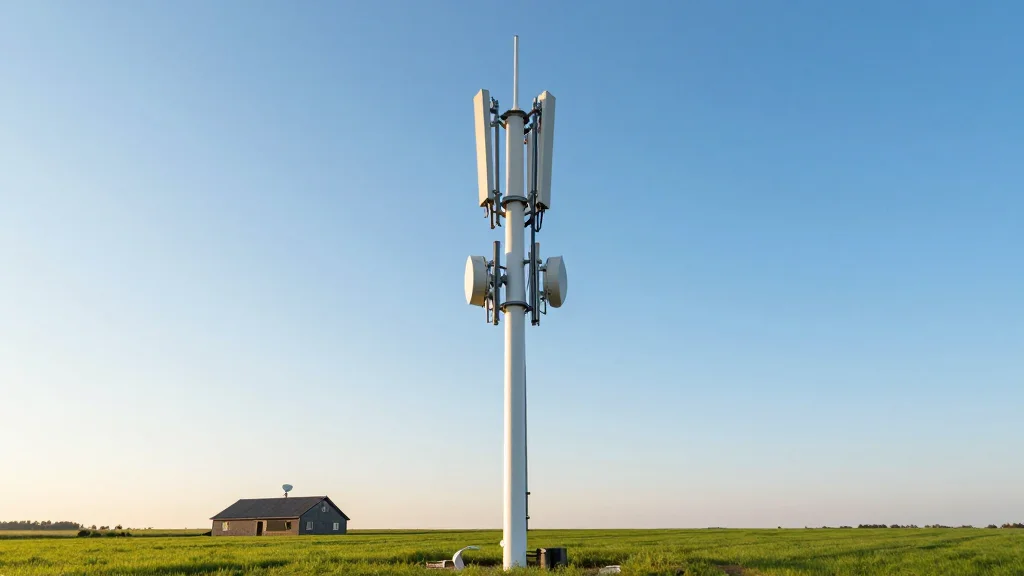
Nextlink and Vistabeam Activate First BEAD Broadband Services, Marking $42B Rural Rollout

Why It Matters
The activation of the first BEAD‑funded tower and household proves that the $42.45 billion federal program can deliver tangible broadband service, a critical step toward closing the digital divide in rural America. By demonstrating that fixed wireless can meet gigabit speed targets, the milestones give policymakers and investors confidence that less expensive, spectrum‑based solutions can complement traditional fiber builds, potentially accelerating overall deployment timelines. Moreover, the contrasting state approaches underscore the importance of agile governance. Louisiana’s streamlined subgrant process and Nebraska’s rapid subscriber activation illustrate how state execution can become a differentiator in a program where billions of dollars are at stake. The outcomes will shape future funding allocations, influence the mix of technologies deployed, and set performance benchmarks for the next wave of rural broadband projects.
Key Takeaways
- •Nextlink activated the first BEAD‑funded tower on May 1 in Bienville Parish, Louisiana.
- •Vistabeam connected the first BEAD‑funded household on May 14 near Ogallala, Nebraska, delivering >800 Mbps down/200 Mbps up.
- •Louisiana’s $18.5 million subgrant targets 7,460 locations using Tarana ngFWA Gen 2 on 3.5 GHz CBRS spectrum.
- •Nebraska’s $423,375 grant covers 93 sites; a separate $16.8 million allocation aims at ~7,400 locations statewide.
- •Fixed wireless accounts for ~12 % of BEAD sites, satellite for ~23 %; private capital adds an $80 million Ripple Fiber expansion.
Pulse Analysis
The BEAD activations signal a turning point in how the U.S. government leverages subsidies to catalyze private‑sector broadband builds. Historically, federal broadband programs have struggled with slow rollout and cost overruns, often because they defaulted to fiber‑only solutions that are prohibitively expensive in low‑density areas. By embracing fixed wireless, the BEAD program is aligning technology choice with economic reality, allowing operators to meet speed commitments without the massive trenching costs that have stalled many projects.
From a market perspective, the early success of Nextlink and Vistabeam could reshape competitive dynamics. Fixed wireless vendors now have a credible case study to present to state officials and investors, potentially attracting more capital to the sector. At the same time, fiber incumbents may need to adjust their strategies, focusing on hybrid models that combine fiber backhaul with wireless last‑mile delivery. The $80 million Ripple Fiber expansion illustrates that fiber will still play a vital role, especially for high‑capacity backhaul, but the BEAD milestones suggest that wireless will dominate the initial customer‑facing layer.
Looking ahead, the real test will be scaling these pilots into full‑statewide networks. States that can streamline grant approvals, coordinate spectrum access, and manage IP address resources efficiently will likely attract more BEAD funding and private investment. Conversely, bureaucratic delays could leave billions of dollars idle while rural communities remain offline. The next six months will reveal whether the BEAD program can maintain momentum or revert to the slow, ceremonial pace that has characterized past federal broadband initiatives.
Nextlink and Vistabeam Activate First BEAD Broadband Services, Marking $42B Rural Rollout
Comments
Want to join the conversation?
Loading comments...