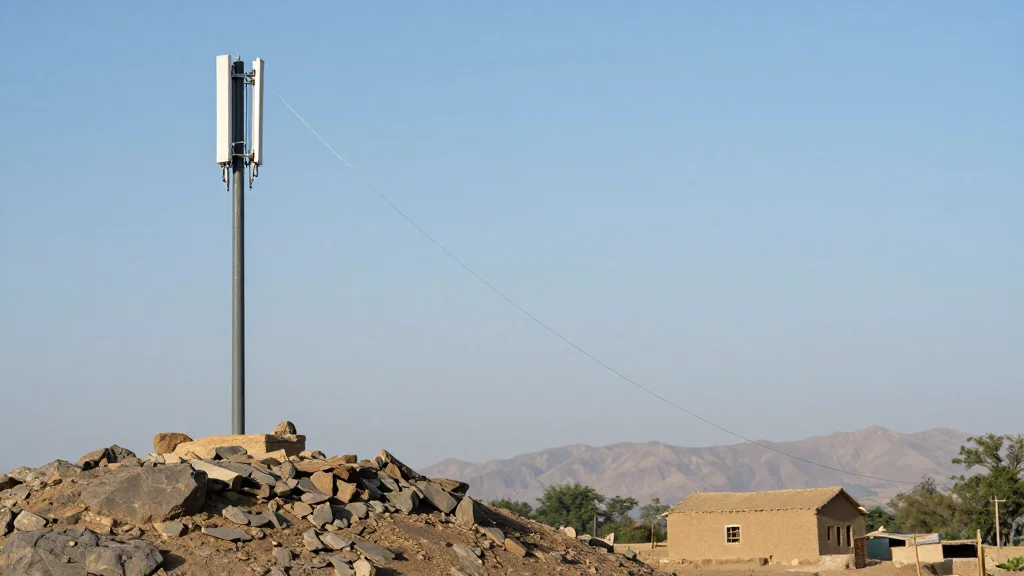
PTA Grants 21 District Licenses to Accelerate Local Internet Expansion in Pakistan

Why It Matters
Bridging Pakistan's digital divide is critical for inclusive economic growth. Reliable internet access enables remote education, digital banking, and participation in the global digital economy, which are essential for a country where over half the population lives outside major cities. By mandating measurable rollout targets, the PTA is turning policy intent into actionable outcomes, potentially reshaping the telecom market and encouraging competition at the grassroots level. The licensing scheme also serves as a barometer for regulatory effectiveness in emerging markets. If the 21 districts see rapid broadband uptake, it could validate the PTA's approach and encourage similar models in neighboring countries facing comparable connectivity challenges. Conversely, failure to meet benchmarks could highlight the need for more robust financing mechanisms or infrastructure sharing agreements.
Key Takeaways
- •PTA approved 21 district‑level class licences for internet service providers.
- •Each licence runs for ten years with a requirement to launch service within one year.
- •Licensees must establish at least 100 broadband connections within a year of commencement.
- •62 applications were received; 21 approved, 41 under review.
- •The move aims to narrow Pakistan's urban‑rural internet penetration gap, currently around 35%.
Pulse Analysis
The PTA's district‑licensing strategy marks a shift from a top‑down, city‑centric rollout to a more granular, market‑driven model. Historically, Pakistan's telecom expansion has been dominated by a few large operators focusing on high‑density urban markets where return on investment is clear. By carving out licences at the district level, the regulator is lowering the entry barrier for smaller players and encouraging infrastructure sharing, which could lead to a more diversified ecosystem.
From a financial perspective, the ten‑year licence horizon provides a stable revenue stream that can justify the high upfront capex associated with building fiber backbones or deploying wireless towers in remote terrain. However, the 100‑connection minimum may be insufficient to achieve economies of scale in sparsely populated districts, potentially resulting in higher per‑user costs. To mitigate this, the government may need to introduce targeted subsidies or tax incentives, especially for regions with challenging topography.
Looking ahead, the success of this initiative will hinge on the ability of operators to navigate logistical hurdles and secure financing. If the first wave of licences delivers measurable connectivity gains, it could unlock a cascade of private investment, spur ancillary services like local content creation, and accelerate Pakistan's digital transformation agenda. Failure, on the other hand, could reinforce the perception that regulatory mandates alone cannot overcome structural market constraints, prompting a reevaluation of policy tools.
PTA Grants 21 District Licenses to Accelerate Local Internet Expansion in Pakistan
Comments
Want to join the conversation?
Loading comments...