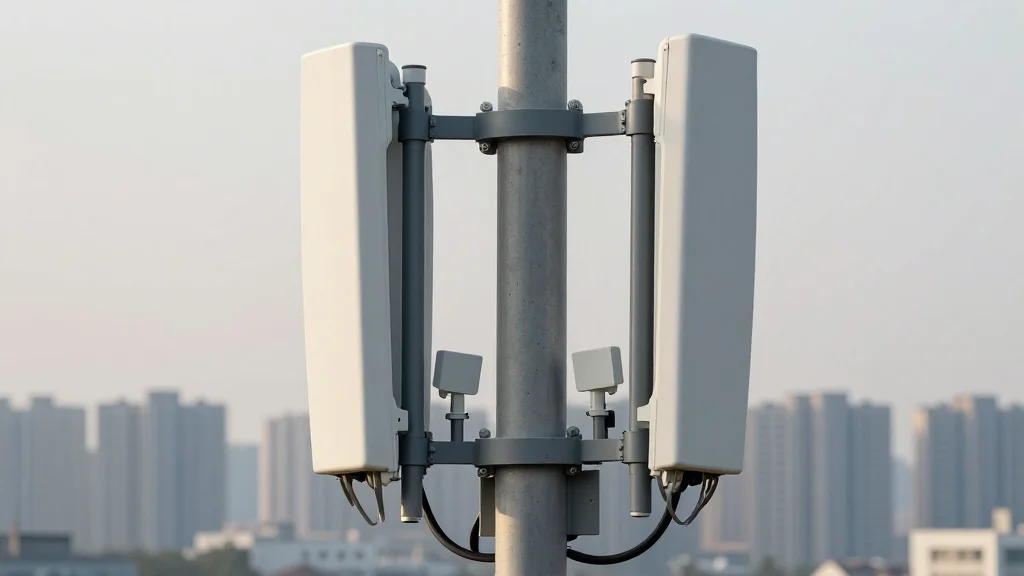
Samsung and LG Uplus Want to Turn Cell Towers Into Radar for 6G
Why It Matters
ISAC could eliminate separate sensing hardware, reducing costs and enabling new safety and operational services for operators. Early field validation gives Samsung and LG Uplus a competitive edge as global 6G spectrum allocations are finalized.
Key Takeaways
- •Samsung, LG Uplus to test ISAC on existing 5G network.
- •ISAC enables cell towers to detect drones, vehicles, foot traffic.
- •7 GHz band targeted as “golden band” for future 6G rollout.
- •ITU lists ISAC among six core scenarios for IMT‑2030.
- •Early ISAC trials could shape global 6G spectrum and standards.
Pulse Analysis
Integrated Sensing and Communication (ISAC) is reshaping the role of mobile infrastructure by embedding radar‑like perception directly into the radio waves that already carry voice and data. Unlike traditional LiDAR or dedicated radar units, ISAC requires no extra hardware; it extracts speed, distance and direction information from signal reflections, turning every base station into a low‑cost environmental sensor. This convergence promises operators new revenue streams—from drone detection to crowd analytics—while slashing capital expenditures on parallel sensing networks. As the International Telecommunication Union (ITU) elevates ISAC to one of six IMT‑2030 scenarios, the technology is moving from laboratory proof‑of‑concept to a cornerstone of 6G design.
The race for the so‑called “golden band” around 7 GHz underscores the strategic importance of spectrum in realizing ISAC’s potential. South Korea is actively testing the 7.125‑8.4 GHz slice, while the World Radiocommunication Conference (WRC‑27) will decide its allocation worldwide. In the United States, the NTIA must finish its study of the 7.125‑7.4 GHz range by the end of 2026, and Europe is eyeing the upper 6 GHz band. Early access to these frequencies will give domestic operators a head‑start in deploying ISAC‑enhanced services and influencing global 6G standards.
For Samsung, the partnership with LG Uplus bridges cutting‑edge research and real‑world network exposure, accelerating the transition from controlled‑lab results to commercial viability. Samsung’s AI‑RAN expertise and semiconductor scale can fuse ISAC data with camera feeds, creating multimodal models that improve detection accuracy and network efficiency. LG Uplus contributes a nationwide 5G footprint for field trials, providing the traffic diversity needed to stress‑test the technology. If successful, ISAC could become a differentiator for operators, opening up safety‑critical applications and new data‑as‑a‑service offerings, while cementing Samsung’s position as a 6G infrastructure leader.
Samsung and LG Uplus want to turn cell towers into radar for 6G
Comments
Want to join the conversation?
Loading comments...