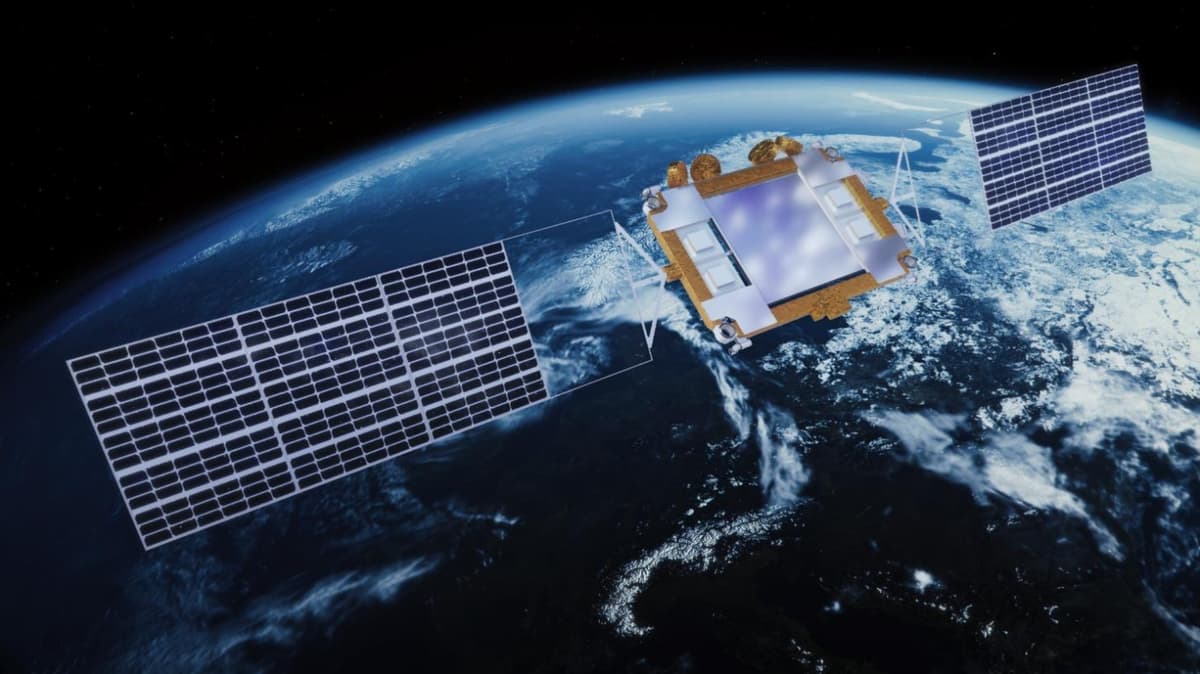
Satellite Startup Univity Raises €27m to Throw Its Hat Into the Ring
Companies Mentioned
Why It Matters
Direct‑to‑phone satellite connectivity could extend 5G coverage without handset upgrades, reshaping telecom operators’ network strategies. Univity’s funding accelerates VLEO technology that promises lower latency and new revenue streams for carriers.
Key Takeaways
- •Univity raised €27 million ($29 M) Series A for VLEO 5G satellites
- •Funding will build uniShape demonstrator with two VLEO‑based 5G satellites
- •Goal: direct smartphone connectivity using operators' existing frequency bands
- •Atmospheric drag at <400 km requires aerodynamic design or stronger propulsion
- •Market crowded with Starlink, OneWeb, AST SpaceMobile, Amazon Leo, EU IRIS2
Pulse Analysis
Univity’s recent €27 million Series A injection underscores growing investor confidence in very low Earth orbit (VLEO) satellite platforms. By positioning its uniSky constellation below 400 km, the French firm aims to slash round‑trip latency and enable direct broadband links to standard smartphones, sidestepping the need for specialized user equipment. The capital will fund the uniShape demonstrator, a two‑satellite testbed that will validate aerodynamic designs and propulsion solutions needed to counteract the heightened atmospheric drag that plagues VLEO missions. Converting the euro amounts, the round equates to roughly $29 million, complementing a prior $33 million grant from CNES, and signaling a clear path toward commercial‑scale operations.
Technical hurdles remain formidable. Operating at VLEO demands lightweight structures, advanced materials, and high‑thrust electric propulsion to maintain orbital altitude, driving up development costs. Moreover, spectrum coordination is critical; Univity plans to use operators’ existing bands, mirroring efforts by AST SpaceMobile and Open Cosmos. The crowded non‑terrestrial network (NTN) arena—featuring SpaceX’s Starlink, OneWeb, Amazon’s Leo, and the EU‑backed IRIS2 consortium—means Univity must differentiate on price, latency, and integration ease. Its focus on seamless handover between terrestrial 5G and satellite links could appeal to carriers seeking to extend coverage in rural or hard‑to‑reach regions without overhauling handset inventories.
If Univity can demonstrate reliable, low‑cost connectivity, the commercial implications are significant. Telecom operators could treat space as an extension of their 5G fabric, unlocking new services such as high‑definition video streaming in remote locales and bolstering network resilience during terrestrial outages. The successful deployment of uniShape would also validate a business model that blends satellite infrastructure with existing mobile ecosystems, potentially attracting further private and public investment. However, profitability will hinge on scaling production, managing launch expenses, and competing against entrenched players that already benefit from economies of scale.
Satellite startup Univity raises €27m to throw its hat into the ring
Comments
Want to join the conversation?
Loading comments...