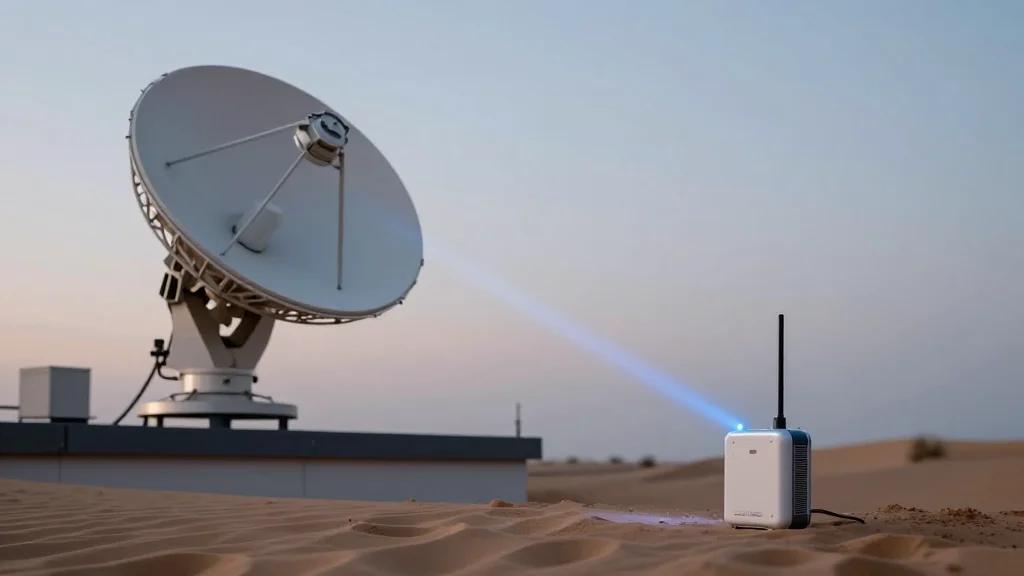
Stealth Satellite Signals Restore Connectivity for Millions in Iran Blackout

Why It Matters
The Toosheh deployment demonstrates that even the most centralized telecom architectures can be outflanked by low‑tech, high‑impact solutions. For policymakers, the case highlights the limits of deep‑packet inspection and gateway control as tools for total information suppression. For the telecom industry, it signals a potential new revenue stream in providing secure broadcast‑based data channels, while also exposing operators to geopolitical risk if their satellites are used to subvert state censorship. Beyond Iran, the technique could reshape how NGOs, journalists and disaster‑response teams maintain communications in environments where conventional networks are compromised. By turning ubiquitous satellite TV infrastructure into a data conduit, the approach offers a scalable, cost‑effective alternative to satellite internet constellations, potentially democratizing access to resilient communications worldwide.
Key Takeaways
- •NetFreedom Pioneers activated Toosheh 13 days after Iran's Jan 8, 2026 internet blackout.
- •The blackout cut off over 90 million Iranians from global internet, mobile calls and VPNs.
- •Toosheh embeds data in satellite TV audio tracks, bypassing deep‑packet inspection.
- •Second blackout followed Feb 2026 U.S./Israeli airstrikes, prompting continued Toosheh use.
- •The case illustrates a new frontier for telecom resilience and anti‑censorship tactics.
Pulse Analysis
The Iranian blackout and Toosheh’s response mark a watershed in the cat‑and‑mouse game between authoritarian control and digital resistance. Historically, regimes have focused on cutting fiber links and throttling IP traffic; the Iranian government’s reliance on a few state‑linked gateways made that strategy effective. However, the Toosheh model shows that legacy broadcast layers—long considered obsolete for data—can be resurrected as a covert channel, effectively re‑introducing a broadcast‑centric paradigm into a unicast‑dominated internet era.
From a market perspective, telecom operators that own satellite capacity may soon be courted by NGOs and governments seeking resilient communication pathways. This could spawn a niche segment of “broadcast‑data services,” where carriers lease transponder space for encoded data streams, offering a low‑latency, low‑cost alternative to LEO constellations for niche, low‑bandwidth applications. Yet the same capability could attract regulatory scrutiny, especially from states that view such transmissions as subversive. Operators will need to balance commercial opportunities against the risk of sanctions or forced shutdowns of satellite assets.
Looking ahead, the Toosheh experiment could catalyze a broader shift toward hybrid network architectures that blend traditional broadcast, cellular, and satellite layers. By designing protocols that automatically switch to broadcast‑based data when IP paths are blocked, future resilient networks could provide continuous service even under total internet shutdowns. The Iranian case thus serves as both a cautionary tale for governments seeking total control and a blueprint for technologists aiming to safeguard the flow of information in the most hostile environments.
Stealth Satellite Signals Restore Connectivity for Millions in Iran Blackout
Comments
Want to join the conversation?
Loading comments...