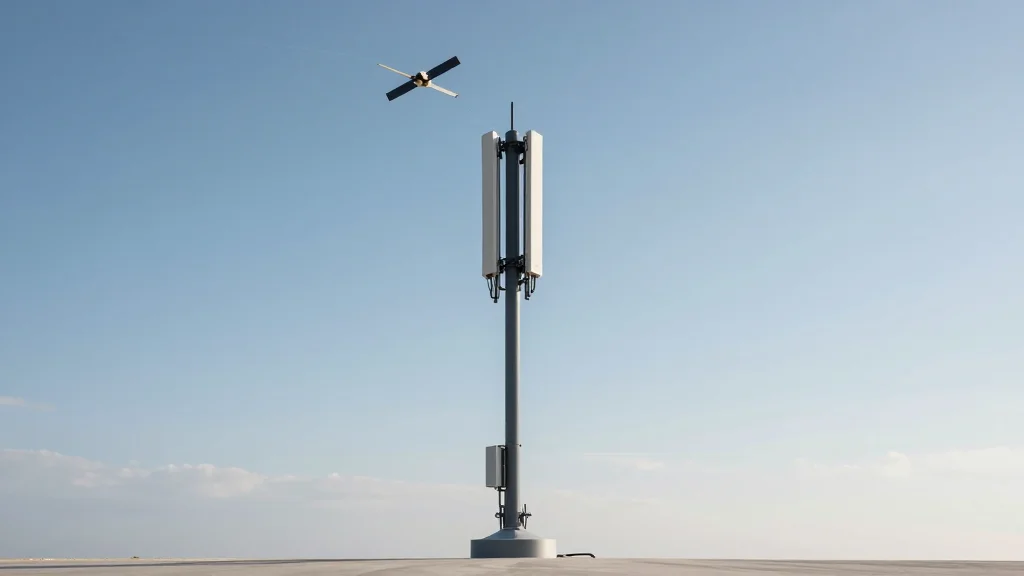
T‑Mobile and Starlink Launch SuperBroadband, a 5G‑Satellite Hybrid for U.S. Enterprises

Companies Mentioned
Why It Matters
SuperBroadband illustrates how telecom carriers are leveraging satellite constellations to overcome the geographic limitations of terrestrial networks. For enterprises, the promise of a single provider delivering both high‑speed 5G and satellite redundancy could simplify procurement, reduce vendor management overhead, and lower total cost of ownership. The partnership also signals that satellite operators like SpaceX are moving beyond consumer broadband into high‑value enterprise services, potentially unlocking new revenue streams and reshaping the economics of satellite deployment. If the hybrid model proves reliable, it could accelerate the broader convergence of 5G and satellite technologies, prompting regulators and industry groups to revisit spectrum allocation and interconnection policies. The success of SuperBroadband may also influence future standards for seamless handoff between terrestrial and space‑based links, a capability that will be critical for emerging applications such as autonomous vehicles and remote industrial automation.
Key Takeaways
- •T‑Mobile and Starlink announced SuperBroadband on April 28, combining 5G and LEO satellite for enterprise internet.
- •The service promises continuous connectivity, claiming to survive "virtually all outages and disruptions."
- •Hybrid architecture routes traffic over both networks, offering redundancy without separate contracts.
- •The partnership marks the first large‑scale integration of Starlink’s satellite fleet into a business‑focused telecom product.
- •Rollout will begin across the United States; pricing and equipment details were not disclosed.
Pulse Analysis
SuperBroadband arrives at a moment when enterprises are re‑evaluating their connectivity strategies. The pandemic accelerated cloud adoption, and with it, the need for resilient, high‑bandwidth links that can span remote sites. Historically, carriers have relied on fiber to guarantee uptime, but fiber’s rollout costs and physical constraints have left gaps in coverage. By tapping Starlink’s LEO constellation, T‑Mobile sidesteps those constraints, offering a plug‑and‑play solution that can be deployed in minutes rather than months.
From a competitive standpoint, the move forces other carriers to confront a new reality: satellite is no longer a niche backup but a core component of the service stack. Verizon’s recent trial of Ku‑band satellite backhaul and AT&T’s partnership with OneWeb suggest the industry is already testing the waters. However, T‑Mobile’s direct branding of a hybrid product gives it a marketing edge, positioning the company as an innovator rather than a follower. The partnership also leverages SpaceX’s aggressive launch cadence, ensuring that capacity will keep pace with growing demand.
Looking ahead, the key test will be performance under stress. Enterprises will scrutinize latency, jitter, and packet loss during peak usage and during real outages. If SuperBroadband can deliver carrier‑grade service levels, it could set a new benchmark for hybrid connectivity, prompting a wave of similar offerings worldwide. Conversely, any shortfall could reinforce the perception that satellite remains a supplemental, not primary, connectivity option. The outcome will shape investment decisions for both telecoms and satellite operators for years to come.
T‑Mobile and Starlink Launch SuperBroadband, a 5G‑Satellite Hybrid for U.S. Enterprises
Comments
Want to join the conversation?
Loading comments...