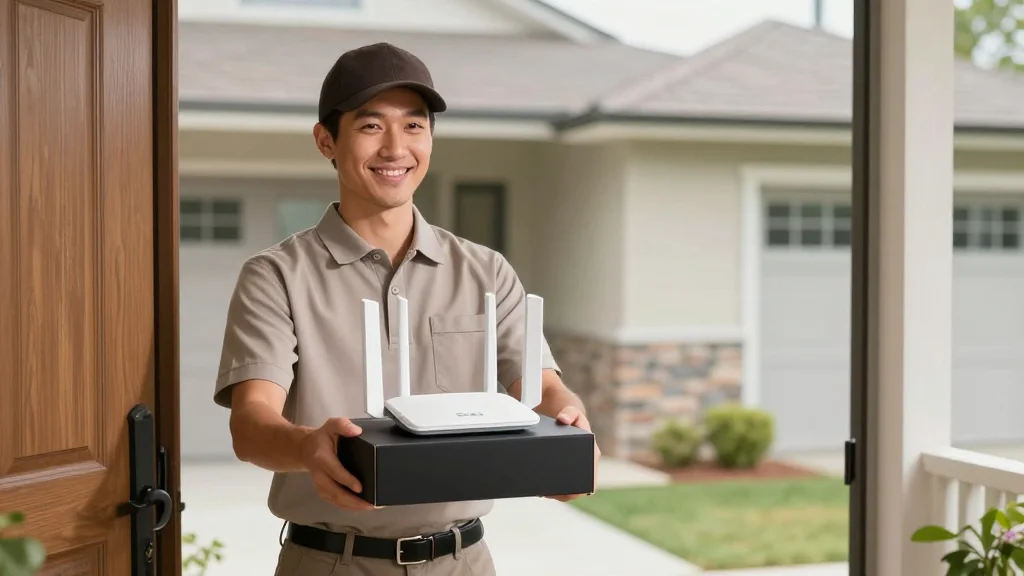
T‑Mobile Teams with DoorDash for Same‑Day 5G Home Internet Delivery

Companies Mentioned
Why It Matters
The same‑day delivery of 5G Home Internet equipment could reshape how broadband is provisioned in the United States. By eliminating the traditional wait for a technician, T‑Mobile lowers the barrier to entry for consumers who need immediate connectivity, potentially accelerating the shift from legacy DSL and cable to wireless broadband. The model also puts pressure on competitors to rethink their own delivery logistics, as speed and convenience become differentiators alongside price and speed. If the service proves popular, it may encourage other telecom operators to partner with gig‑economy platforms, further blurring the lines between traditional telecom infrastructure and on‑demand logistics. This could lead to a more fragmented but faster‑moving market, where carriers compete on both network quality and the agility of their customer‑facing operations.
Key Takeaways
- •T‑Mobile now offers free same‑day DoorDash delivery of its 5G Home Internet gateway
- •Plans start at $35 per month with optional voice and autopay bundles
- •Customers must self‑install; a 15‑day return window is provided
- •CNET tests show 87‑318 Mbps download and 14‑56 Mbps upload speeds
- •The service builds on a November rollout of DoorDash‑delivered smartphones
Pulse Analysis
T‑Mobile’s decision to outsource last‑mile delivery to DoorDash reflects a strategic pivot toward operational efficiency and customer experience. Historically, telecom carriers have owned or tightly controlled the logistics of equipment deployment, a model that adds overhead and slows time‑to‑service. By leveraging DoorDash’s existing courier network, T‑Mobile can scale rapid deliveries without the capital expense of a dedicated fleet, aligning its cost structure more closely with the low‑margin, high‑volume nature of consumer broadband.
The move also taps into a broader consumer expectation for instant gratification, cultivated by the food‑delivery and e‑commerce sectors. As broadband becomes a utility rather than a premium service, speed of activation may become as important as price or speed. However, the self‑install requirement introduces risk: a failed setup could generate support tickets, eroding the net benefit of faster delivery. T‑Mobile will need robust digital support tools—augmented reality guides, AI‑driven troubleshooting, or optional paid technician visits—to mitigate churn.
Competitors are likely to respond. Verizon’s emphasis on technician‑assisted installations underscores a divergent strategy: higher service assurance at the cost of slower rollout. If T‑Mobile’s model drives measurable subscriber growth, we could see a split in the market between “instant‑install” carriers and those that prioritize hands‑on service. The partnership also hints at future collaborations beyond delivery, such as using DoorDash couriers for on‑site equipment upgrades or emergency repairs, further integrating gig‑economy resources into telecom operations.
In the longer term, the success of this model could influence regulatory discussions around broadband deployment, especially in underserved areas where traditional infrastructure rollout is slow. Rapid, low‑cost delivery of wireless gateways might become a viable policy tool to close the digital divide, provided the underlying 5G coverage is sufficient. T‑Mobile’s experiment will therefore be watched not only by industry peers but also by policymakers seeking scalable solutions to broadband access challenges.
T‑Mobile Teams with DoorDash for Same‑Day 5G Home Internet Delivery
Comments
Want to join the conversation?
Loading comments...