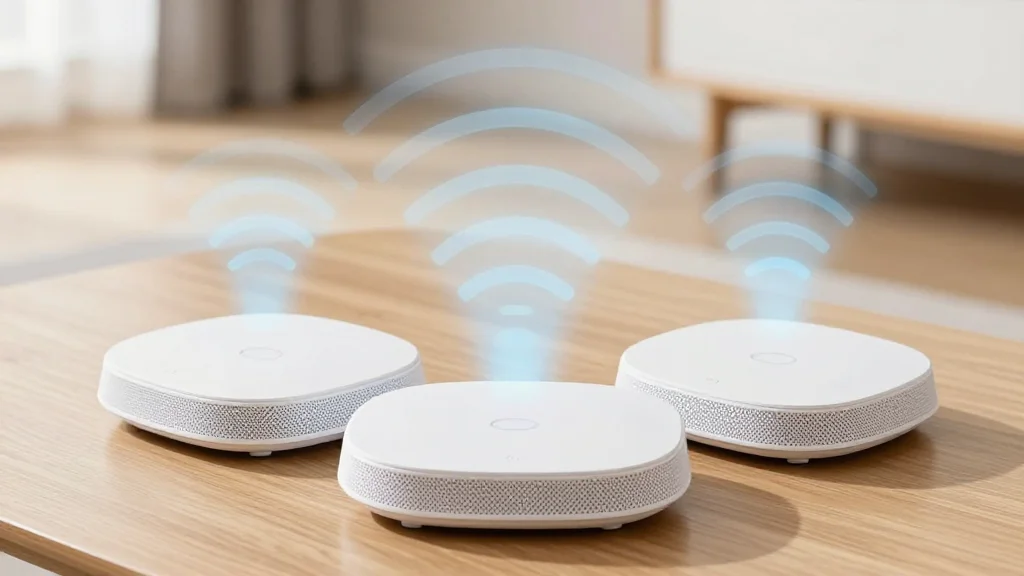
TP-Link Debuts $180 Wi‑Fi 7 Mesh Kit, Undercutting Premium Competitors

Companies Mentioned

Why It Matters
The Deco BE23 lowers the financial barrier to Wi‑Fi 7, a technology that promises higher capacity, lower latency and better handling of dense device environments. By offering a sub‑$200 entry point, TP‑Link may spur broader household upgrades, increasing the effective bandwidth of last‑mile connections and reinforcing the business case for fiber rollouts. The product also intensifies price competition among mesh vendors, potentially compressing margins but driving innovation in cost‑efficient hardware design. For telecom operators, the proliferation of affordable Wi‑Fi 7 routers could reduce churn by improving the end‑user experience of broadband services. It also opens opportunities for service bundling, where operators can offer managed security subscriptions alongside the hardware, creating new recurring‑revenue streams.
Key Takeaways
- •TP‑Link’s Deco BE23 three‑pack sells for $180 on Amazon, $60 per unit.
- •Peak throughput reaches 2.882 Gbps across 2.4 GHz and 5 GHz bands.
- •Coverage claims: 4,500 sq ft (two‑pack) and 6,500 sq ft (three‑pack).
- •Performance test shows 43 % higher speed than Netgear Orbi 370.
- •Two‑year warranty and unlimited support contrast with competitors’ shorter terms.
Pulse Analysis
TP‑Link’s aggressive pricing strategy reflects a broader shift in the consumer networking market: manufacturers are betting that volume will compensate for thinner margins. The BE23’s omission of the 6 GHz band, while a technical compromise, is unlikely to deter most households today because many ISP plans still cap at 1‑2 Gbps. By focusing on the more mature 2.4 GHz and 5 GHz spectra, TP‑Link can keep component costs low while still delivering a noticeable performance uplift over Wi‑Fi 6 gear.
Historically, Wi‑Fi 7 adoption has been hampered by high‑end hardware costs and limited device support. The BE23 could act as a catalyst, prompting device manufacturers to accelerate chipset integration and encouraging ISPs to market higher‑speed plans with confidence that the home network won’t be the bottleneck. In the longer term, we may see a cascade effect where budget‑friendly Wi‑Fi 7 routers become the default offering in ISP‑provided equipment kits, further normalizing the technology.
However, the market will watch how TP‑Link’s security subscription model performs. While the basic HomeShield suite is free, the $5‑per‑month Security+ and $70‑per‑year Total Security upgrades represent a new revenue layer that could either be embraced as value‑added protection or rejected as unnecessary cost. The success of these services will influence whether telecom operators adopt similar subscription‑based security bundles, potentially reshaping the ancillary services market tied to broadband connectivity.
TP-Link Debuts $180 Wi‑Fi 7 Mesh Kit, Undercutting Premium Competitors
Comments
Want to join the conversation?
Loading comments...