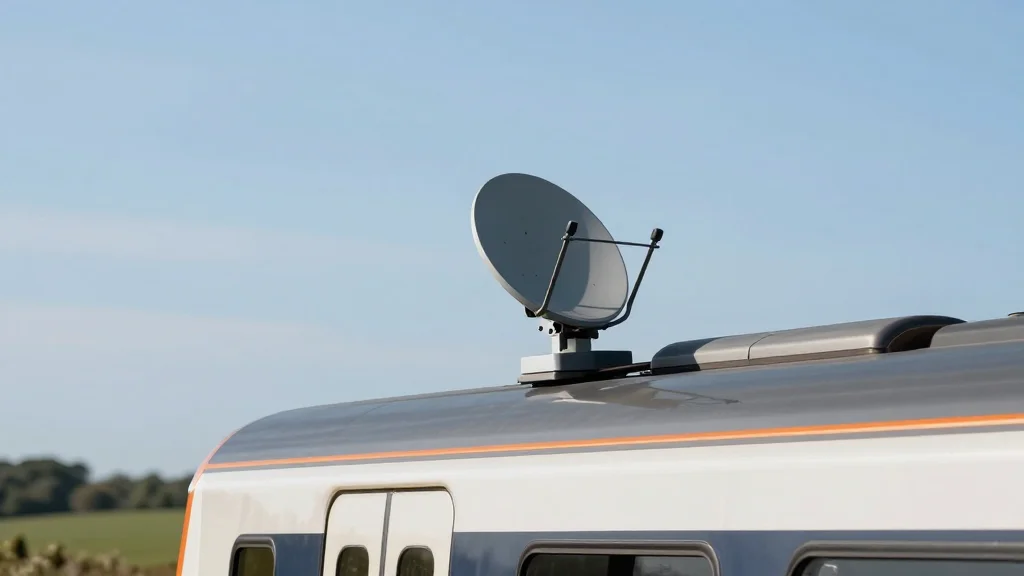
UK Government Allocates £57 Million to Upgrade Wi‑Fi on 1,400 Trains via Satellite

Companies Mentioned
Why It Matters
Reliable on‑board connectivity has become a prerequisite for modern commuters, especially as remote‑working habits persist post‑pandemic. By moving the rail network onto a satellite backbone, the UK aims to eliminate the “not‑spot” zones that have long frustrated business travelers and limited the rail sector’s ability to compete with road and air alternatives. The initiative also dovetails with broader digital‑infrastructure goals, such as expanding fibre‑optic coverage in tunnels and improving 5G reach at stations, thereby future‑proofing the transport system against evolving data demands. Beyond passenger convenience, the upgrade could unlock new revenue streams for train operators through premium Wi‑Fi services, data‑driven advertising, and real‑time analytics. It also positions the UK as an early adopter of LEO‑satellite integration in public transport, potentially influencing policy and procurement decisions across Europe and beyond.
Key Takeaways
- •£57 million government funding to fit >1,400 trains with satellite Wi‑Fi.
- •Target to raise on‑board connectivity from ~55% to at least 90% by 2030.
- •Starlink LEO satellites will be combined with 5G mast coverage.
- •Project Reach will add up to 5,000 km of fibre‑optic in tunnels.
- •First installations expected early 2027; full rollout by 2030.
Pulse Analysis
The UK’s satellite Wi‑Fi push marks a strategic pivot from reliance on terrestrial mobile networks, which have struggled to deliver consistent coverage across the country’s sprawling rail geography. By leveraging Starlink’s low‑latency constellation, the government sidesteps the costly and time‑consuming process of densifying 4G/5G mast infrastructure along remote corridors. This mirrors a broader industry trend where operators are turning to space‑based back‑haul to meet the exponential growth in data consumption, especially as passengers increasingly treat train cabins as mobile offices.
Historically, rail Wi‑Fi projects have faltered due to the “Faraday effect” of steel carriages and the patchy nature of line‑of‑sight mobile signals. The Formula 1‑inspired technology highlighted by Nick Fry promises to mitigate these issues by dynamically switching between satellite and cellular links, ensuring the strongest signal at any moment. If the rollout delivers the promised 90% availability, it could reshape passenger expectations, making reliable broadband a baseline service rather than a luxury. This, in turn, may pressure other transport modes—airlines and intercity buses—to accelerate their own connectivity upgrades.
However, the initiative is not without risk. Satellite bandwidth costs remain volatile, and the durability of antenna arrays on moving trains will be tested in harsh weather and vibration environments. Moreover, the £57 million budget, while significant, represents a modest slice of the rail sector’s overall capital spend, raising questions about long‑term funding for maintenance and upgrades. Success will hinge on coordinated governance through the new Great British Railway body, clear performance metrics, and the ability to integrate satellite connectivity with ongoing 5G rollouts at stations. If these challenges are managed, the UK could set a template for a digitally resilient rail network that other nations will seek to emulate.
UK Government Allocates £57 million to Upgrade Wi‑Fi on 1,400 Trains via Satellite
Comments
Want to join the conversation?
Loading comments...