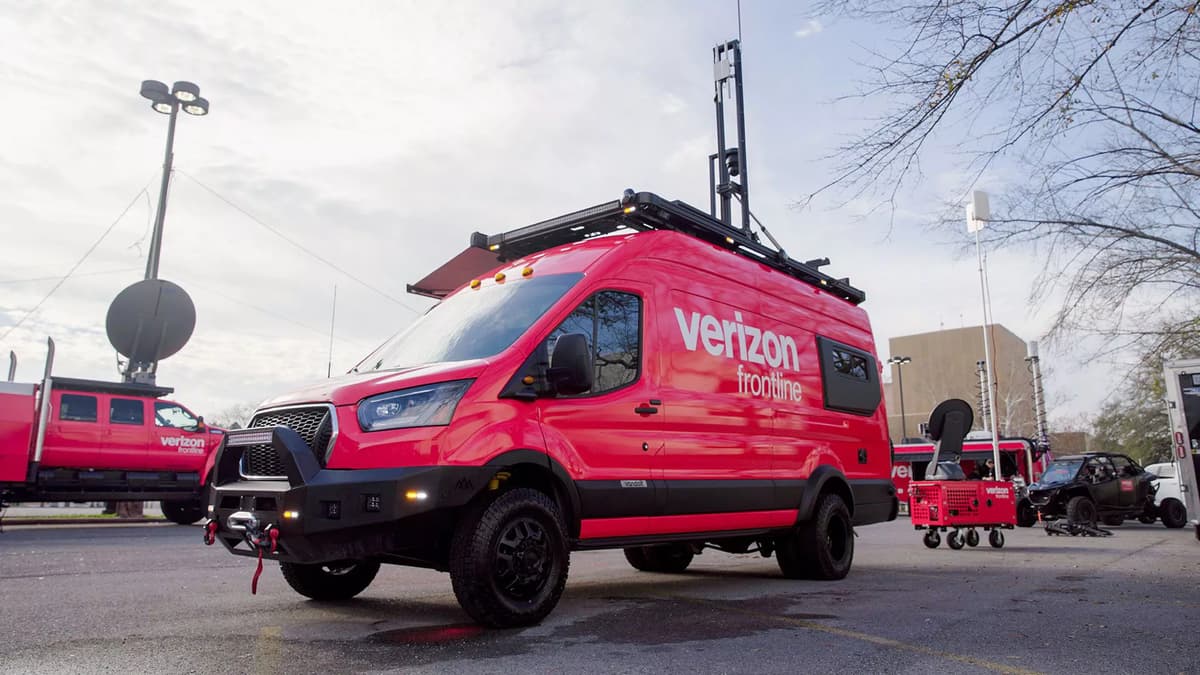
Verizon Uses Digital Twins to Defend Against Storm Damage
Why It Matters
The approach cuts restoration time and field costs, boosting network resilience as climate‑driven storms increase. It also positions Verizon as a leader in telecom disaster‑response technology, differentiating it from competitors.
Key Takeaways
- •Drone‑captured 3D models pinpoint storm damage instantly
- •AI compares “before” and “after” images to identify faults
- •Satellite backhaul tested at Southeast macro‑cells for redundancy
- •Multi‑Orbit trailer uses GEO and LEO links in disaster zones
- •V Team volunteers trained with Red Cross support community relief
Pulse Analysis
Verizon’s new disaster‑response platform hinges on digital twins—virtual replicas of its cellular infrastructure built from tens of thousands of drone flights. High‑resolution 3D imagery captured after a storm is fed into AI algorithms that automatically detect deviations from pre‑storm models, flagging damaged antennas, cables or power units. By delivering a precise damage map to engineers before they set foot on a site, the system slashes the time needed to assess outages, reduces hazardous tower climbs, and enables rapid procurement of exact replacement parts. In an industry where minutes of downtime translate into lost revenue and frustrated customers, such predictive visibility is a competitive differentiator.
Complementing the virtual inspection, Verizon is expanding its satellite backhaul to create a resilient transport layer when fiber or grid power are knocked out. The carrier’s fleet of roughly 2,600 satellite assets—including mobile deployable cells, link kits and permanent satellite links—provides redundancy across both geosynchronous (GEO) and low‑earth‑orbit (LEO) constellations. Field trials in the storm‑prone Southeast have demonstrated that a Multi‑Orbit Off‑Road Trailer can instantly switch between GEO and LEO links, maintaining cellular traffic flow even if both commercial power and fiber are severed. This hybrid approach mirrors a broader telecom shift toward satellite‑augmented networks, especially as climate‑related disruptions become more frequent.
Beyond technology, Verizon has institutionalized its humanitarian response through the V Team Disaster Response Corps, a volunteer network trained by the American Red Cross. Employees on the ground can assist with emergency communications, shelter coordination and community outreach, reinforcing the carrier’s brand as a public‑service partner. The integration of volunteer manpower with advanced network resilience tools creates a holistic disaster‑management ecosystem that other operators may seek to emulate. As regulators and investors scrutinize corporate preparedness, Verizon’s combined tech‑and‑people strategy positions it to meet both service‑level expectations and ESG commitments.
Verizon uses digital twins to defend against storm damage
Comments
Want to join the conversation?
Loading comments...