Vodafone Rolls Out Monthly 5G Home Broadband to 26 Million UK Homes

Companies Mentioned
Why It Matters
The launch signals a shift in how telecom operators address the last‑mile connectivity challenge. By using 5G fixed‑wireless technology, Vodafone can bypass the costly and time‑consuming rollout of fibre to reach renters, students and other transient users, expanding broadband penetration without massive civil works. This approach could reshape the UK broadband market, forcing traditional fibre providers to innovate or lower prices. Moreover, the service showcases the strategic payoff of the Vodafone‑Three merger. The combined spectrum assets and shared infrastructure enable a cost‑effective rollout that would have been impossible for either brand alone. Success here could serve as a template for other markets where Vodafone seeks to leverage 5G for fixed‑wireless broadband, potentially accelerating global 5G adoption and diversifying revenue streams beyond mobile services.
Key Takeaways
- •Vodafone launches 5G home broadband targeting >26 million UK homes
- •Plans offer up to 150 Mbps, priced at £21 ($27) on 24‑month or £30 ($38) on rolling contracts
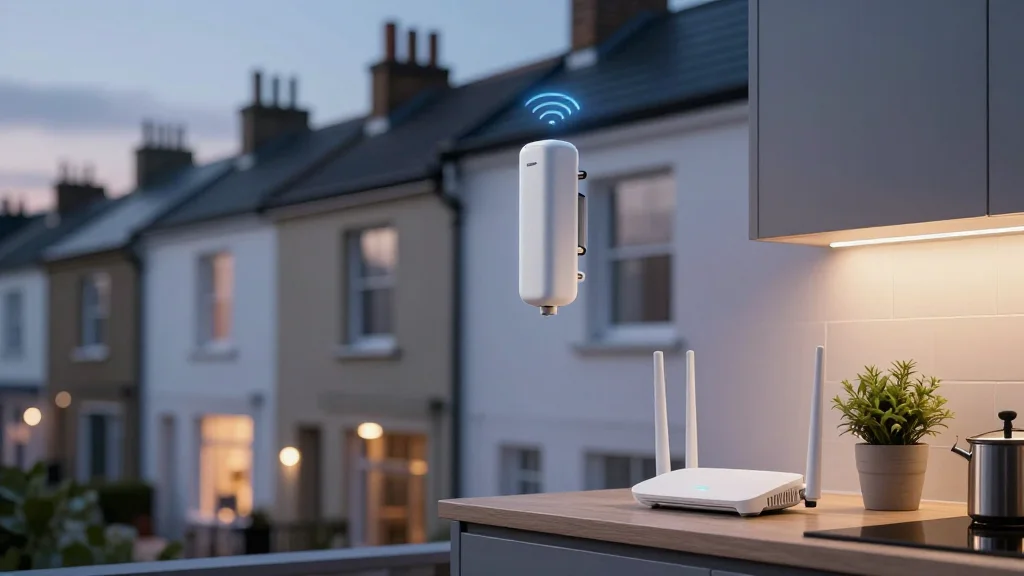
- •Service uses self‑install Power Hub router with Wi‑Fi 6, no engineer visit required
- •Launch follows Vodafone‑Three merger, which adds £700 million ($890 million) annual cost‑saving potential
- •CEO Margherita Della Valle says the rollout builds momentum in Vodafone’s post‑merger transformation
Pulse Analysis
Vodafone’s 5G broadband debut is more than a product launch; it’s a strategic lever to monetize the massive spectrum haul from the Vodafone‑Three merger. By converting mobile spectrum into fixed‑wireless capacity, Vodafone sidesteps the capital‑intensive fibre build‑out that has stalled broadband expansion in many UK suburbs. The pricing strategy—offering a low‑cost, month‑to‑month option—directly targets the rental market, a segment that has historically been a blind spot for fibre providers bound by long‑term contracts. This could force incumbents like BT to reconsider their pricing models or accelerate their own fixed‑wireless pilots.
From a financial perspective, the broadband service adds a new, higher‑margin revenue stream that can help offset the modest dip in pre‑tax profit reported for the year. If subscriber uptake mirrors Vodafone’s aggressive mobile growth targets, the 5G broadband line could contribute several hundred million pounds to the top line within two years, improving earnings per share and supporting the group’s dividend policy. The rollout also serves as a proof point for Vodafone’s broader ambition to become a converged communications provider, blending mobile, fixed‑wireless, and enterprise services under one roof.
Looking forward, the key risk lies in network performance. Fixed‑wireless speeds can fluctuate with signal strength and congestion, especially in dense urban pockets. Vodafone’s promise of “full fibre‑like” speeds will be scrutinized by regulators and consumer groups. Successful management of these quality‑of‑service challenges will determine whether the service can scale beyond early adopters to become a mainstream broadband alternative. If Vodafone can deliver consistent performance, the model could be exported to other markets where fibre rollout is stalled, potentially reshaping global broadband dynamics.
Vodafone rolls out monthly 5G home broadband to 26 million UK homes
Comments
Want to join the conversation?
Loading comments...