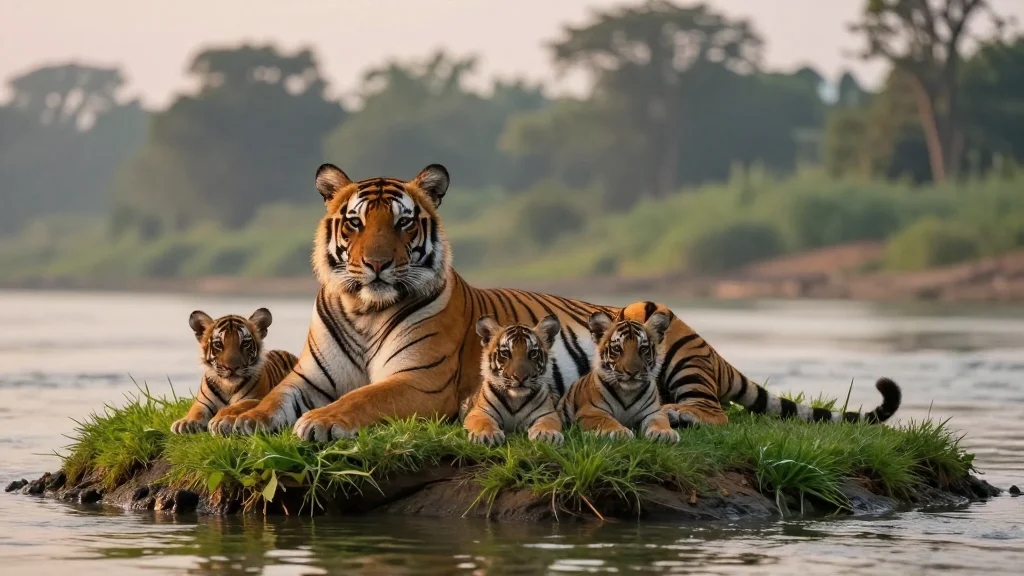
BBC One to Air ‘Tiger Island’ Documentary, Showcasing Unusual Mothering Among Nepal’s Tigers

Companies Mentioned
Why It Matters
The airing of “Tiger Island” on a mainstream channel like BBC One brings cutting‑edge wildlife research into living rooms across the UK, bridging the gap between scientific discovery and public awareness. By highlighting cooperative parenting among a species traditionally portrayed as solitary, the documentary challenges entrenched narratives and may inspire a new wave of support for tiger conservation programs. Moreover, the broadcast demonstrates that traditional broadcasters can still compete for attention in an era dominated by streaming services, using exclusive, high‑impact natural‑history storytelling to retain and grow audiences. In the broader television landscape, the success of such documentaries can influence commissioning decisions, encouraging networks to invest in similarly ambitious, science‑driven content. This could lead to a richer ecosystem of educational programming that not only entertains but also drives tangible environmental action.
Key Takeaways
- •BBC One schedules the two‑part “Tiger Island” documentary at 7.15 pm, reaching a national prime‑time audience.
- •Footage shows mother tigers Goma and Jugini sharing cubs, a behavior previously undocumented in textbooks.
- •Dan O’Neill (wildlife biologist) and Max Hug Williams (cinematographer) provide on‑air commentary about the discovery.
- •The programme underscores BBC Earth’s capacity to produce exclusive wildlife content rivaling streaming platforms.
- •Public exposure to cooperative tiger behavior may boost conservation support and influence future funding.
Pulse Analysis
BBC’s decision to slot “Tiger Island” into a prime‑time slot reflects a calculated gamble: leveraging the emotional pull of rare wildlife footage to capture a broad audience that might otherwise gravitate toward on‑demand entertainment. Historically, natural‑history documentaries have thrived on public broadcasters because they combine education with spectacle, a formula that still resonates when paired with compelling narratives like cooperative mothering. The timing is crucial; airing the film alongside high‑profile sports and drama ensures cross‑demographic exposure, potentially converting casual viewers into conservation advocates.
From a market perspective, the documentary’s exclusive drone footage offers a competitive edge that streaming services struggle to match without substantial investment. By delivering content that feels both novel and urgent, BBC can reinforce its brand as a premier source of factual programming, a positioning that may attract advertisers seeking association with high‑trust, high‑engagement content. This move also signals to other broadcasters that premium natural‑history series remain a viable draw, possibly spurring a resurgence of similar commissions.
Looking ahead, the real test will be whether the emotional resonance of “Tiger Island” translates into measurable outcomes—donations to tiger NGOs, policy shifts, or increased viewership for subsequent BBC Earth titles. If the documentary succeeds in converting curiosity into action, it could set a precedent for future collaborations between broadcasters and scientific institutions, cementing a model where television serves as both a storytelling platform and a catalyst for environmental change.
BBC One to Air ‘Tiger Island’ Documentary, Showcasing Unusual Mothering Among Nepal’s Tigers
Comments
Want to join the conversation?
Loading comments...