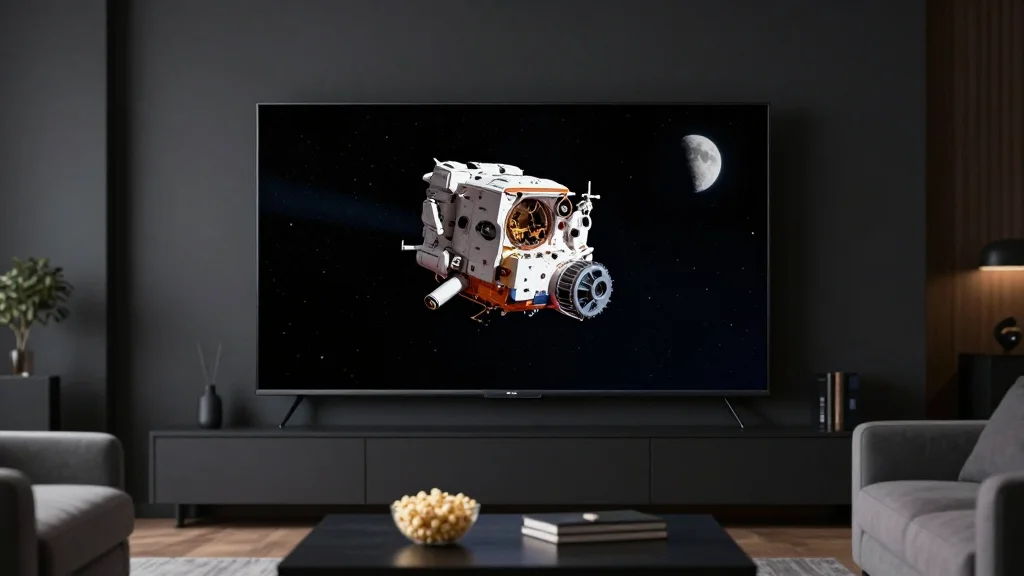
Streaming Giants Broadcast Artemis II Lunar Flyby, Marking New TV Era

Companies Mentioned

Why It Matters
The Artemis II livestream illustrates a turning point in how large‑scale scientific events are delivered to the public. By distributing the feed across both a government‑run service (NASA+) and commercial platforms, NASA maximizes audience reach while tapping into the data and monetization capabilities of private streaming firms. This model could reshape funding and outreach strategies for future missions, making space content a regular fixture on subscription services. For the television industry, the event signals that streaming platforms are now capable of handling live, mission‑critical broadcasts that were once the exclusive domain of network news. The success of the Artemis II coverage may encourage other content creators—sports leagues, cultural ceremonies, even political events—to negotiate similar multi‑platform deals, accelerating the migration of live television to the internet.
Key Takeaways
- •NASA streamed the Artemis II lunar flyby on April 6 across NASA+, Amazon Prime Video, Apple TV+, Hulu, Netflix, HBO Max, Roku and YouTube
- •Orion reached a record 252,760 miles from Earth, surpassing Apollo 13’s 248,655‑mile mark
- •The launch on April 1 drew 18.1 million broadcast viewers, according to Nielsen
- •Netflix’s partnership with NASA, announced June 2025, enables the mission feed on all subscription tiers
- •The broadcast ran from 1 p.m. to 9:45 p.m. ET, covering a 7‑hour lunar observation window and a 40‑minute communications blackout
Pulse Analysis
Historically, NASA’s most watched moments—Apollo 11, the Space Shuttle launches—were anchored to the three major broadcast networks. The Artemis II livestream flips that script, leveraging the fragmented, on‑demand nature of today’s TV ecosystem. By placing the feed on services that already command billions of subscriber hours, NASA taps into a ready‑made audience while sidestepping the logistical constraints of linear scheduling. The partnership also offers a data advantage: streaming platforms can measure engagement minute‑by‑minute, providing NASA with granular insights into viewer demographics that were impossible in the analog era.
From a commercial perspective, the deal benefits the streamers as much as the agency. Exclusive live content is a proven driver of subscriber acquisition; Netflix’s inclusion of NASA+ content adds a unique, educational hook that differentiates it from competitors. Meanwhile, the free NASA+ app ensures that the mission remains accessible to the public, preserving the agency’s mandate for open outreach. This dual‑track approach—premium on paid services, free on government platforms—creates a hybrid model that could become standard for future high‑profile events.
Looking forward, the success of the Artemis II broadcast may prompt NASA to negotiate similar arrangements for the Artemis III lunar landing and the subsequent Artemis IV missions. As the agency’s budget tightens, leveraging commercial distribution channels could become a cost‑effective way to amplify public interest and justify continued funding. For the streaming industry, the precedent sets a new bar: live, unscripted scientific events are now viable flagship programming, potentially reshaping content strategies across the board.
Streaming Giants Broadcast Artemis II Lunar Flyby, Marking New TV Era
Comments
Want to join the conversation?
Loading comments...