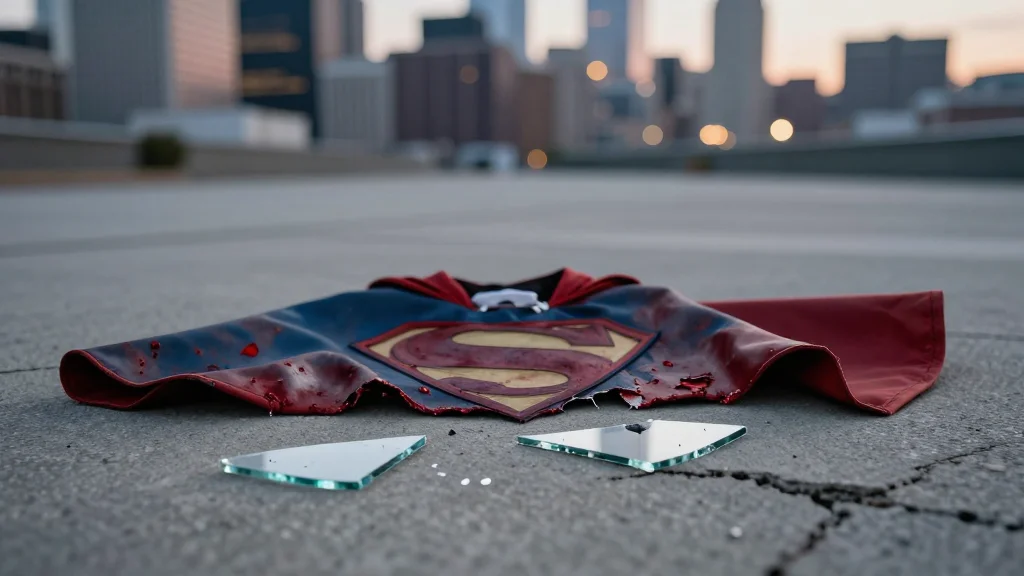
The Boys Finale Kills Homelander, Igniting Debate and Reshaping Amazon Prime

Companies Mentioned
Why It Matters
The Boys finale serves as a litmus test for how streaming giants can balance provocative storytelling with subscriber expectations. By ending on a politically charged, deliberately uncomfortable note, Amazon signals a willingness to double‑down on content that challenges cultural narratives, a strategy that could attract a niche but vocal audience while risking alienation of more mainstream viewers. The reaction from high‑profile figures like Elon Musk amplifies the conversation, turning a series finale into a broader cultural debate that can drive brand awareness and subscriber churn in either direction. Moreover, the transition to the Vought Rising spin‑off illustrates Amazon’s long‑term commitment to monetizing the franchise. The shift from present‑day satire to a period prequel may broaden the appeal to viewers less interested in overt political allegory, while preserving the lucrative Vought brand. How Amazon leverages the momentum from The Boys’ ending will likely influence its content acquisition strategy and its positioning against rivals such as Netflix and Disney+.
Key Takeaways
- •The Boys concluded after five seasons and 40 episodes, ending with Homelander's public humiliation and death.
- •Creator Eric Kripke and star Antony Starr confirmed the intentional “pathetic” ending, with Kripke saying Homelander would “go out the most pathetic way possible.”
- •Elon Musk labeled the finale “pathetic” and “fake and gay” on X, sparking a viral exchange with Kripke.
- •Amazon announced a spin‑off, Vought Rising, slated for a 2027 release, featuring Jensen Ackles and Aya Cash.
- •The finale reignited debate over the show’s political commentary, with conservatives calling Homelander a Trump analogue.
Pulse Analysis
The Boys’ finale is more than a narrative closure; it is a strategic inflection point for Amazon Prime Video’s brand identity. Historically, Amazon has leaned on data‑driven content decisions, but the series proved that a high‑risk, high‑reward approach can generate cultural cachet that transcends raw viewership metrics. By allowing the antagonist to die in a deliberately undignified fashion, the show reinforced its core premise that power is fragile and that celebrity can be weaponized against the public. This thematic consistency, even in the final act, strengthens the franchise’s intellectual property, making it a valuable asset for spin‑offs, merchandise, and cross‑media extensions.
From a market perspective, the controversy surrounding the ending—amplified by Elon Musk’s tweet—creates free‑wheel publicity that rivals paid marketing spend. While some subscribers may churn over perceived political bias, the heightened visibility can attract new viewers drawn to the series’ unapologetic tone. Amazon’s decision to green‑light Vought Rising, a period piece with a different aesthetic, suggests a hedging strategy: retain the franchise’s fan base while broadening its demographic reach. The spin‑off’s 1950s setting may also sidestep the current political climate, offering a safer narrative sandbox.
Looking ahead, Amazon must balance the allure of provocative storytelling with the need for sustainable subscriber growth. The Boys demonstrated that a bold creative gamble can cement a show’s legacy and generate ancillary revenue streams, but it also highlighted the volatility of audience sentiment in a polarized media environment. If Amazon can translate the buzz into measurable subscriber retention and leverage the Vought brand across multiple formats, it will have turned a contentious finale into a long‑term competitive advantage.
The Boys finale kills Homelander, igniting debate and reshaping Amazon Prime
Comments
Want to join the conversation?
Loading comments...