🎯Today's Wealth Management Pulse
Updated 1h agoWhat's happening: Mixing Bitcoin with Gold Offers Diversification Edge
MoneyWeek recommends pairing Bitcoin with gold through the Bold index, a risk‑weighted, monthly‑rebalanced strategy that exploits their low correlation. The article highlights that Bitcoin is deeply oversold while gold shows strong bullish momentum, creating a clear diversification opportunity. The approach is delivered via the 21Shares Bitcoin Gold ETP (LSE: BOLD) for UK investors.

Video•Mar 1, 2026
High Volatility + Reversals: The Real Reason Leveraged ETFs Underperform
The video examines why leveraged exchange‑traded funds (ETFs) tend to underperform during turbulent markets, focusing on the empirical link between volatility and serial correlation rather than volatility alone. The presenter challenges the common narrative that volatility is inherently detrimental, showing that high‑volatility episodes also generate pronounced return reversals, which exacerbate the daily rebalancing drag inherent to leveraged products. Data analysis reveals two critical forces: underlying stock returns typically weaken in high‑volatility regimes, and those regimes also experience a surge in reversal patterns. Because leveraged ETFs must reset exposure each day, they incur higher transaction costs and compounding losses when reversals dominate, a phenomenon the speaker labels “volatility decay.” The key driver is the serial covariance—the product of volatility magnitude and the strength of serial correlation—rather than volatility in isolation. The speaker underscores this point by contrasting real‑world observations with textbook models such as geometric Brownian motion, which assume independent, identically distributed returns and would predict no link between volatility and reversals. He notes, “Volatility acts as an amplifier for whatever serial correlation you have,” highlighting that the observed reversal spikes are the true source of performance erosion. For investors and product designers, the implication is clear: monitoring serial correlation and its interaction with volatility is essential for assessing leveraged ETF risk. Strategies that ignore this serial covariance may underestimate rebalancing costs, leading to unexpected losses during market turbulence.
By Rational Reminder

News•Mar 1, 2026
Calamos Market Neutral Income Strategy Q4 2025 Commentary
Calamos Market Neutral Income Strategy posted a 1.53% net return in Q4 2025, beating the Bloomberg US Government/Credit Bond Index’s 0.90% gain. The fund’s performance was driven by a strong hedged‑equity book and continued arbitrage activity, even as SPAC arbitrage...
By Seeking Alpha — Site feed

News•Mar 1, 2026
Bitcoin Losing Trillions in Value Hasn't Stopped Traditional Giants' Interest in Digital Assets Sector
At the iConnections conference in Miami, the sentiment among large allocators toward digital assets has shifted from skepticism to acceptance, with more than 75 crypto funds and roughly 750 manager‑allocator meetings mirroring pre‑crash activity. Nearly 25% of limited partners on...
By CoinDesk

Blog•Mar 1, 2026
Helping Adult Children, Pt. 2
A family gathered after a grandparent’s death to discuss the adult children’s desire to buy a home. Leveraging lessons from the HumbleDollar community, the parents offered financial support, citing an upcoming inheritance intended for grandchildren. The conversation balanced respect for...
By Humbledollar

News•Mar 1, 2026
3 Luxury Purchases You May End Up Regretting
The article warns that splurging on luxury items such as high‑end cars, oversized homes, and exclusive club memberships can quickly erode savings and hinder long‑term financial goals. It outlines how each purchase brings hidden costs—depreciation, maintenance, insurance, taxes, and lack...
By Money.com

News•Mar 1, 2026
‘Why You Should Mix Bitcoin and Gold’
The piece advocates pairing Bitcoin with gold through the Bold index, a risk‑weighted, monthly‑rebalanced strategy that exploits their low correlation. Bitcoin is currently deeply oversold while gold enjoys strong bullish momentum, creating a diversification opportunity. Bold is offered as the...
By MoneyWeek – All

News•Feb 28, 2026
Bitcoin’s Self Custody Culture Created an Inheritance Time Bomb, and 2026 May Be when It Starts Detonating
Bitcoin’s self‑custody model is now confronting an inheritance crisis as early adopters age, creating a single‑point‑of‑failure that could lock away multigenerational wealth. A Gannett Trust report flags 2026 as the year holders will begin formalizing succession plans to avoid permanent...
By CryptoSlate

News•Feb 28, 2026
Robert Kiyosaki Says the ‘Biggest Crash in History’ Is About to Hit — Warns Millions Could Lose Everything
Robert Kiyosaki warned on X that the “biggest crash in history” is about to hit, affecting global markets, jobs, and real estate. He cites geopolitical tensions, tariff uncertainties, and AI‑driven job displacement as catalysts, echoing concerns from U.S. Bank wealth...
By Yahoo Finance – Finance News

News•Feb 28, 2026
Everything You Need to Know About Roth IRAs in 2026
Roth IRAs let individuals contribute after‑tax dollars and withdraw earnings tax‑free in retirement. For 2026 the contribution cap is $7,500 ($8,600 for those 50+) and eligibility phases out between $153,000‑$168,000 for single filers and $242,000‑$252,000 for married couples. Unlike traditional...
By Money.com

News•Feb 28, 2026
Continuation Funds: What They Are and Why They Matter
Continuation funds are new private‑equity vehicles that let general partners transfer one or more portfolio companies into a separate fund, extending the holding period beyond the typical ten‑year life. They give limited partners a choice to cash out or roll...
By Advisor Perspectives
Blog•Feb 28, 2026
HSA Tips
Health Savings Accounts (HSAs) provide a rare triple‑tax advantage—deductible contributions, tax‑free earnings, and tax‑free withdrawals for qualified medical costs. For 2026, contribution limits rise to $4,400 for individuals and $8,750 for families, with a $1,000 catch‑up for those 55+. Savvy...
By Humbledollar

News•Feb 27, 2026
DOL Moves to Undo Stricter Independence Test for Brokers
The Department of Labor has issued a proposal that would replace the Biden‑era “totality of the circumstances” test with a simpler “economic reality” test for determining independent‑contractor status. The change is aimed at easing the classification process for brokerage advisors,...
By Financial Planning (Arizent)

News•Feb 27, 2026
Do You Have to Report Inheritance on Your Taxes? Rules for Beneficiaries
Beneficiaries generally do not report an inheritance as income on their federal tax return, but any income the inherited assets generate—such as interest, dividends, rent, or distributions—must be reported. Cash, stocks, bonds, real estate, and retirement accounts each have distinct...
By SmartAsset – Blog
News•Feb 27, 2026
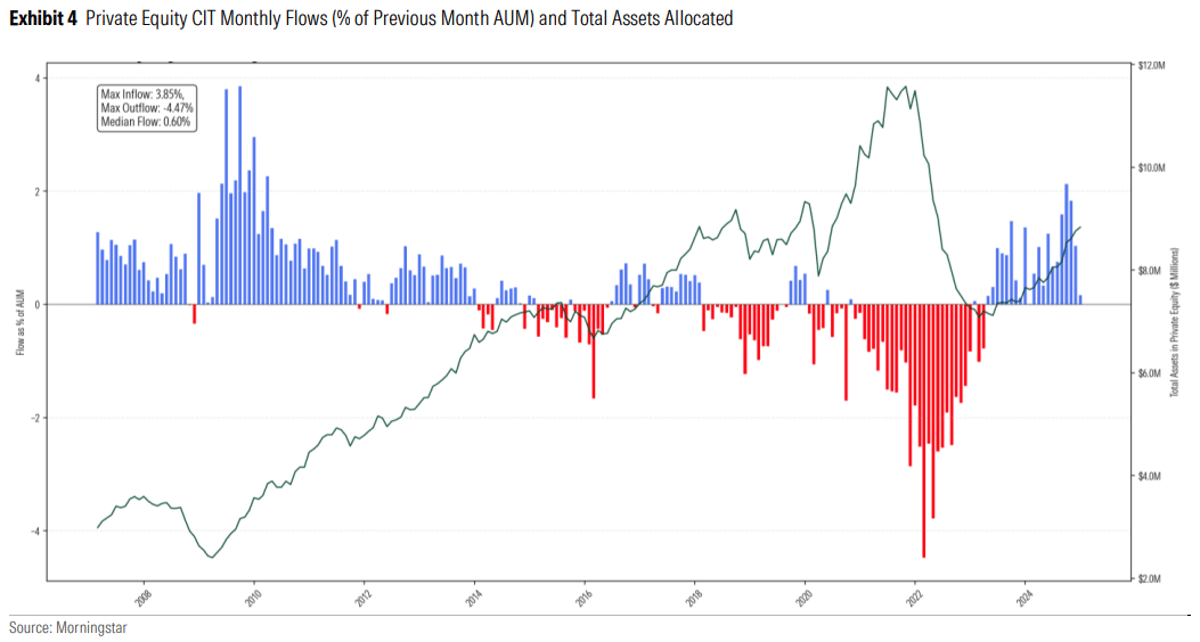
Private Markets in 401(k)s Face Major Liquidity Challenges: Morningstar
Morningstar’s new research shows that liquidity, not performance, is the primary obstacle for private‑equity and credit products in 401(k) plans. Simulations using real participant data reveal that even modest redemption flows can exhaust liquidity buffers, forcing managers to allocate up...
By Financial Planning (Arizent)

News•Feb 27, 2026
Tax Implications of Adding a Spouse to a Deed: Rules and Tips
Adding a spouse to a property deed is a common estate‑planning move that changes legal ownership without necessarily triggering immediate federal income tax. The transfer is generally treated as a gift, but the unlimited marital deduction shields U.S. citizen spouses...
By SmartAsset – Blog

News•Feb 27, 2026
5 Investments That Can Add Income After You Retire
The article outlines five key investments—dividend‑paying stocks, bonds, annuities, Treasury‑linked instruments, and income‑focused funds—that can generate reliable cash flow for retirees. It recommends a balanced allocation of roughly 35‑45% fixed income, 30‑40% equities, 10‑15% cash, and 5‑15% alternatives to manage...
By SmartAsset – Blog

Video•Feb 26, 2026
Why the Wealthy Love Bitcoin Crashes
The video explains why Bitcoin’s price drops attract affluent investors, focusing on how they leverage tax‑advantaged retirement vehicles—especially Roth conversions and self‑directed crypto IRAs—to turn market volatility into a tax‑saving opportunity. Klein outlines the specific tools: SEP and SIMPLE IRAs, Solo...
By Anthony Pompliano

Video•Feb 25, 2026
US-Iran Tensions: What the Options Market Is Telling Investors
The video examines how the options market is reflecting investor expectations amid rising U.S.-Iran tensions, highlighting that traders are pricing in a more hostile scenario. Data points show the put‑call skew on the S&P 500 (Triple Q) is as wide as...
By Bloomberg Television

Video•Feb 25, 2026
Bloomberg Surveillance 2/25/2026
Bloomberg Surveillance aired on February 25, 2026 centered on President Donald Trump’s State of the Union address and its implications for the U.S. economy and markets. The hosts highlighted a surprisingly resilient macro backdrop—low mortgage rates, a declining inflation headline,...
By Bloomberg Television
Video•Feb 25, 2026
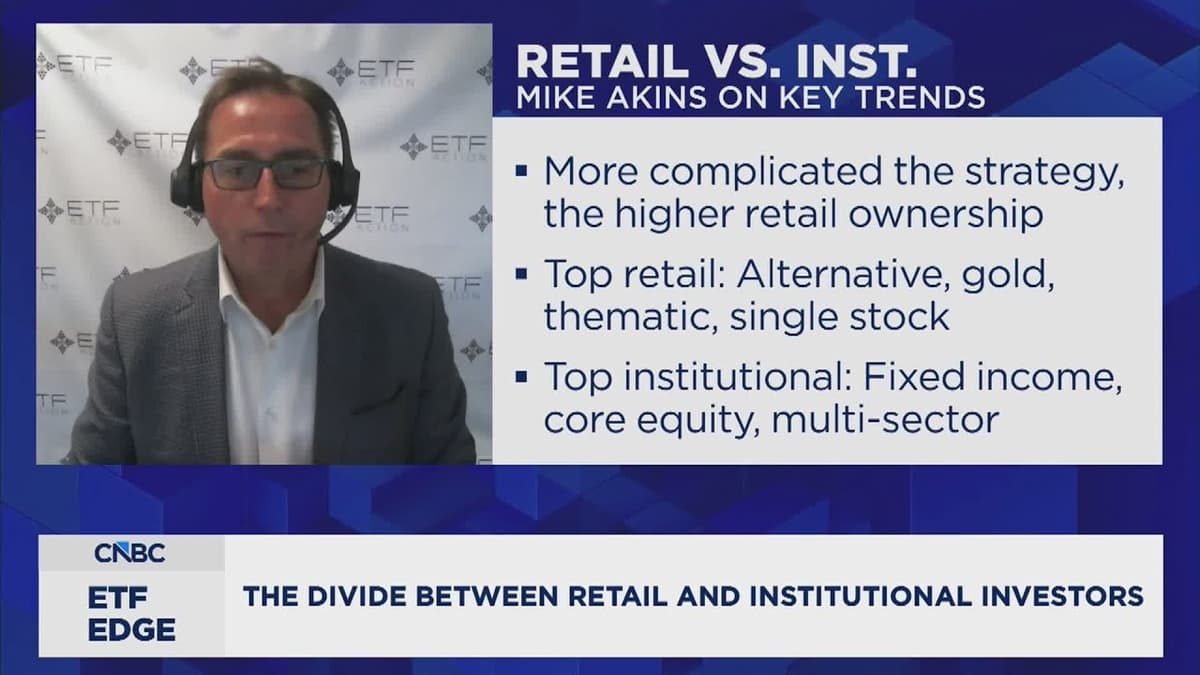
ETF Industry ‘Not Going to Run Out of Innovation’, Says ETF Action Founder
The discussion centers on the ETF industry’s evolving innovation landscape, highlighted by founder Mike of ETF Action. He explains how the market now hosts roughly 5,000 funds managing about $14 trillion, with a clear split between traditional passive products and a...
By CNBC Television

Video•Feb 25, 2026
David Tepper Sends Scathing Letter to Whirlpool for Destroying Shareholder Value, Pushes for Changes
Activist billionaire David Tepper, founder of Appaloosa Management, sent a sharply worded letter to Whirlpool’s board accusing the appliance maker’s leadership of erasing hundreds of millions of dollars in shareholder value. Tepper singled out the recent equity raise, which he says...
By CNBC Television

Video•Feb 25, 2026
Tariffs, Taxes and AI Power Plans Dominate Outlook After the State of the Union
The recent State of the Union, though lengthy, offered few new policy announcements but highlighted three pillars—tariffs, health‑care subsidies, and a power‑infrastructure push for AI firms—that will shape market expectations. Both UBS’s Marc Anderson and Veda Partners’ Henrietta Treyz agreed that...
By CNBC Television
Video•Feb 25, 2026
How History Will Judge Fed Chair Jerome Powell | Trader Talk
The Trader Talk episode centers on Jerome Powell’s legacy and the looming transition to new Fed Chair Worsh. Panelists dissect how Powell’s insistence that inflation was "transitory" clashed with reality, and they argue that his backward‑looking stance delayed the...
By Yahoo Finance