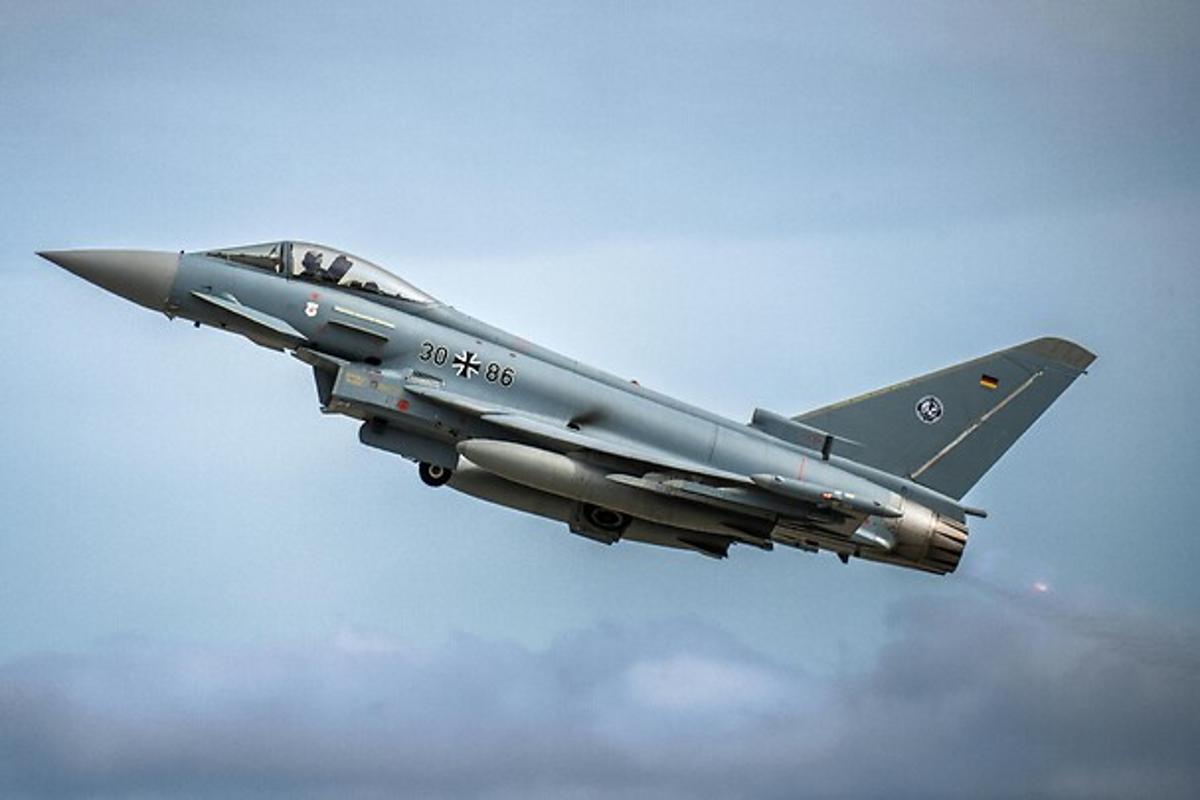
Air Policing in Romania: “With the Eurofighter We Can Respond at a Moment's Notice”
Why It Matters
The deployment fortifies NATO’s collective air defence, deterring Russian aggression and safeguarding critical Black Sea airspace.
Key Takeaways
- •German Eurofighters stationed in Romania since August 2025.
- •Five jets and ~170 personnel support NATO air policing.
- •Quick Reaction Alerts intercept drones and unauthorized aircraft.
- •Over ten Russian drone alerts triggered ‘alpha scrambles’.
- •Daily joint exercises ensure readiness and interoperability.
Pulse Analysis
NATO’s enhanced air policing framework has evolved from a seasonal safeguard into a permanent shield along Europe’s eastern perimeter, especially after Russia’s 2022 invasion of Ukraine. By positioning German Eurofighters at Mihail Kogălniceanu, the alliance projects power directly over the Black Sea corridor, a region where maritime routes and energy pipelines intersect with heightened geopolitical tension. The forward‑deployed fleet complements similar assets in the Baltics, creating a layered deterrent that can react to incursions before they threaten NATO airspace.
The German detachment operates under a Quick Reaction Alert (QRA) model, demanding that pilots and ground crews launch within minutes of an alarm. Five multi‑role Eurofighters, equipped with interchangeable sensors and precision munitions, provide the speed and flexibility needed to counter both manned aircraft and increasingly sophisticated unmanned systems. Integration with Romania’s Air Force and other NATO partners is reinforced through daily joint exercises, which test communication links, data‑fusion protocols, and logistical support, ensuring that the Eurofighter can seamlessly interoperate with allied platforms.
Beyond immediate tactical gains, the Romanian deployment signals a long‑term commitment to collective security in a region where Russian drone activity has already generated more than ten “alpha scrambles.” The visible presence of cutting‑edge fighters serves as a strategic deterrent, discouraging escalation while reassuring member states. As drone threats proliferate, NATO may expand similar forward‑based air policing units, leveraging the Eurofighter’s adaptability to maintain air superiority and uphold the alliance’s credibility across its eastern flank.
Air policing in Romania: “With the Eurofighter we can respond at a moment's notice”


Comments
Want to join the conversation?
Loading comments...