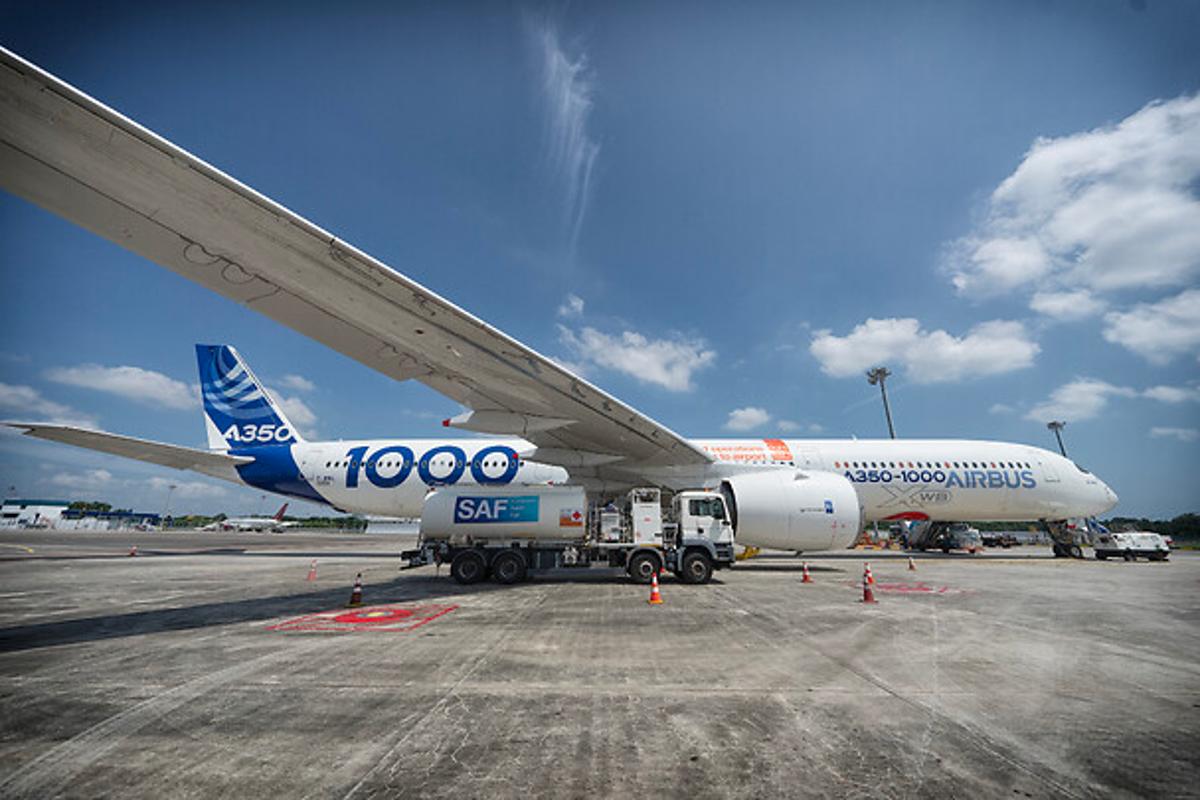
Decarbonising Air Travel in Asia-Pacific with SAF
Companies Mentioned
Why It Matters
Rapid air‑travel growth makes decarbonisation essential for climate resilience and economic stability; scaling SAF and hydrogen infrastructure will cut emissions, create jobs, and protect the region’s connectivity.
Key Takeaways
- •Asia‑Pacific to double passengers by 2043.
- •Region aims 40% of global SAF production by 2050.
- •Singapore SAF levy starts Oct 2026, targeting 1% blend.
- •Airbus invested $270M in regional SAF projects.
- •Hydrogen hub pilots launch at Singapore and Japanese airports.
Pulse Analysis
Asia‑Pacific’s aviation boom is reshaping the global travel landscape, but the region’s geography also makes it a frontline for climate impacts such as sea‑level rise and extreme weather. As middle‑class incomes rise, demand for air connectivity surges, creating a paradox where the very mode of transport that fuels economic growth also threatens environmental stability. Understanding this dynamic is crucial for investors and policymakers who must balance expansion with sustainability.
Policy momentum is accelerating. Singapore’s SAF levy, Japan’s 10% target by 2030, South Korea’s 1% mandate from 2027, and Australia’s AUD 1.1 billion incentive package illustrate a coordinated push toward low‑carbon fuels. These measures aim to capture 40% of the world’s SAF output by 2050, positioning the region as a production hub. Airbus leverages this environment through strategic investments—$200 million with Qantas, $70 million with Cathay, and joint ventures with feedstock owners—thereby de‑risking supply chains and harmonising standards across borders.
Beyond SAF, the industry is testing hydrogen as a complementary pathway. Initiatives like the Hydrogen Hubs at Airports network, active at Changi and Kansai, explore liquid‑hydrogen infrastructure for future aircraft. By embedding community benefits—such as converting agricultural residues into fuel and revitalising remote economies—the transition promises a just, resilient energy future. For airlines, investors, and governments, the convergence of market growth, regulatory frameworks, and technological innovation offers a roadmap to decarbonise one of the world’s most critical transport sectors.
Decarbonising air travel in Asia-Pacific with SAF


Comments
Want to join the conversation?
Loading comments...