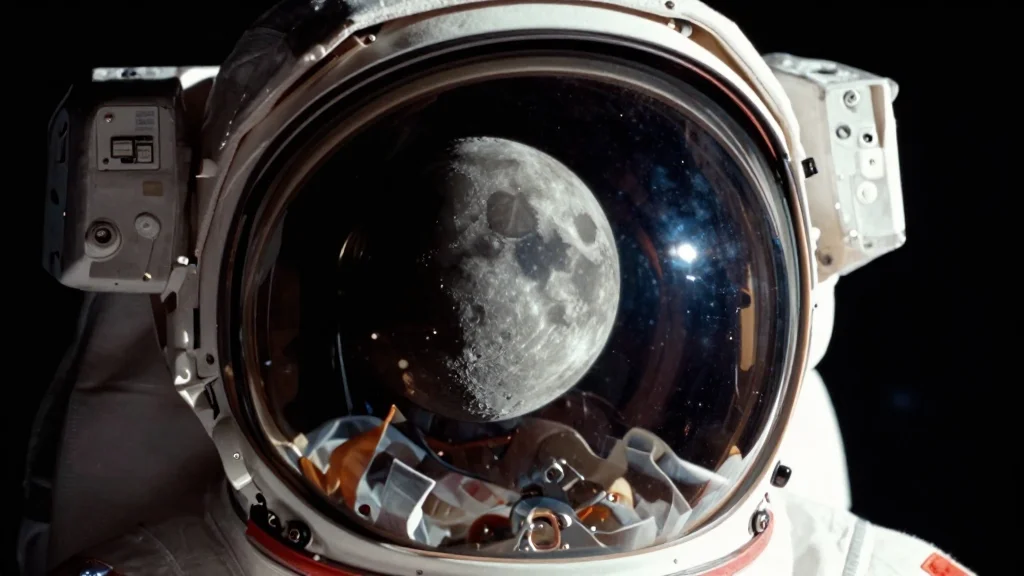
NASA’s Artemis II Captures Rare ‘Earthset’ as Crew Endures Communication Blackout

Why It Matters
Artemis II’s Earthset photograph provides the first crewed visual of Earth disappearing behind the Moon, a data point that will improve navigation and illumination modeling for future lunar landings. The brief communications blackout, though quickly resolved, highlights the fragility of deep‑space links and the need for redundant, autonomous systems as NASA pushes farther from Earth. Together, these events inform the safety protocols, engineering designs, and commercial opportunities that will define the next era of human space exploration. Beyond the technical realm, the astronaut’s personal reaction—saying a prayer during the silence—humanizes the challenges of deep‑space travel and underscores the psychological support required for crews operating far from immediate assistance. As Artemis III prepares to put humans back on the Moon, lessons from Artemis II will shape crew training, mission planning, and public confidence in NASA’s lunar ambitions.
Key Takeaways
- •Artemis II captured the first crewed "Earthset" image on flight day 6, showing Earth disappearing behind the Moon.
- •The crew also recorded an "Earthrise" and a solar eclipse during the same lunar orbit.
- •A two‑minute communications blackout occurred due to antenna misalignment, prompting the astronaut to say a prayer.
- •NASA restored contact via backup systems, confirming redundancy protocols work as designed.
- •Data from the mission will feed into navigation, illumination modeling, and communication design for Artemis III.
Pulse Analysis
Artemis II’s visual milestones signal a shift from purely robotic lunar reconnaissance to human‑centric observation, a transition that could accelerate commercial interest in lunar‑orbit services. The Earthset image not only satisfies a scientific curiosity but also serves as a calibration reference for future autonomous landing systems, which must account for rapidly changing lighting conditions. Companies developing lunar navigation software will likely leverage this data to refine their algorithms, potentially shortening the time needed to certify lander guidance packages.
The communications blackout, while brief, exposes a systemic vulnerability: reliance on precise antenna pointing during dynamic maneuvers. As NASA and its commercial partners plan longer missions—such as Artemis III’s surface stay and eventual Mars transit—robust, self‑healing communication architectures will become a competitive differentiator. Expect a surge in investment for high‑gain, gimbaled antennas and AI‑driven fault detection that can pre‑emptively correct misalignments.
Strategically, Artemis II reinforces the United States’ leadership in deep‑space crewed flight, a narrative that influences both domestic policy and international partnerships. Nations watching the mission’s successes and setbacks will calibrate their own lunar ambitions, potentially prompting new bilateral agreements or competition in lunar resource extraction. In the near term, the mission’s outcomes will shape the budgetary and technical roadmap for Artemis III, dictating launch schedules, crew composition, and the readiness of the Lunar Gateway as a staging point.
Overall, the blend of scientific discovery and operational learning from Artemis II provides a template for how future deep‑space missions can balance exploration goals with the pragmatic demands of safety and reliability, setting the tone for the next decade of human spaceflight.
NASA’s Artemis II Captures Rare ‘Earthset’ as Crew Endures Communication Blackout
Comments
Want to join the conversation?
Loading comments...