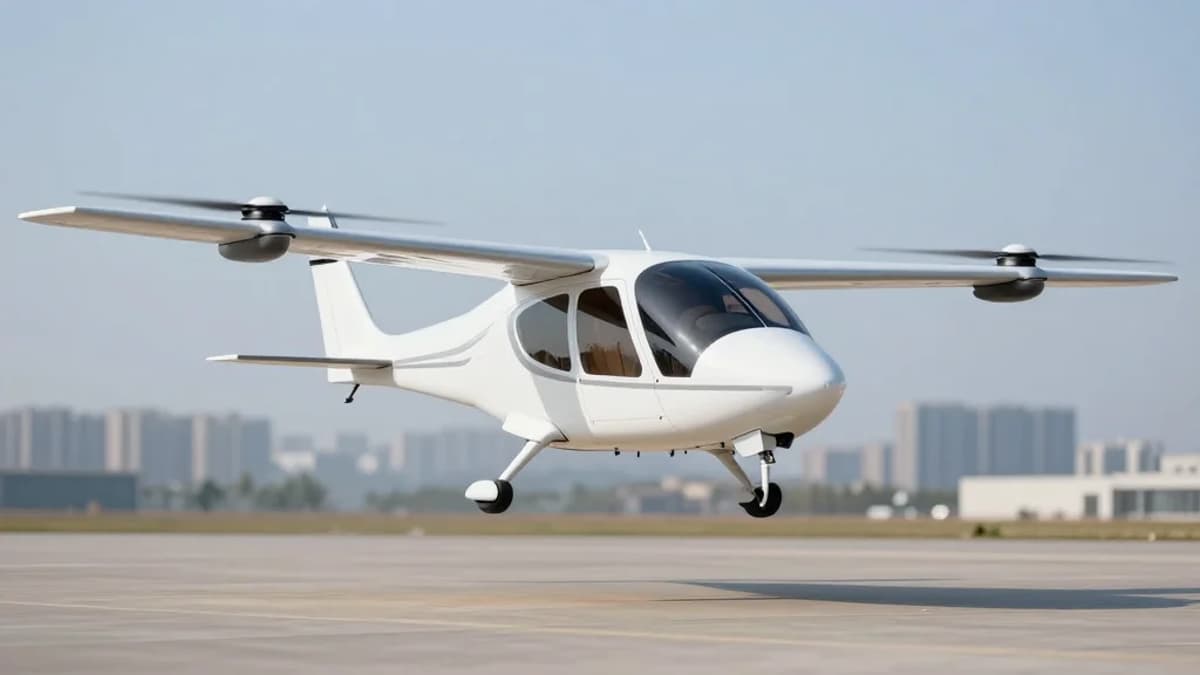
Outlook 2026: The State of the Major eVTOL Projects
Key Takeaways
- •Lilium, Volocopter, Supernal, CityAirbus exited 2024‑25.
- •Only EHang EH216‑S holds Chinese certification and AOC.
- •Remaining projects target 2027+ certification.
- •Current eVTOL missions limited to 10‑15 minutes, fair weather.
- •Early hype ignored trade‑offs between range, speed, endurance.
Summary
The eVTOL sector suffered a sharp contraction in 2025 as Lilium, Volocopter, Hyundai’s Supernal, Airbus’s CityAirbus, Textron’s Nexus and Overair all ceased development or shut down. Only China’s EHang EH216‑S achieved full certification, receiving a Type Certificate in 2023, a Production Certificate in 2024 and an Air Operator Certificate in 2025 for tourist flights. All other major projects remain far from certification, with timelines pushed to 2027 or later. Current operational use is limited to short, fair‑weather hops replacing helicopter shuttles.
Pulse Analysis
The eVTOL boom of the early 2020s gave way to a sobering reality in 2025, as a cascade of high‑profile failures exposed the gap between visionary promises and engineering feasibility. Companies like Lilium and Volocopter, once heralded as the future of urban air mobility, folded under mounting technical challenges, regulatory hurdles, and capital shortages. This wave of exits underscores the sector’s shift from speculative hype to a more disciplined, risk‑aware approach, where only projects with clear certification roadmaps survive.
Amid the downturn, EHang’s EH216‑S stands as the sole certified eVTOL, having secured Chinese Type, Production, and Air Operator Certificates between 2023 and 2025. Its limited 10‑ to 15‑minute, fair‑weather missions illustrate the near‑term niche that urban air mobility can realistically fill—primarily short‑range airport‑to‑city shuttles replacing helicopters. Regulators worldwide are tightening certification criteria, emphasizing safety, noise, and battery reliability, which pushes most Western developers to target 2027 or beyond for market entry.
For investors and OEMs, the lesson is clear: future growth hinges on incremental certification milestones, robust battery technology, and viable business models rather than grandiose range or speed claims. Companies that align product development with realistic operational envelopes and secure early regulatory approvals are poised to capture the emerging demand for short‑haul aerial services. The industry’s consolidation may ultimately yield a more sustainable urban air mobility ecosystem, but patience and capital discipline will be essential as the next wave of eVTOLs prepares for certification in the late 2020s.


Comments
Want to join the conversation?