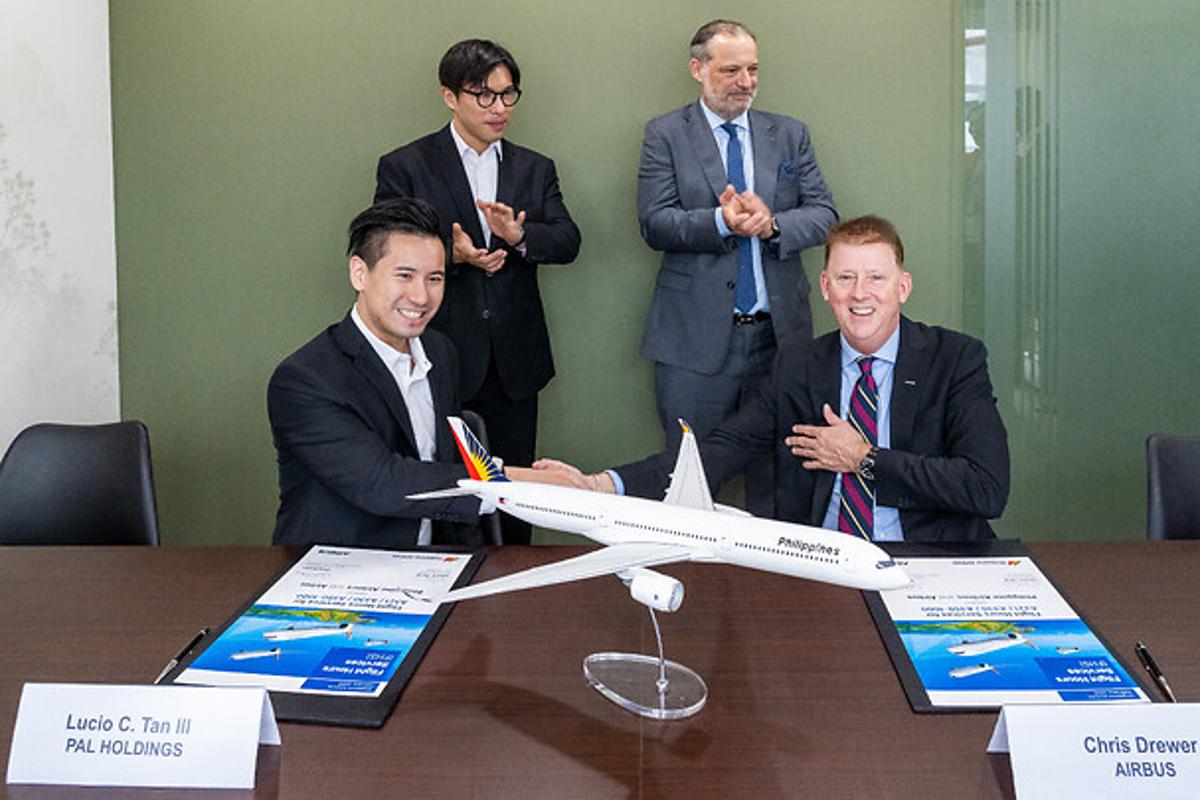
Philippine Airlines Extends FHS Support Agreements Across Its Airbus Fleet
Companies Mentioned
Why It Matters
The extended FHS deal gives PAL predictable, long‑term maintenance costs while improving fleet uptime, a critical advantage as the airline expands regional routes. It also reinforces Airbus’s position as a leading provider of power‑by‑the‑hour services in the Asia‑Pacific market.
Key Takeaways
- •PAL extends FHS to entire Airbus fleet
- •Covers 9 A350‑1000, 11 A330, 43 A320 aircraft
- •Includes on‑site stock and component reliability services
- •Enhances fleet availability, reduces maintenance cost volatility
Pulse Analysis
Philippine Airlines’ decision to broaden its Flight Hour Services (FHS) contract reflects a strategic push to secure operational resilience across a rapidly growing fleet. With a mix of long‑haul A350‑1000s and high‑frequency A320 and A330 aircraft, PAL faces intense pressure to maintain high dispatch reliability while containing costs. The FHS model, which bundles component replacement, repair and engineering expertise under a predictable hourly rate, aligns with the airline’s ambition to scale routes throughout Southeast Asia without sacrificing service quality.
The new agreement deepens Airbus’s involvement by adding on‑site spare‑parts inventory at PAL’s Manila base, a move that shortens turnaround times and reduces aircraft on‑ground incidents. Leveraging Airbus’s digital health‑monitoring platforms, PAL will gain real‑time insights into component wear, enabling proactive maintenance and further smoothing cost volatility. For an airline that has historically relied on ad‑hoc repairs, the shift to a data‑driven, power‑by‑the‑hour framework promises tighter budget control and higher fleet utilization, essential metrics for competing against low‑cost carriers in the region.
Industry‑wide, the deal signals growing confidence in integrated, multi‑fleet support solutions, especially in the Asia‑Pacific where airlines are modernising fleets at pace. Airbus’s FHS dominance in the A330/A350 segment positions it to capture more of the aftermarket revenue stream, challenging traditional MRO players. As airlines worldwide seek to lock in cost certainty amid fluctuating fuel prices and labor markets, such long‑term service contracts are likely to become a standard component of fleet strategy, shaping the competitive dynamics of commercial aviation for years to come.
Philippine Airlines extends FHS support agreements across its Airbus fleet


Comments
Want to join the conversation?
Loading comments...