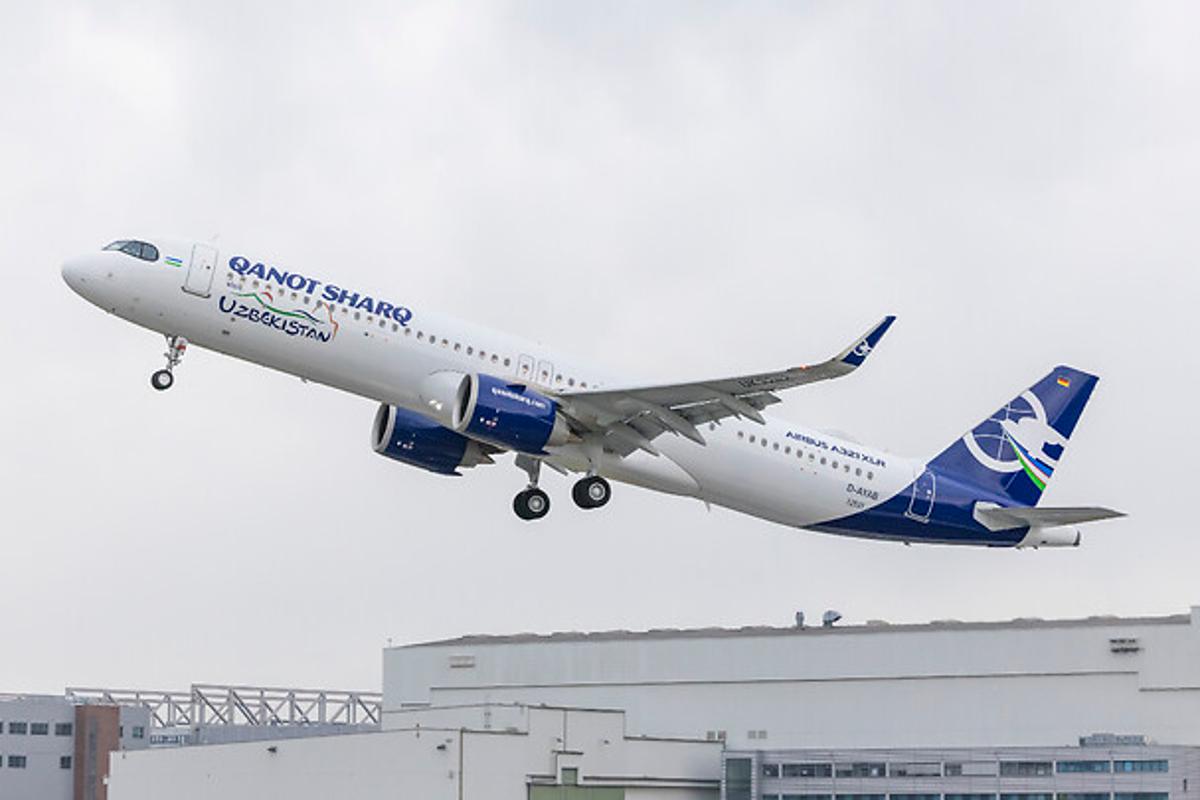
Qanot Sharq Takes Delivery of Its First Airbus A321XLR Aircraft
Companies Mentioned
Why It Matters
The delivery gives Qanot Sharq a competitive edge in long‑haul connectivity while showcasing the A321XLR’s efficiency, positioning the carrier for growth in high‑margin international markets.
Key Takeaways
- •First A321XLR operator in Central Asia and CIS
- •Four‑plane lease from Air Lease expands fleet capacity
- •190‑seat layout includes 16 flat‑bed business seats
- •30% lower seat‑fuel burn versus older rivals
- •Capable of 4,700 nm range, enabling New York route
Pulse Analysis
The Airbus A321XLR represents a pivotal evolution in the single‑aisle market, delivering ultra‑long‑range capability that bridges the gap between traditional narrow‑body and wide‑body aircraft. For Qanot Sharq, adopting this platform signals a strategic shift toward higher‑yield routes, leveraging the aircraft’s 190‑seat configuration and modern cabin amenities to attract premium travelers. By securing a lease from Air Lease, the airline mitigates capital risk while rapidly modernising its fleet, a move that aligns with the broader trend of emerging carriers upgrading to fuel‑efficient jets.
Qanot Sharq’s route blueprint—targeting Asian hubs like Sanya and Busan, and a trans‑Atlantic service to New York via Budapest—exploits the A321XLR’s 4,700‑nautical‑mile range. This enables the carrier to tap lucrative long‑haul markets without the cost structure of larger wide‑bodies, potentially increasing load factors and yield per seat. The new connectivity also strengthens Uzbekistan’s position as a regional gateway, fostering tourism and trade flows that benefit ancillary sectors such as hospitality and logistics.
Beyond commercial advantages, the A321XLR’s environmental credentials are noteworthy. With a 30% reduction in fuel burn per seat and compatibility with up to 50% Sustainable Aviation Fuel today, the aircraft aligns with global decarbonisation goals. Airbus’s roadmap toward 100% SAF capability by 2030 further enhances the aircraft’s appeal to eco‑conscious passengers and regulators. Qanot Sharq’s early adoption may serve as a benchmark for other Central Asian airlines seeking to balance growth with sustainability, reinforcing the A321XLR’s role as a catalyst for greener, more efficient long‑haul operations.
Qanot Sharq takes delivery of its first Airbus A321XLR aircraft


Comments
Want to join the conversation?
Loading comments...