GrowthRise Mastermind Recap May 12, 2026

Companies Mentioned
Why It Matters
By targeting intent signals and investing in long‑term awareness, high‑value sellers can expand pipelines and stay visible in emerging AI‑assisted buying journeys, turning a niche market into sustainable revenue growth.
Key Takeaways
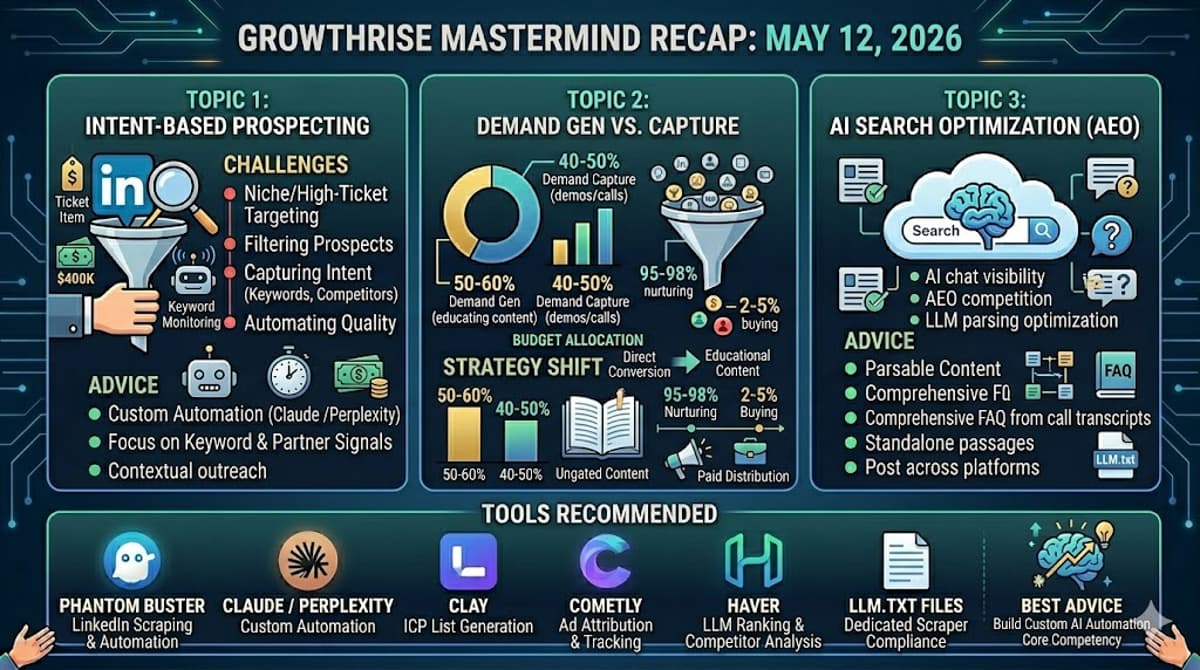
- •AI tools automate LinkedIn scraping, messaging, and intent detection
- •Shift spend to 50‑60% demand generation, 40‑50% capture
- •Ungated educational content fuels long‑term prospect awareness
- •Structure pages for LLM parsing with self‑contained FAQ blocks
- •Custom AI workflows become essential competitive advantage
Pulse Analysis
The mastermind underscored that selling a $400 K annual solution requires more than cold outreach; it demands intent‑based prospecting that pinpoints prospects showing genuine interest. By leveraging generative AI models such as Claude or Perplexity, marketers can build custom pipelines that scrape LinkedIn activity, monitor keyword spikes, and trigger personalized connection requests. Tools like PhantomBuster and Clay automate data collection while preserving context, allowing sales teams to engage at the moment a prospect interacts with a competitor or relevant ecosystem partner. This AI‑driven workflow reduces manual effort and improves signal‑to‑noise ratio.
Equally critical is the reallocation of marketing spend. The session argued that only 2‑5 % of a target market is actively buying, leaving the remaining 95‑98 % in a longer consideration phase. Shifting 50‑60 % of the budget to demand generation—through ungated case studies, webinars, and thought‑leadership pieces—creates sustained brand recall. Paid media amplifies these assets, feeding prospects into a nurture track that converts once they enter the six‑to‑twelve‑month buying window. This balanced approach steadies pipeline velocity and lowers cost per acquisition.
Finally, the rise of AI‑enhanced search (AEO) forces companies to rethink SEO. Large language models retrieve concise, self‑contained answers, so content must be modular, with clear FAQs derived from sales transcripts and an upfront statement of ideal‑customer profile and use cases. Publishing LLM‑friendly files such as LLM.txt and maintaining a robust help center signals credibility to both bots and human reviewers. By aligning on‑page structure with LLM parsing rules, firms improve visibility in AI‑driven buying journeys, turning algorithmic relevance into a competitive moat.
GrowthRise Mastermind Recap May 12, 2026
Comments
Want to join the conversation?
Loading comments...