
Video•Feb 27, 2026
What Businesses Can Learn From Block's 40% AI Layoff, the Death of Marketers, New Marketing Channel
The conversation centers on today’s turbulent business climate, highlighted by Block’s recent 40% workforce reduction and the broader narrative that marketers are dying amid a flood of AI tools. The hosts argue that while AI hype is intense, the reality is that most of the world—about 84%—has yet to use any AI, making the current environment a crucible for firms that can adapt quickly. Key insights include the notion that chaos weeds out the weak; companies that double‑down on core tactics—paid ads, SEO, social—while integrating AI as an intelligence amplifier will capture market share when competitors retreat. Data points cited range from the early‑stage AI adoption curve (only 0.04% using advanced coding scaffolds) to the U.S. adult usage hovering around 60%, underscoring a massive growth runway. The speakers stress that AI magnifies existing capabilities, turning both talent and leadership into either assets or liabilities. Notable examples pepper the dialogue: Block’s massive layoff serves as a cautionary tale about misaligned AI strategy; Jensen Huang’s reflection that NVIDIA took 15 years to find its stride illustrates the long‑term patience required. An on‑stage anecdote describes a 2,000‑employee firm where executives complained about non‑AI‑enabled staff, prompting a hard‑line stance that resistant employees be retrained or, if unwilling, let go. The hosts also share their own company’s mandatory hackathons, office‑hour help desks, and peer‑pairing to force AI fluency. The implication for businesses is clear: treat the current upheaval as a strategic inflection point. Build a culture of continuous learning, prioritize AI‑enabled talent, and avoid complacency by competing not just with early adopters but with the emerging elite of AI‑savvy firms. Those who embrace the chaos and embed AI responsibly will emerge stronger as the market accelerates.
By Eric Siu
Video•Feb 27, 2026
The Mindset Behind the "Customer Voice" Approach
The video explains that the “customer voice” mindset requires sellers to step out of their product‑centric bubble and enter the buyer’s world before any pitch. It stresses using the buyer’s own language—priorities, pain points, and terminology—rather than internal jargon, especially during...
By Jason Bay
![Win the Demand-Gen Game in 39 Days With This System [VIDEO]](/cdn-cgi/image/width=1200,quality=75,format=auto,fit=cover/https://i.ytimg.com/vi/xeg-Jpf5yts/maxresdefault.jpg)
Video•Feb 27, 2026
Win the Demand-Gen Game in 39 Days With This System [VIDEO]
The video introduces a “GTM Survivor Island” framework that promises marketers to win demand‑generation in 39 days by treating the go‑to‑market process like a reality‑show competition. Josh Bayz, senior demand‑gen manager at Netline, outlines three phases—lighting the signal fire (day 1),...
By Content Marketing Institute

Video•Feb 26, 2026
What a Secret Service Interrogator Can Teach You About Building Trust in Sales
Brad Beeler, a retired Secret Service polygraph specialist, reveals that the same instincts that compel criminals to confess also drive buyer behavior in sales. He explains that prospects instinctively assign "horns"—a threat signal— to salespeople within the first moments of...
By Jeb Blount (Sales Gravy)
Video•Feb 26, 2026
Ep. 390 | Personalizing Your Pitch to Connect and Convert Faster
In this episode Mark Hunter interviews Jamie Diglio, founder of The Win Room, who reframes ROI as “return on interactions” and urges sellers to prioritize memorable, personalized conversations over formulaic pitches. Diglio teaches salespeople and leaders to develop a “leadership...
By The Sales Hunter Live/Shorts (Mark Hunter)
Video•Feb 26, 2026
Nail the Problem when You Lack Brand Notoriety
In the Outbound Kitchen sales podcast, Jason Bay outlines a cold‑calling playbook designed for companies with limited brand notoriety. He recommends starting calls with permission‑based openers, then shifting to problem‑focused language that highlights the prospect’s pain points. The framework culminates...
By Jason Bay

Video•Feb 26, 2026
Why Aggressive Sales Tactics Fail: Tone This Down When Selling
Aggressive, fear‑based sales tactics—such as over‑amplifying pain points, shaming prospects, or bashing competitors—are backfiring in today’s buyer‑centric market. Nikki Rausch explains that these approaches erode trust and often drive prospects away. Instead, the most successful sellers focus on clear, value‑driven...
By Sales Maven (Nikki Rausch)
Video•Feb 26, 2026
Ai-Media CEO Says Future Growth Is Not Lost in Translation
AI-Media Technologies reported an 80% jump in annual recurring revenue (ARR) to $30 million in the first half of the year, prompting the company to lift its full‑year ARR growth guidance from 35% to 50%. The firm is shedding legacy services,...
By ausbiz
Video•Feb 25, 2026
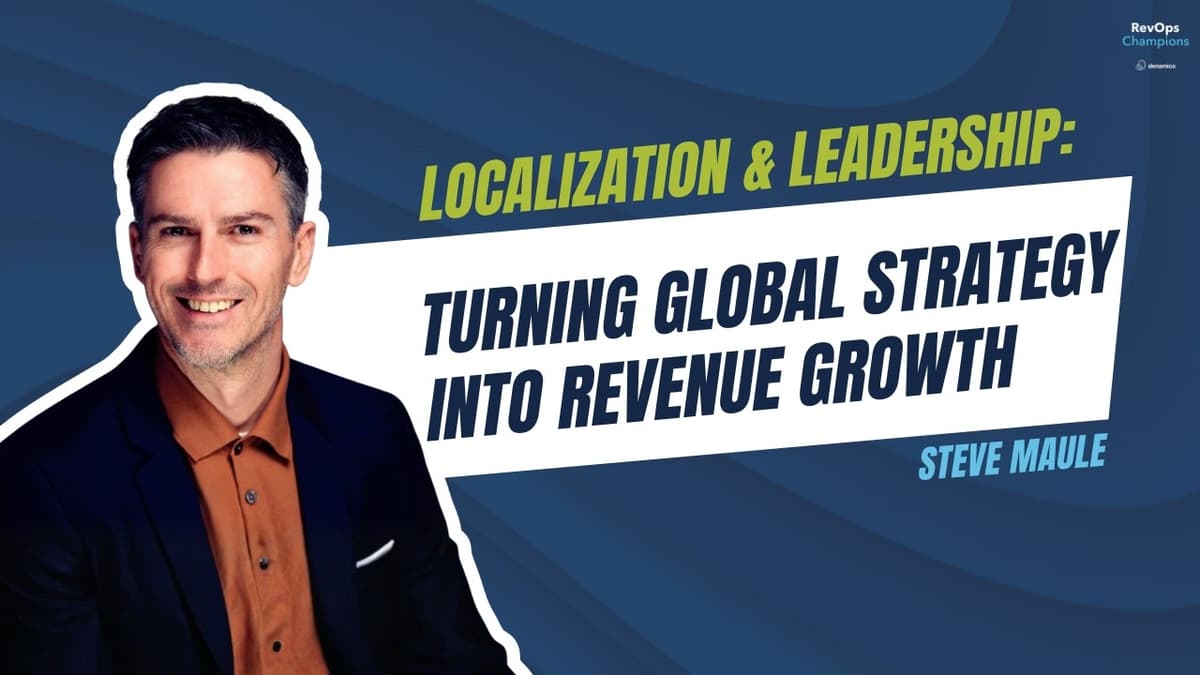
108 | Localization & Leadership: Turning Global Strategy Into Revenue Growth | Steve Maule
Steve Maule, VP of Global Sales at Acclaro, discusses how revenue teams can sustain rapid growth by prioritizing clarity and communication. He outlines two levers leaders need to keep go‑to‑market teams aligned and introduces a structured go/no‑go qualification framework. The...
By RevOps Champions
Video•Feb 25, 2026
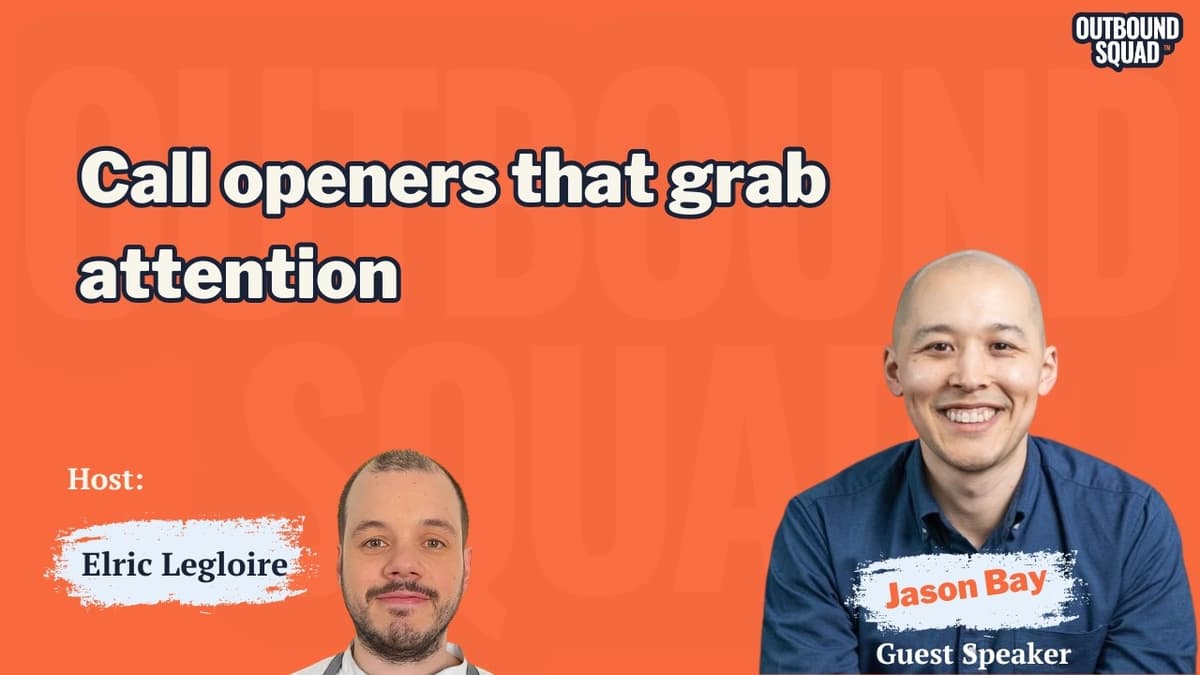
Call Openers that Grab Attention
Jason Bay appeared on the Outbound Kitchen Sales Podcast to reveal a structured cold‑calling framework. He emphasizes using permission‑based openers, problem‑centric language, and a clear, compelling offer to lift connect rates. The approach aims to generate genuine interest and secure...
By Jason Bay
![How To Make Sales Enablement Content That Sales Loves to Use [the READY Framework]](/cdn-cgi/image/width=1200,quality=75,format=auto,fit=cover/https://i.ytimg.com/vi/JCj3ReX-Tb4/maxresdefault.jpg)
Video•Feb 25, 2026
How To Make Sales Enablement Content That Sales Loves to Use [the READY Framework]
The video introduces the READY framework—a practical checklist that marketers can apply to every piece of sales‑enablement content before it reaches the field. Positioned within the broader Revco (Revenue Content Operations) model, READY ensures that assets move beyond polished marketing...
By A. Lee Judge
Video•Feb 25, 2026
The LinkedIn Event Marketing Hacks No One Talks About
In a deep‑dive with AJ Wilcox, Jack Caspino of Contact Level reveals LinkedIn event marketing tactics that top B2B marketers keep private. The discussion covers a free LinkedIn post‑feed hack to locate conference attendees, repurposing last year’s attendee list for...
By AJ Wilcox (B2Linked)

Video•Feb 24, 2026
5 of My Favorite AI Marketing Tools 💡
The creator walks viewers through five AI‑driven utilities that promise to streamline marketing, development, and communication workflows, positioning each as a revenue‑boosting asset. Mobin generates custom landing‑page screens by interpreting user‑provided preferences, while Granola ingests meeting transcripts and lets users query...
By Eric Siu

Video•Feb 24, 2026
AI Chips, Software Profit & Atlassian's Growth HACK! #shorts
The short‑form video stitches together a rapid‑fire commentary on the current state of SaaS growth, AI‑chip economics and Atlassian’s latest earnings, highlighting how profit and revenue stacks are being reshuffled amid the AI boom. Atlassian reported a 23 % year‑over‑year revenue increase...
By Jason Lemkin

Video•Feb 24, 2026
Claude Code or N8n? (What I'm Doing in My $1M/Mo Business)
In the video, Lee Jenj, who runs two eight‑figure agencies, explains why the debate over whether NADN (a no‑code automation platform) or Cloud Code (a low‑code app builder) is dead‑ended. He argues the real question is not which tool replaces...
By Jay Feldman