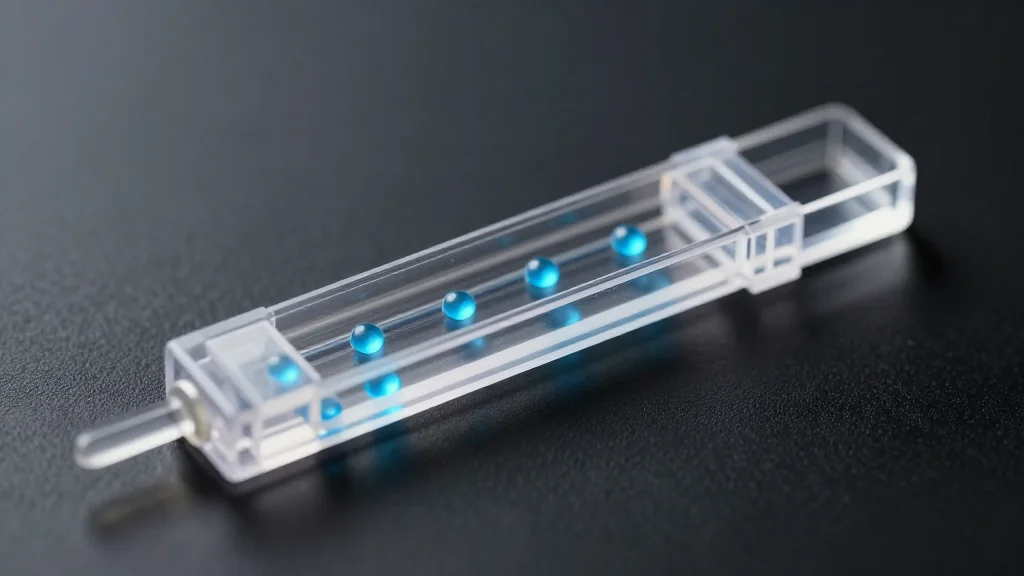
Ultra-Precise Technology Can Count Damaged DNA Fragments
Why It Matters
By providing a reliable, quantitative biomarker of DNA‑repair efficiency, the assay accelerates precision oncology research and enables clinicians to gauge treatment response and cancer risk more accurately.
Key Takeaways
- •Detects sedDNA down to thousands of molecules
- •Counts up to 22× more fragments than traditional assays
- •Competitive immunoassay overcomes end-labeling degradation
- •Enables quantitative assessment of NER activity in cells
- •Supports early cancer risk evaluation and drug response monitoring
Pulse Analysis
DNA is constantly assaulted by UV light, chemicals, smoking, and metabolic by‑products, creating lesions that, if unrepaired, drive aging and oncogenesis. The nucleotide excision repair (NER) pathway excises damaged oligonucleotides, producing small excised damaged DNA (sedDNA) fragments that serve as direct footprints of repair activity. Historically, researchers have relied on end‑labeling techniques that infer fragment abundance from fluorescence intensity, but intracellular enzymatic trimming often erodes fragment ends, causing systematic under‑counting. Consequently, the field has lacked a robust, quantitative biomarker to compare repair capacity across individuals or to gauge cellular response to genotoxic therapies.
The Korea Research Institute of Standards and Science (KRISS) addressed this gap with a competitive immunoassay platform that immobilizes synthetic damaged DNA on a microplate and pits it against native sedDNA for antibody binding. By translating competition curves into molar concentrations, the assay quantifies as few as several thousand molecules—roughly 22‑fold more sensitive than conventional methods. This approach sidesteps the need for end labeling, eliminating bias from enzymatic degradation. Validation in UV‑irradiated cell lines, corroborated by a peer‑reviewed Nucleic Acids Research article, demonstrates reproducible detection across a dynamic range suitable for both basic research and translational studies.
The ability to count sedDNA with unprecedented precision opens new avenues in precision oncology and toxicology. Clinicians could soon use sedDNA levels as an early indicator of deficient NER, flagging patients at heightened cancer risk or identifying those likely to respond to DNA‑damage–targeting agents such as platinum compounds and PARP inhibitors. Moreover, pharmaceutical developers can employ the assay to monitor drug‑induced DNA repair modulation in preclinical models, accelerating biomarker‑guided trial designs. As KRISS expands validation to human tissue samples, the technology promises to become a standard tool for personalized risk assessment and therapeutic monitoring.
Ultra-precise technology can count damaged DNA fragments
Comments
Want to join the conversation?
Loading comments...