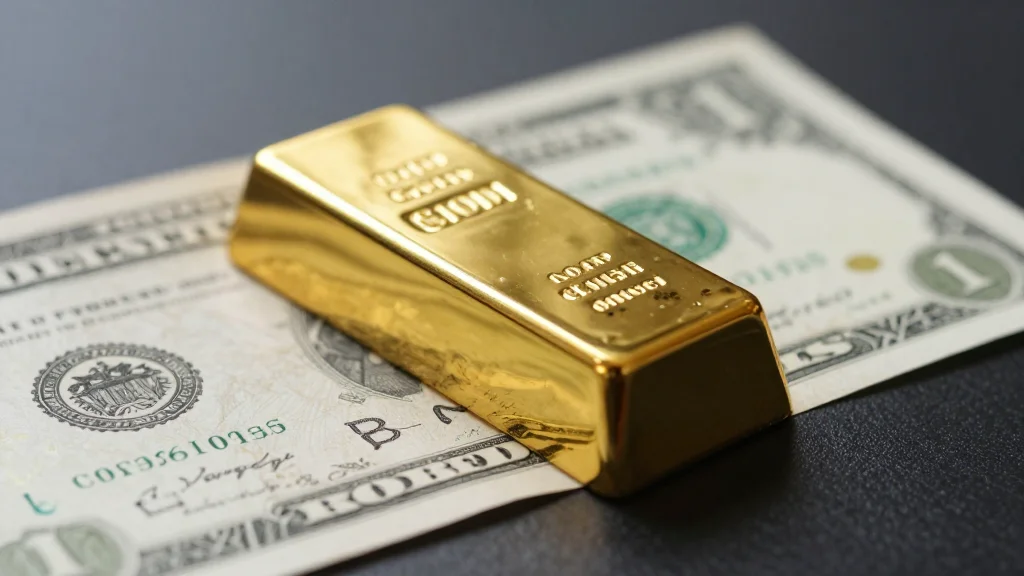
Gold Rises 0.9% as Treasury Yields Slip, Boosting Bond Market Sentiment

Companies Mentioned
Why It Matters
The inverse relationship between gold prices and Treasury yields is a classic barometer of market risk sentiment. A rise in gold alongside falling yields signals a shift toward safety, prompting investors to favor high‑quality sovereign debt over riskier assets. This dynamic influences portfolio allocations, pricing of new bond issuances, and the broader cost of borrowing for governments and corporations. Moreover, the underlying geopolitical tension—particularly the U.S.–Iran negotiations—adds a layer of uncertainty that can quickly swing yields, making the current dip a pivotal moment for fixed‑income strategy. For policymakers, the yield movement offers insight into how market participants price inflation risk and monetary policy expectations. A sustained decline could embolden the Federal Reserve to keep rates steady or even consider cuts, while a reversal would reinforce a more hawkish stance. Understanding this feedback loop is essential for anticipating future rate paths and the health of credit markets.
Key Takeaways
- •Spot gold rose 0.9% to $4,524.87/oz, the highest since early May.
- •U.S. 10‑year Treasury yield fell about 3 basis points, lifting bond prices.
- •The dollar weakened across major currencies, reducing the cost of holding gold.
- •Oil prices dropped nearly 2%, easing inflation pressures.
- •Jefferies strategist Mohit Kumar warned that a Strait of Hormuz agreement could push rates lower.
Pulse Analysis
The recent gold rally and Treasury yield dip illustrate a classic flight‑to‑quality scenario, but the drivers are more nuanced than a simple risk‑off narrative. Geopolitical friction in the Middle East has kept investors on edge, yet the tentative de‑escalation signaled by U.S.–Iran talks has already softened the risk premium on sovereign debt. This suggests that bond markets are now pricing in a conditional easing of geopolitical risk, rather than a blanket optimism.
Historically, periods of heightened tension—such as the 2014 oil price shock—have seen yields spike as investors demand higher compensation for uncertainty. The current environment, however, is marked by a convergence of three forces: a weaker dollar, lower inflation expectations, and a potential diplomatic breakthrough. Together, they create a fertile ground for a modest but meaningful yield decline, which could set the stage for a longer‑term flattening of the curve if the Fed maintains its current stance.
Looking forward, the bond market’s trajectory will hinge on two variables: the resolution of the Strait of Hormuz dispute and the Fed’s reaction to upcoming labor market data. A clear diplomatic win would likely deepen the yield slide, reinforcing the appeal of long‑duration Treasuries and TIPS. Conversely, a resurgence of tension or stronger-than‑expected payrolls could reverse the trend, prompting a rapid reallocation back into riskier assets. Fixed‑income managers should therefore maintain flexibility, monitoring both geopolitical headlines and domestic economic indicators to adjust duration and credit exposure accordingly.
Gold Rises 0.9% as Treasury Yields Slip, Boosting Bond Market Sentiment
Comments
Want to join the conversation?
Loading comments...