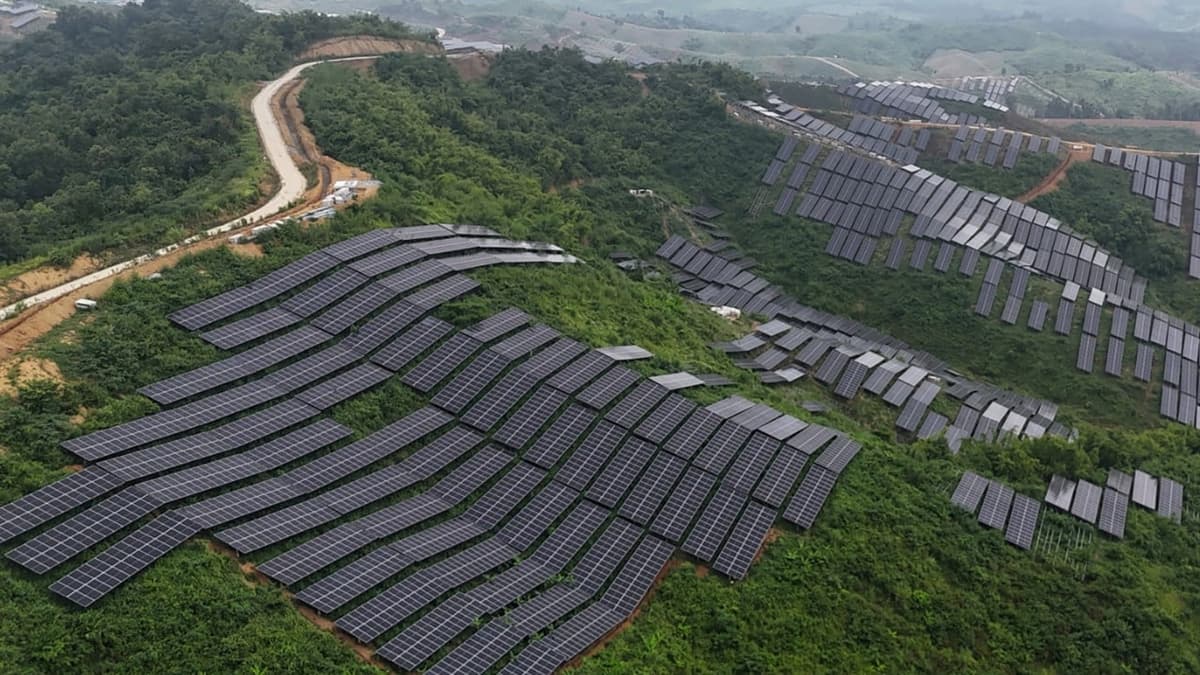
China-Backed Solar Project Powers up in Laos Amid Iran War Energy Shock
Why It Matters
The project supplies stable, low‑carbon electricity to Laos and strengthens ASEAN’s energy security as countries seek alternatives to volatile fossil‑fuel imports caused by Middle‑East conflicts.
Key Takeaways
- •1 GW solar plant inaugurated in northern Laos.
- •Generates ~1.65 billion kWh annually, powering thousands of homes.
- •Saves 500,000 tonnes of coal and cuts 1.3 Mt CO₂.
- •Uses 2.23 million panels linked to 500 kV China‑Laos line.
- •Enhances regional energy security amid Middle‑East supply shocks.
Pulse Analysis
The launch of a 1‑gigawatt solar farm in northern Laos marks a watershed moment for renewable energy in the Mekong region. Built on steep terrain, the installation demonstrates that large‑scale photovoltaic projects can thrive outside flat desert sites, expanding the geographic options for clean power. Backed by China General Nuclear Power Group, the plant reflects Beijing’s strategy to export green infrastructure and deepen ties with its land‑locked neighbor. As ASEAN economies grapple with volatile fossil‑fuel markets, the project offers a tangible alternative to traditional generation.
Equipped with roughly 2.23 million solar modules, the facility is expected to produce about 1.65 billion kilowatt‑hours each year—enough electricity for millions of households. By displacing an estimated 500,000 tonnes of coal, the plant avoids roughly 1.3 million tonnes of carbon dioxide emissions, contributing to Laos’ climate commitments under the Paris Agreement. The farm is directly tied to the 500‑kilovolt China‑Laos transmission line, a critical corridor that not only moves power across borders but also integrates the new renewable output into the regional grid.
The timing could not be more strategic. The ongoing conflict in the Persian Gulf has reignited concerns over energy supply reliability, prompting Southeast Asian nations to accelerate diversification away from oil and gas. Laos’ new solar hub strengthens the ASEAN power pool, offering a stable, low‑cost source that can be dispatched during peak demand or grid emergencies. Moreover, the project showcases a model for future collaborations, where Chinese financing and technical expertise combine with host‑country resources to fast‑track decarbonisation across the region.
China-backed solar project powers up in Laos amid Iran war energy shock
Comments
Want to join the conversation?
Loading comments...