
Generative AI in the Real World: Danielle Belgrave on Generative AI in Pharma and Medicine
In this podcast, GSK’s Vice President of AI and Machine Learning, Danielle Belgrave, explains how generative and traditional AI are being deployed across the pharmaceutical pipeline. Drawing on a 15‑year career that spans a PhD on asthma heterogeneity, stints at Microsoft Research and DeepMind, and now leading AI for clinical development at GSK, she outlines the shift from one‑size‑fits‑all treatments to data‑driven, patient‑specific interventions. Belgrave highlights several use cases: leveraging whole‑genome and RNA‑seq data to inform computational pathology, using multimodal foundation models to translate molecular signals into biopsy image insights, and employing generative AI to synthesize large‑scale multi‑omics datasets for target identification. She also stresses the importance of responsible AI, noting GSK’s dedicated team that applies model cards, external reviews, and hallucination metrics to ensure safety and reproducibility. Concrete examples include her PhD work that identified five distinct asthma subtypes, current projects that map genomic profiles onto tissue‑level pathology, and internal language models such as “jewels” that assist scientific productivity while being rigorously vetted. The discussion underscores the breadth of data—clinical notes, biomarkers, microbiomes, epigenetics—and the technical hurdles of batch effects, small‑sample robustness, and data sparsity. The overarching implication is that AI, especially generative and multimodal models, can dramatically shorten drug discovery cycles, improve trial enrollment efficiency, and enable precision therapeutics, provided that robust governance and methodological safeguards keep pace with rapid innovation.
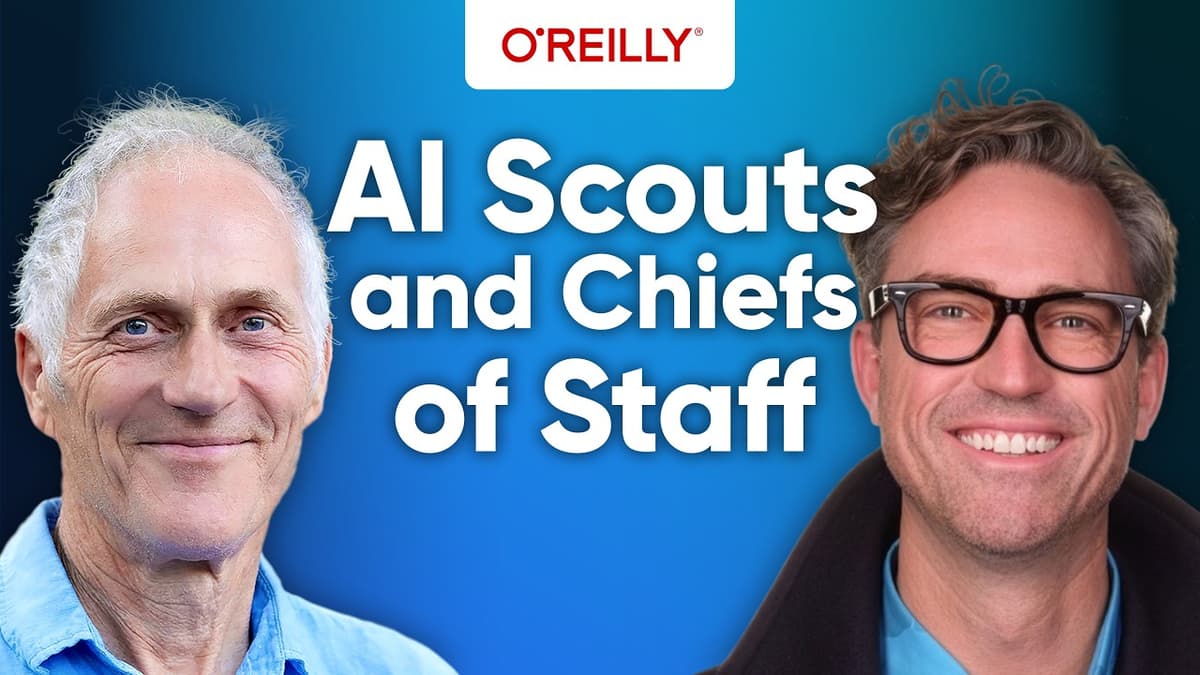
AI Scouts and AI Chiefs of Staff with Ryan Carson
Ryan Carson explains how he runs an open‑source AI "chief of staff" called OpenClaw, built around a simple priority map and a 15‑minute cron job that triages inbox, Slack and other data streams. The loop surfaces high‑priority items and can...
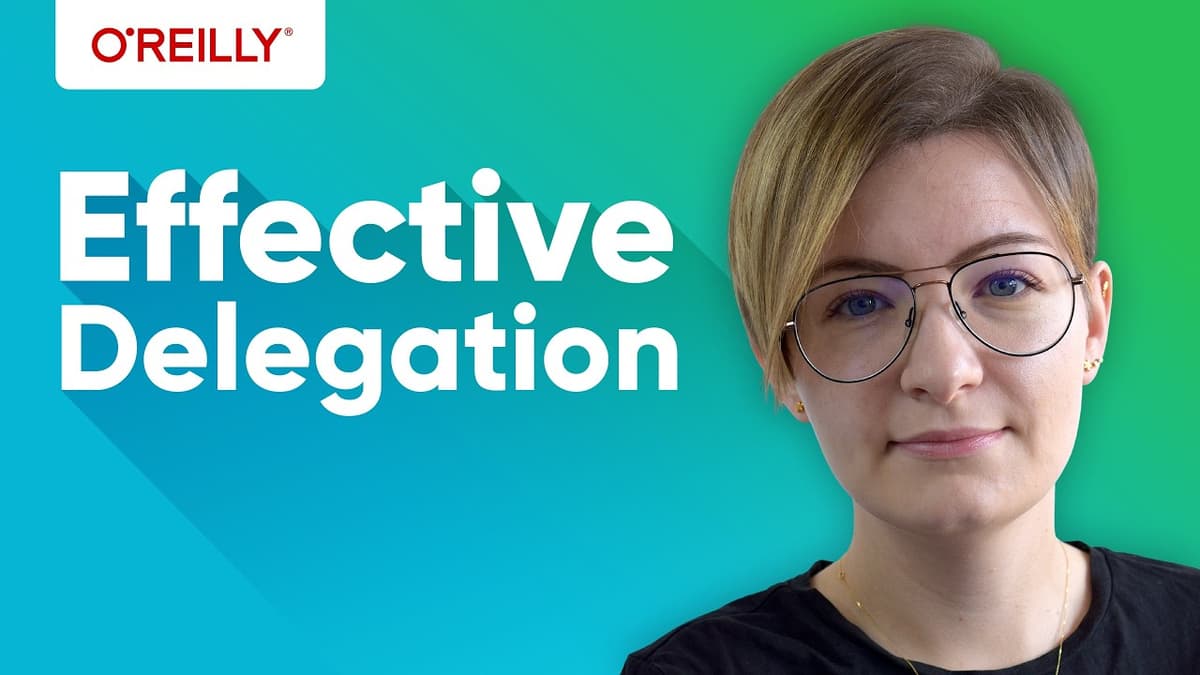
How to Delegate Effectively with Anemari Fiser
In the video, tech‑lead coach Anemari Fiser explains how tech leads can delegate effectively, focusing on two simple secrets that address most common delegation pitfalls. First, she stresses setting crystal‑clear expectations: define the problem, desired outcomes, specific artifacts, and any required...
Generative AI in the Real World: Shreya Shankar on AI for Corporate Data Processing
In this podcast, UC Berkeley PhD candidate Shreya Shankar explains how generative AI is reshaping enterprise data processing. She highlights the long‑standing challenge of extracting structure from unstructured assets—PDFs, transcripts, logs—and shows how large language models now make that feasible....
Encourage AI Exploration with Camille Fournier
Camille Fournier argues that the biggest barrier to AI adoption is not technology but managerial inertia. She stresses that leaders need to carve out dedicated, protected time for teams to experiment with AI tools, rather than expecting employees to fit...
Avoid Interpassivity in AI Tooling with Camille Fournier
Camille Fournier cautions engineers against "interpassivity"—the habit of letting AI tools operate autonomously while the user remains passive. She frames the issue as a modern extension of an old debugging mindset, where engineers once leaned on debuggers or print statements...
Simplifying Context Engineering for AI Agents in Production with Cornelia Davis
The video outlines three core best practices for production‑grade AI agents: narrowly scoping each agent, delivering data incrementally, and rigorously managing conversation history. By treating agents as micro‑service‑like components, developers can avoid the monolithic pitfalls that often cripple performance. The speaker...
Highlights From Software Architecture Superstream: Software Architecture and the Age of Agentic AI
The Superstream session examined how software architecture must evolve for the age of agentic AI. Speakers highlighted the rapid rise in interest for autonomous AI agents, noting that while generative models have matured, the ability of agents to act independently...
Generative AI in the Real World: Putting AI in the Hands of Farmers with Rikin Gandhi
The podcast features Ben Laura and Rikin Gandhi, CEO of Digital Green, discussing Farmer.Chat – a generative‑AI platform that puts localized agricultural knowledge into the hands of smallholder farmers across India, Ethiopia, Kenya and Nigeria. Digital Green leverages a library of...

How Should Junior Engineers Use Claude Code? With Cat Wu
The discussion centers on how junior engineers can effectively adopt Claude’s QuadCode tool to accelerate onboarding and contribute meaningfully to a codebase. The speaker emphasizes starting with basic navigation—asking the AI any “dumb” questions to map the terrain, then cross‑checking...
Generative AI in the Real World: Adopting AI in the Enterprise with Timothy Persons
The podcast with PwC’s AI leader Timothy Persons explores how enterprises are navigating the generative AI wave. He outlines the current adoption landscape, noting that while some sectors move slowly, most firms are in a sandbox or "AI factory" stage,...
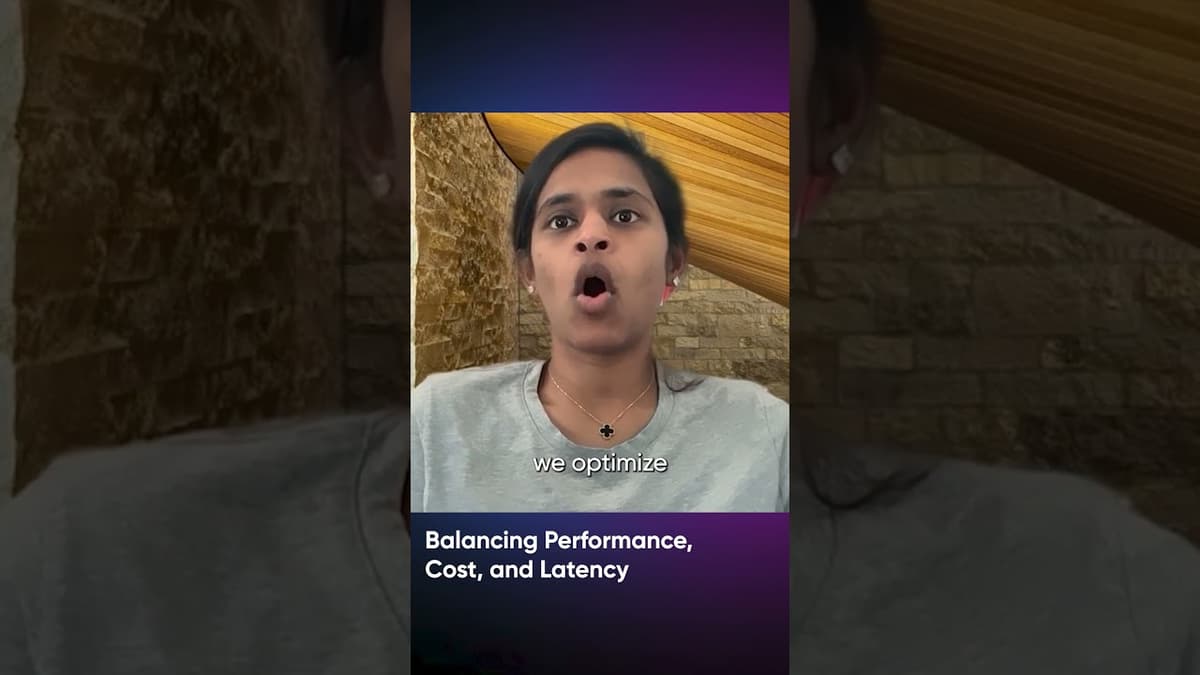
Balancing Performance, Cost, and Latency with Aishwarya Naresh Reganti
Balancing performance, cost, latency, and effort is the focus of Aishwarya Naresh Reganti’s discussion, where she outlines a systematic approach for AI model development. She emphasizes beginning with a low‑effort prototype to establish an upper performance ceiling before any heavy...

Hiring Agent Native Operators with Aishwarya Naresh Reganti
In a recent discussion, Aishwarya Naresh Reganti argues that firms should prioritize hiring “agent native” operators—young professionals fluent in AI‑driven workflows—to accelerate automation. Reganti notes that seasoned engineers, accustomed to decade‑long manual processes, often resist leveraging large‑language‑model agents. Early‑career hires are...
Generative AI in the Real World: Democratizing AI with Gwendolyn Stripling
The podcast features Google Cloud’s Gwendelyn Stripling discussing how no‑code and low‑code tools are democratizing machine learning. She co‑authored the O’Reilly book *No Code AI*, which frames AI adoption around business use cases rather than deep technical expertise. Stripling defines no‑code...
Building Secure, High-Quality, AI-Powered Applications with Chris Lalonde
In the talk Chris Lalonde argues that AI‑generated code is neither pure magic nor useless slop; it’s a powerful accelerator that reshapes how startups build software. He shows that AI multiplies output, turning a two‑person team into a high‑volume code producer,...

Shift Left: Not a Magic Bullet with Liz Rice
Liz Rice argues that the shift‑left mantra, while still relevant, is no longer a silver bullet for software security. She notes that the buzz has moved toward supply‑chain transparency and SBOMs, but early‑stage testing alone cannot eliminate runtime risk. Rice emphasizes...
Generative AI in the Real World: Chip Huyen on Finding Business Use Cases for Generative AI
In the inaugural episode of O'Reilly’s "Generative AI in the Real World," host Ben interviews Chip Huyen, founder of Claypot AI and author of Designing Machine Learning Systems, to explore how enterprises can discover practical generative‑AI use cases. Huyen stresses...

Box’s Strategic Pivot From Content to Context
Box is redefining its platform by shifting from a content‑centric model to a context‑driven architecture that empowers autonomous AI agents. The company argues that traditional workflows assume users start with zero context, but agents need just‑right, surgical context to act...

Startups Versus Incumbents
The video examines how incumbents and startups compete in deploying AI agents across business workflows, arguing that the balance of power hinges on data availability and task structure. Incumbents retain an edge when large volumes of workflow data already reside in...

AI Requires More Engineering Sophistication, Not Less
In his AI CodeCon talk, Box CEO Aaron Levie argues that AI‑generated code does not simplify engineering, but rather deepens technical demands. Engineers must still master the underlying trade‑offs of building scalable, deterministic or nondeterministic systems. The rise of AI...

Designing RL Environments for Model Training with Sharon Zhou
The video focuses on how enterprises can efficiently enhance large language models by designing reinforcement‑learning (RL) environments rather than attempting costly, in‑house post‑training. Sharon Zhou emphasizes that most companies lack the stable, GPU‑scale infrastructure needed for large‑scale fine‑tuning, and should...

In-Context Learning vs Supervised Fine-Tuning with Sharon Zhou
The discussion centers on the trade‑offs between in‑context learning—embedding examples directly in prompts—and supervised fine‑tuning, where a model is retrained on task‑specific data. In‑context prompting is quick to implement and can be cost‑effective when API calls are infrequent and the context...
The Rise of Agent-First Source Code with Addy Osmani and Tim O'Reilly
The video features Addy Osmani and Tim O'Reilly debating an emerging “agent‑first” paradigm, where software agents—not developers—become the primary consumers of source code. They argue that as AI agents grow more capable, code may be authored for machine readability first,...
Generative AI in the Real World: Sharon Zhou on Post-Training
The conversation centers on post‑training—techniques that adapt large language models after their initial pre‑training—to make them practical for enterprise use. Host Ben interviews Sharon Zhou, VP of AI at AMD, to unpack how these methods turn raw intelligence into usable,...

On the Wrong Side of the Bitter Lesson
Steve Yegge warns that future software will be judged by the "bitter lesson," a principle that favors brute‑force scaling over handcrafted intelligence. He argues that attempts to make AI or code inherently smarter place developers on the wrong side of...

Everyone’s Jeff Bezos Now
AI coding assistants now handle routine programming tasks, leaving developers to tackle more complex design challenges. Steve Yegge highlights this shift in a conversation with Tim O’Reilly, noting that AI solves the easy problems and pushes humans toward harder ones....

AI Coding: Balancing Speed & Quality with Addy Osmani
Addy Osmani discusses how AI‑generated pull requests are reshaping software teams, highlighting the tension between accelerated delivery and maintaining code quality. He notes that senior engineers increasingly feel swamped by a flood of AI‑written PRs they cannot fully comprehend. The core...

Technical Storytelling with Lena Reinhard and Priyanka Vergadia
Technical storytelling, speakers argue, transforms raw technical data into a compelling, decision-ready narrative by adding context, stakes and human impact—turning a ‘recipe’ of facts into a digestible ‘meal.’ Simply listing metrics or project status loses executives’ attention; effective stories link...
Identify, Scope, and Build an Agentic Workflow in N8n with Max Tkacz
The video walks viewers through building an AI‑driven, agentic workflow in n8n, starting with a live demo that automates a repetitive competitor‑monitoring task. Max Tkacz emphasizes a disciplined triage process—evaluating potential automations on time saved, feasibility, risk of damage, and...

How to Build Reliable AI at Scale: Insights From Addy Osmani
Addy Osmani, working to bridge Google DeepMind research with product and developer teams, urges builders to move beyond one-off demos toward production-ready AI systems. He frames development on a spectrum from “wild west” solo experiments to enterprise-grade setups with quality...

"Something Big Is Happening": Addy Osmani and Tim O'Reilly on Matt Shumer's Viral AI Essay
Matt Shumer’s viral essay "Something Big Is Happening" argues that AI has reached a point where it can perform most technical work. In a live discussion, Google engineer Addy Osmani and industry veteran Tim O'Reilly dissect the claim, weighing its...
Highlights From Software Architecture Superstream: Enterprise Architecture in the Age of AI
At the Software Architecture Superstream, leading architects discussed how AI is reshaping enterprise architecture. They highlighted the shift toward AI‑ready, code‑first designs that support continuous innovation while maintaining governance, security, and observability. Speakers covered architecture as code, agentic value streams,...
Building Scalable GenAI Inference Pipelines with Spark NLP with David Talby
David Talby of Pacific AI showcases Spark NLP, an Apache‑2.0 open‑source library that enables enterprise‑grade natural language processing at petabyte scale on standard Spark clusters. He highlights three core use cases: generating embeddings for retrieval‑augmented generation vector stores, performing batch...