American Enterprise Institute (AEI) - Latest News and Information

The video features a conversation between AEI’s Michael Strain and Alberto G. Musalem, President of the Federal Reserve Bank of St. Louis. Musalem outlines the Fed’s recent decision to keep the policy rate in the 3.5‑3.75 percent range, emphasizing that the real rate remains near neutral despite recent energy price spikes. He frames the economic outlook as highly uncertain, with a baseline scenario of growth near potential, unemployment hovering around its natural rate, and core inflation gradually easing toward the 2 percent target, while acknowledging downside risks to both labor and price stability. Musalem highlights several tailwinds—fiscal support, deregulation, and an AI‑driven surge in capital expenditures—that could bolster growth, but he cautions that supply‑side shocks from the Middle‑East conflict, tariffs, and elevated fuel prices continue to pressure headline and core inflation. He draws historical parallels to the 1970s oil shocks, warning that misreading underlying inflation can entrench price pressures, and contrasts that with the productivity gains of the 1990s, noting that AI is currently boosting demand more than supply. Key excerpts include Musalem’s observation that “the unemployment rate remains close to its natural rate” and his estimate that recent fuel price hikes could erase 10‑15 percent of projected tax‑relief benefits each quarter. He also stresses that the Fed’s dual mandate is inherently pro‑growth, arguing that price stability is the foundation for sustainable employment and that any premature easing would risk unanchoring inflation expectations. The remarks signal to markets that the Fed is prepared to maintain a restrictive stance until inflation shows consistent movement toward target, while remaining open to adjustments if labor market weakness intensifies. Investors and policymakers should monitor energy price developments, AI‑related demand spikes, and fiscal policy shifts as they could reshape the Fed’s risk calculus and influence the trajectory of interest rates in the coming months.

Fannie Mae and Freddie Mac remain under conservatorship yet guarantee roughly half of all U.S. residential mortgages, holding about $7.8 trillion in assets. The government’s implicit guarantee led to a 2008 bailout that injected $187 billion of taxpayer funds, expanding Treasury equity...

The U.S. designated Sudanese Islamist militias aligned with elements of the Sudanese Armed Forces (SAF) as terrorist organizations, accusing them of targeting civilians and taking Iranian support to further violent Islamist aims. Washington said these militias have leveraged the SAF’s...

The American Enterprise Institute hosted a high‑profile dialogue with the Warsaw Freedom Institute to examine Poland’s evolving role in the transatlantic partnership. Speakers highlighted Poland’s rapid economic expansion, its transition from a security recipient to a security provider, and...
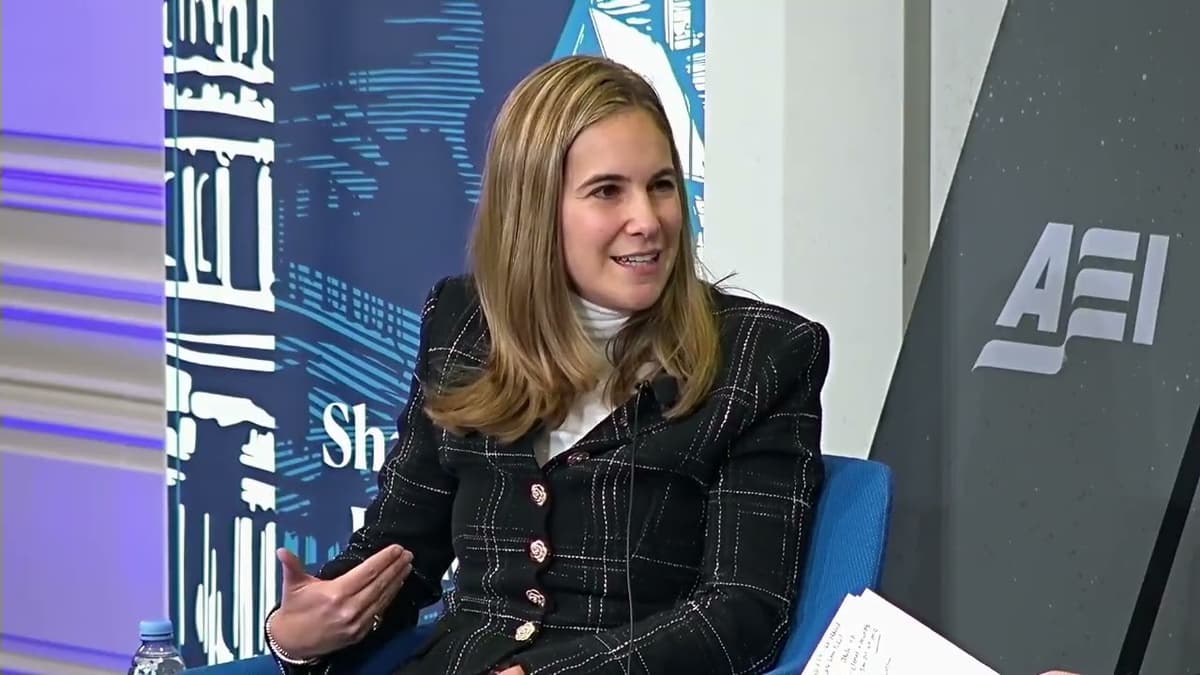
The video features a moderated conversation with former Supreme Court clerk Danielle Sassoon, who reflects on Justice Antonin Scalia’s judicial philosophy, writing style, and mentorship. Sassoon, a Harvard‑Yale graduate who clerked for Scalia toward the end of his tenure, provides...


