

Why Your Real Estate Deal Gets Approved… or Rejected
Finance Friday’s Josh and Aaron break down how internal credit teams evaluate commercial construction and multifamily loans in 2026, from the initial letter of intent to the final funding decision. They explain that today’s market is shaped by rising bond‑risk variables, expanding cap rates, and higher vacancy, prompting lenders to tighten credit standards and focus on granular borrower metrics. The video highlights that lenders now demand verified liquidity reserves, concrete proof of net worth, and a clean credit history. Experience on similar‑scale projects and disciplined cash‑flow management are weighted heavily, while reliance on home‑equity lines or land‑only net worth is viewed skeptically. Additionally, CMHC and other lenders are probing how many concurrent projects borrowers have, assessing overall portfolio debt service and rent‑growth assumptions. Key examples include the preference for cash‑on‑hand over borrowed equity, the practice of asking borrowers to disclose all active submissions, and the de‑valuation of land‑only assets to roughly 50 % of their book value. The hosts also note that mis‑managed construction budgets, not just lack of experience, are a leading cause of loan failures. For developers, the takeaway is clear: bolster liquid reserves, limit overlapping projects, and demonstrate a track record of successful, on‑budget builds. Lenders are tightening terms—potentially lowering loan‑to‑value ratios or raising rates—so financial discipline now directly impacts a deal’s approval odds.

Financing Just Got Harder in 2026... Here's What Rental Rates Have To Do With It
Financing for Canadian real estate has tightened in 2026 as falling rental rates and rising vacancy levels reshape lender risk assessments. Lenders, the Canada Mortgage and Housing Corporation (CMHC), and private investors now treat rent performance as a primary underwriting...

50% of the Waterloo Real Estate Market Is Gone... And No One's Talking About It
The video, hosted by Zach from Fipps Breton, provides a market update for Waterloo region, highlighting a dramatic contraction in real‑estate activity. It notes that the dollar volume of sales in February 2021 was $605 million, but by February 2026 it...
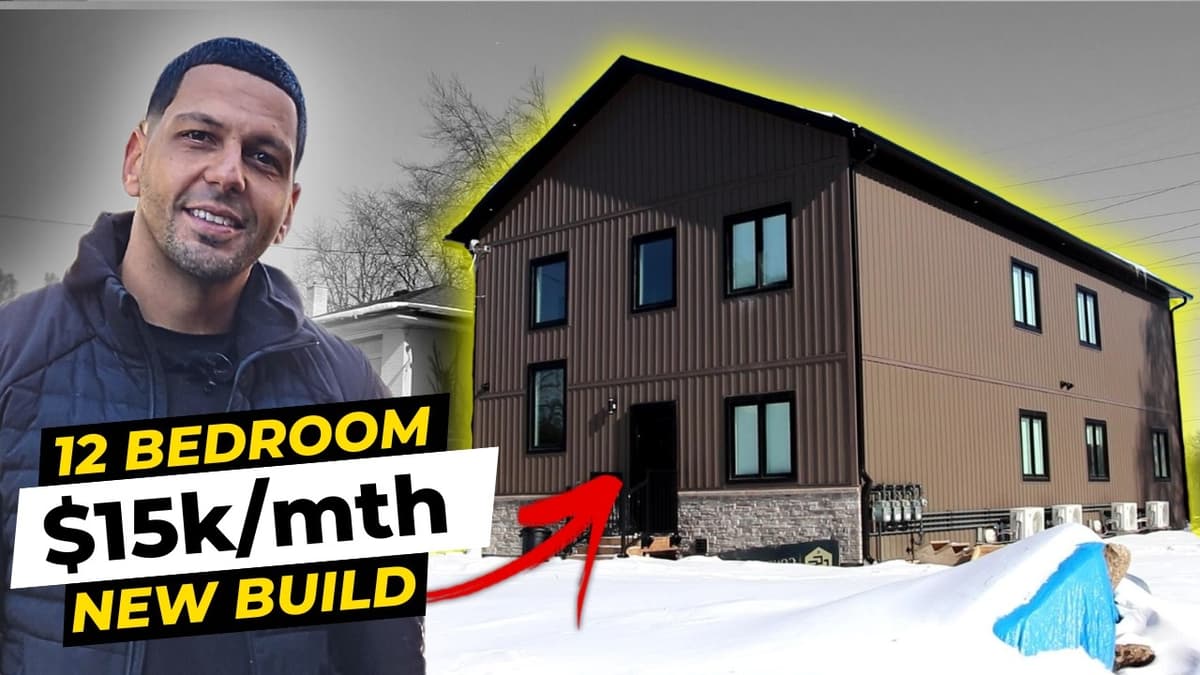
$1.3M Build → $1.9M Value? 12 Bedroom Purpose-Built Rental Breakdown
The video showcases the grand reveal of a purpose‑built 12‑bedroom multiplex in Hamilton’s west end, created after the municipality upzoned the lot under Bill 23. The four above‑grade units each span roughly 750 sq ft, feature three bedrooms, and are fully independent with...

Why Financing Is Getting Harder in 2026… (And No One’s Talking About It)
The video explains why financing new‑construction and repositioning projects is becoming increasingly difficult in 2026. A broad rental‑rate decline from the 2021‑2022 peak has pushed vacancy rates higher across Canada, especially in markets like Edmonton, forcing lenders to reassess loan...

Barrie Expansion + Falling Real Estate Prices: A New Opportunity for Investors?
The video features Adam JD Martin and realtor Colobby Marshall discussing recent policy changes and municipal expansion in Simcoe County, focusing on Barrie and the nearby town of Aurora. They outline federal and provincial HST rebates for new‑build homes and...

Oil, Inflation & Interest Rates: The Hidden Risk for Canadian Real Estate Investors
Canadian real‑estate investors are being warned that oil price volatility, driven by geopolitical events such as the Iran conflict, is a hidden catalyst for core inflation and, consequently, monetary‑policy tightening. The speaker explains that core inflation is the primary metric...

Building a Legal Basement Suite in Ontario | $70K Incentive Breakdown
The video walks viewers through a 650‑sq‑ft basement accessory dwelling unit (ADU) being built in Burlington, Ontario, and explains how the province’s incentive programs can return up to $70,000 to the owner once the unit receives an occupancy permit. Yaser outlines...

Oil, Inflation & Interest Rates: The Hidden Risk for Canadian Real Estate Investors
The video warns Canadian real‑estate investors that oil price volatility, sticky inflation, and shifting short‑term rates form a hidden risk trio that can upend project financing. Josh and Aaron explain how geopolitical flashpoints—such as the Iran conflict—push crude above $100...

Waterloo’s Water Crisis Isn’t Fixed: What It Means for Real Estate Investors
Two months after Waterloo Region publicly halted support for new developments over water-supply shortfalls, regional officials still have no concrete remediation plan or timeline, leaving projects in limbo. Developers and investors say long-term planning and infrastructure funding have not kept...

Panic or Opportunity? Hamilton Real Estate Sales Plunge 40%
Hamilton’s residential market showed sharp weakening at year-end, with board-wide sales plunging nearly 40% in December and new listings down more than 50% month-over-month. Average prices fell roughly 11.5% month-to-month and average days on market jumped by about 11–14 days,...