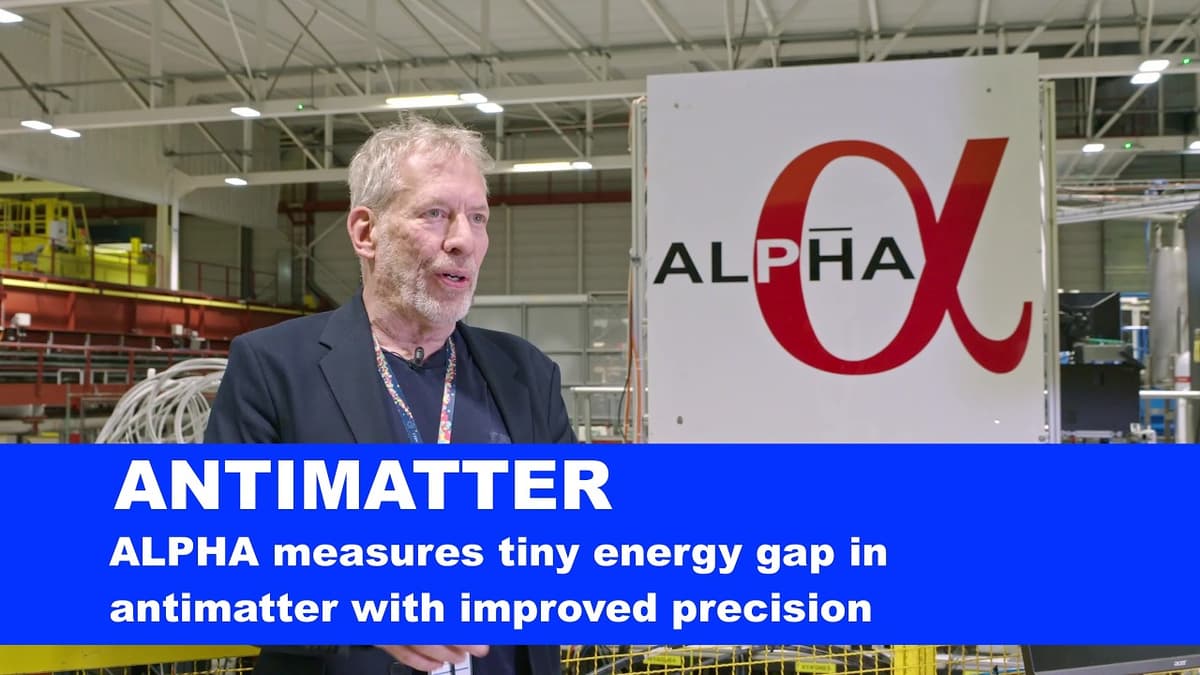
ALPHA Measures Tiny Energy Gap in Antimatter with Improved Precision
The ALPHA collaboration announced the most precise measurement to date of the 21 cm hyperfine transition in antihydrogen, achieving a hundred‑fold improvement over its earlier results. By accumulating several thousand trapped antihydrogen atoms in a magnetic bottle and exposing them to microwaves, the team identified the exact frequency at which the atoms undergo spin‑flip transitions and are ejected from the trap. The experiment leverages decades of expertise in producing, trapping, and detecting antihydrogen. Microwave irradiation at the resonant frequency causes a loss of atoms, directly revealing the hyperfine splitting. The measured frequency aligns with that of ordinary hydrogen within the experimental uncertainty, providing a stringent test of CPT symmetry. “It's the most precise measurement,” a spokesperson noted, adding that the technique offers “the full spectrum, pun intended, of what you can think about doing with an antimatter atom.” The result showcases ALPHA’s unique capability to hold antimatter long enough for high‑resolution spectroscopy. These findings tighten the limits on any possible matter‑antimatter differences in fundamental constants, reinforcing the Standard Model’s predictions and informing cosmological models that rely on hydrogen’s 21 cm line. Future upgrades could push precision even further, probing new physics beyond current theories.

The Start of the 2026 Heavy-Ion Run | #AskAPhysicist
The Large Hadron Collider began its 2026 heavy‑ion program, replacing proton beams with lead ions for the first time in years. By colliding lead nuclei at unprecedented energies, scientists aim to reproduce the quark‑gluon plasma that existed roughly one microsecond after...
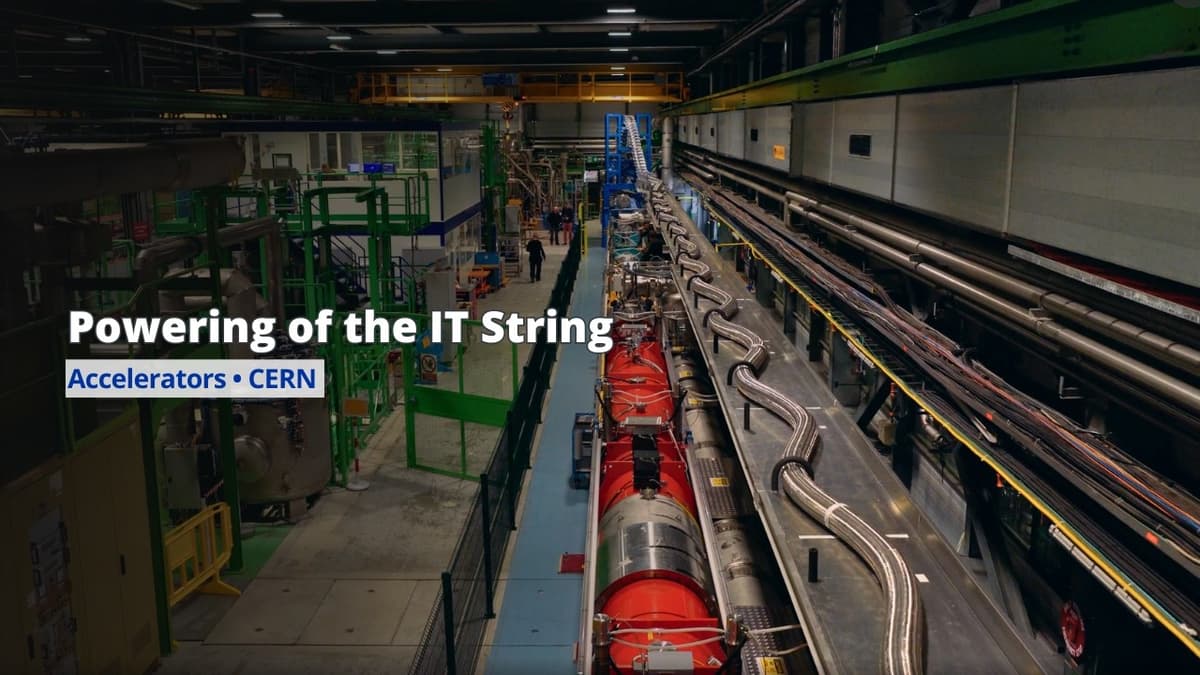
CERN’s Full-Scale Test Stand Enters the Powering Phase
CERN announced that the Inner Triplet (IT) string test stand, a full‑scale replica of the magnet chain destined for the High‑Luminosity Large Hadron Collider (HL‑LHC), has entered the powering phase. After months of assembly and integration, the magnets are now being...

A Particularly Wavy Matter
The video opens by framing the Large Hadron Collider’s immense energy as a product of wave physics, not merely the strength of its superconducting magnets. It promises a tour from everyday ripples to the quantum fields that power particle acceleration. It...