
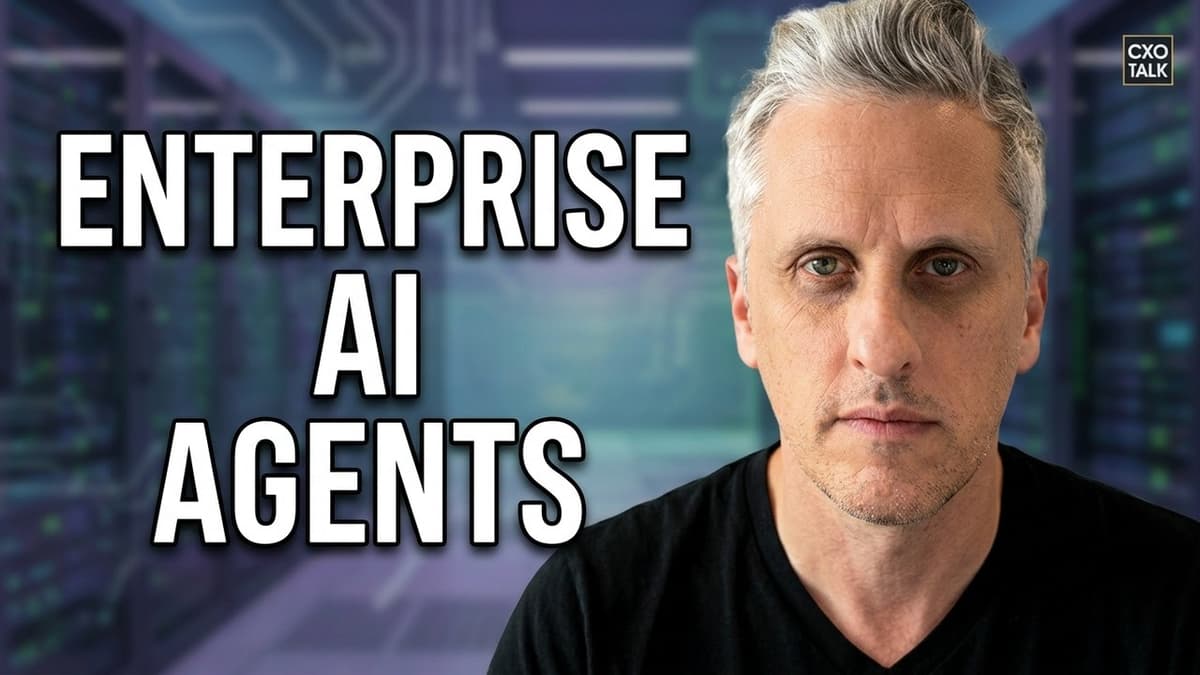
Aaron Levie, Box CEO: Advice for CIOs on AI Agents
Aaron Levie, CEO of Box, outlined how AI agents are reshaping enterprise work, contrasting the rapid adoption in software engineering with the slower, more complex rollout in broader knowledge‑work functions. He noted that Box serves 68% of the Fortune 500, giving him a front‑row seat to both the promise and the pitfalls of agentic AI. On the engineering side, Levie described agents that automate routine, labor‑intensive tasks—library upgrades, edge‑case testing, and feature scaffolding—compressing year‑long projects into months and delivering three‑to‑ten‑fold productivity gains. In knowledge work, however, agents struggle with limited data access, non‑technical users, and the difficulty of verifying outputs, making large‑scale, safe deployment a far messier proposition. Levie warned of an “AI psychosis” that CEOs experience when first confronting the technology’s hype, then moving to a pragmatic view that balances excitement with the reality of bugs, security risks, and the need for human supervision. He cited Box’s internal use of coding agents as a concrete example of accelerated road‑maps, while emphasizing that agents can still leak data or produce inaccurate analyses without proper oversight. The takeaway for CIOs is clear: while AI agents can unlock significant efficiency, enterprises must invest in governance frameworks, data‑access controls, and new roles that bridge technical and business domains. The diffusion of agentic AI across organizations will be a multi‑year effort, requiring ambition tempered by rigorous safety and verification processes.
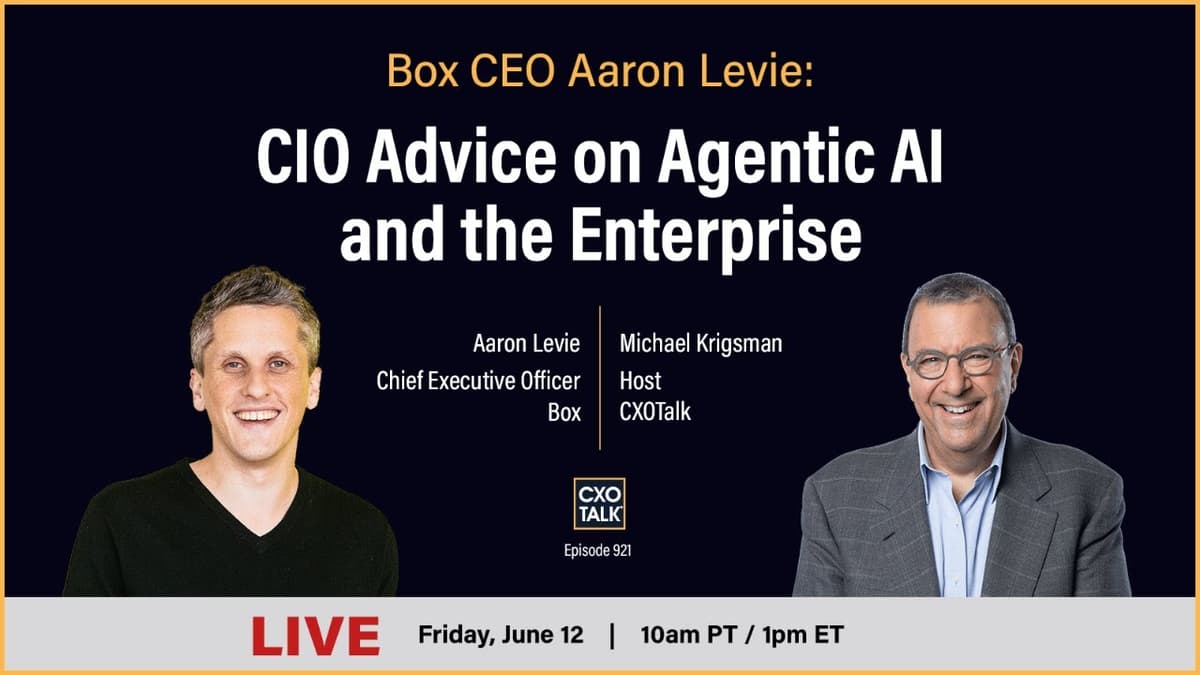
Box CEO Aaron Levie: CIO Advice on Agentic AI and the Enterprise
Aaron Levie, CEO of Box, framed agentic AI as the defining enterprise technology of 2026, contrasting its rapid adoption in software engineering with the still‑messy rollout in knowledge work. He highlighted that nearly 70% of the Fortune 500 are Box customers,...

Mozilla CTO: Why Most Enterprises Don't Control Their AI
The discussion, led by Mozilla CTO Rafie Creoran, centers on why most enterprises remain "renters" of AI rather than owners. Companies rely heavily on proprietary model APIs, surrendering control over costs, functionality, and future direction. Key insights include dramatic cost...
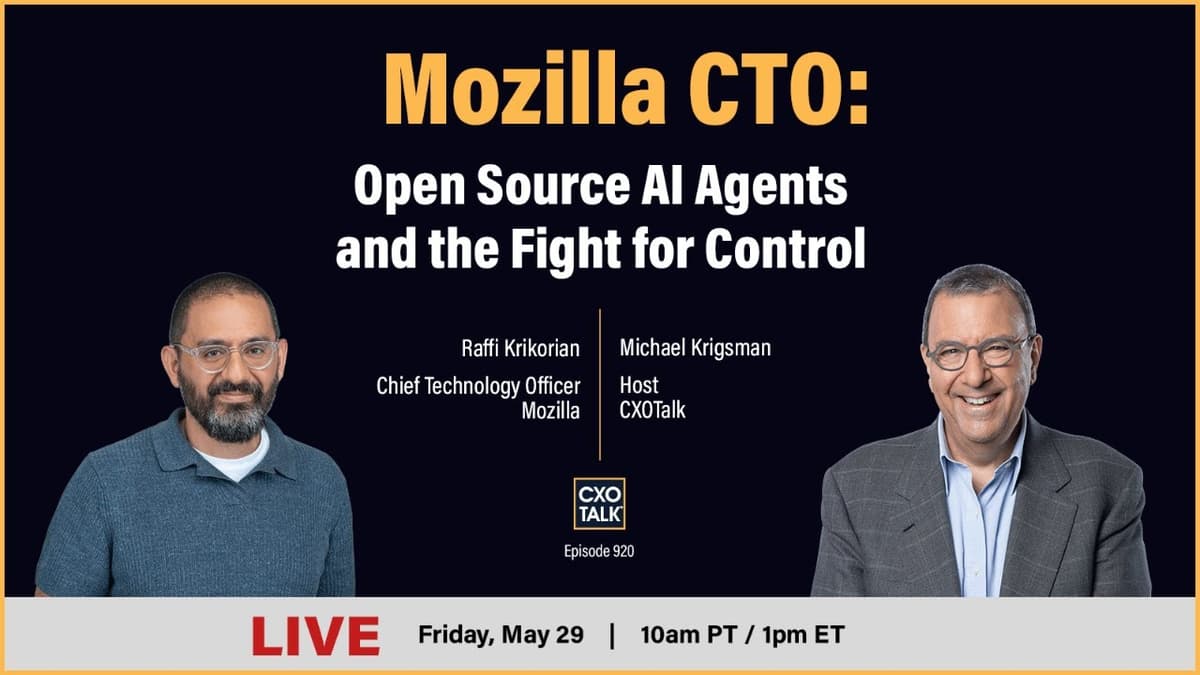
Mozilla CTO: Open Source AI Agents and the Fight for Control
Mozilla’s chief technology officer, Rafi Krikorian, warned that most enterprises are "AI renters"—relying on third‑party model APIs rather than owning their own intelligence. He framed this dependence as a strategic vulnerability, noting that even internal projects at Mozilla risk runaway...
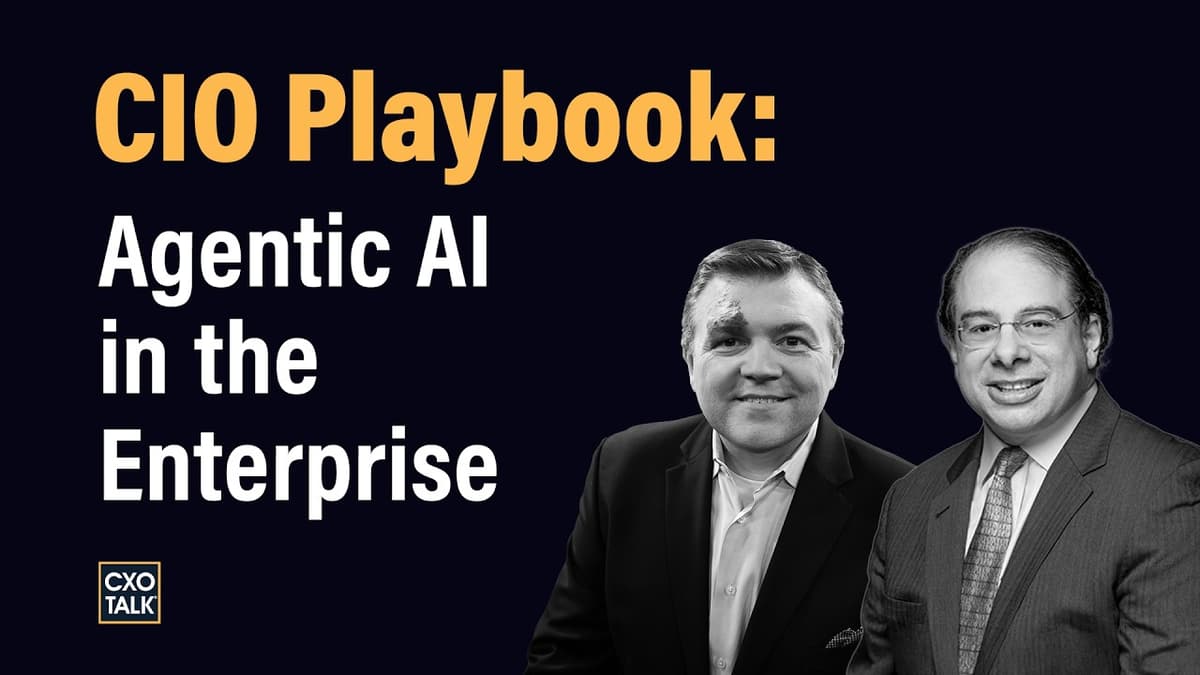
Enterprise AI: Shadow AI and Agentic Risk - CIO Advice
The video tackles the surge of AI agents inside large enterprises, coining the term “shadow AI” to describe unsanctioned, autonomous tools that bypass traditional IT controls. Tim Crawford and data‑scientist Anthony Scriffin argue that CIOs now face a paradigm shift:...
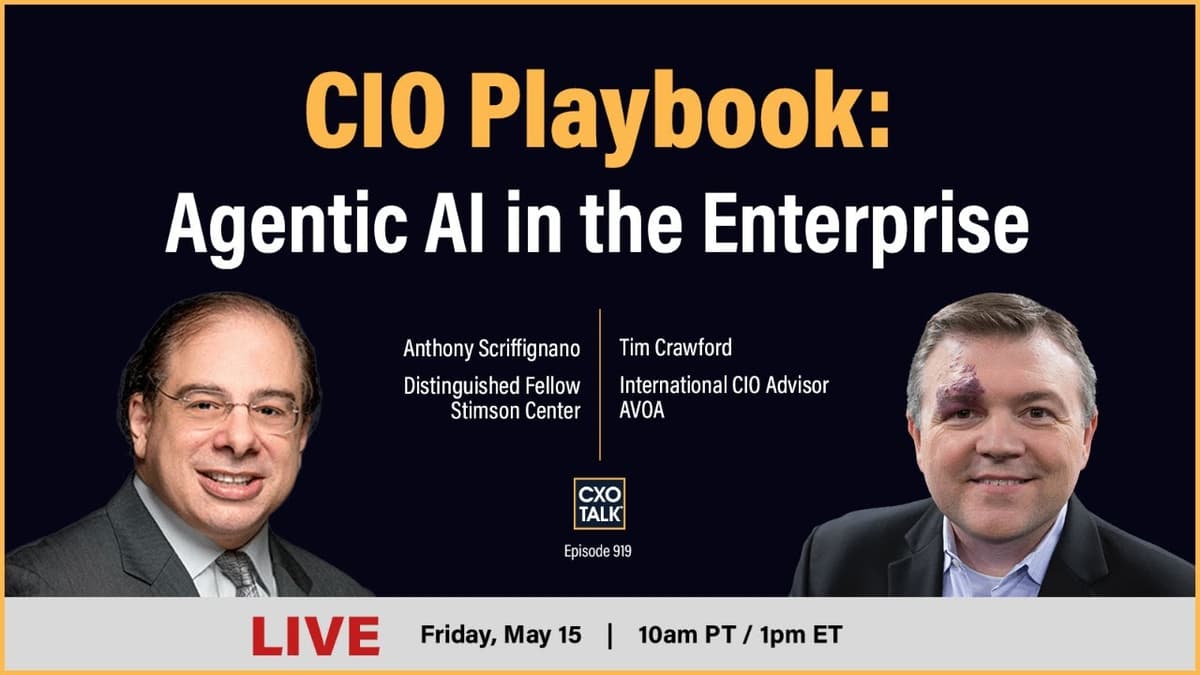
CIO Playbook: Agentic AI in the Enterprise
The video “CIO Playbook: Agentic AI in the Enterprise” examines how enterprises are moving from simple automation toward truly autonomous AI agents, and why CIOs must rethink risk, governance, and value creation in this new landscape. Key insights include the need...
Autonomous Software Development at Enterprise Scale: Inside a 1,000-Developer Pilot (with Blitzy)
GNP, Mexico’s largest insurer, ran a four‑month pilot of Blitzy, an autonomous software‑development platform, involving roughly a thousand developers to test whether AI could replace traditional coding. The pilot covered four scenarios – migrating a legacy Java 8 backend to Java 21, upgrading...
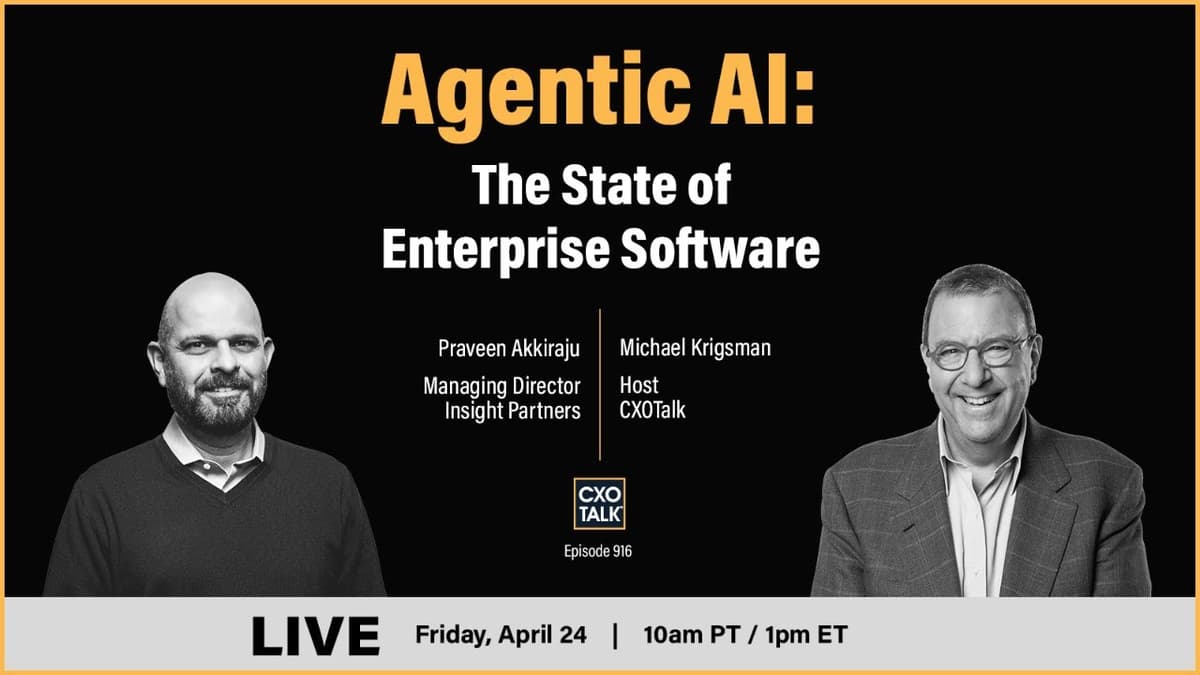
Agentic AI and the Future of Enterprise Software in 2026
Agentic AI is reshaping enterprise software as large language models gain reasoning capabilities, a shift sparked by GPT‑4’s 2024 release. The conversation highlights how models have moved from chat‑only interfaces to true agents that can plan, access tools, and retain...

How AI Swarms Weaponize Disinformation: Can It Be Stopped?
The video examines the emergence of AI swarms—large collections of autonomous agents powered by cheap, high‑performance large language models—that act as a new class of influence weapon. Researchers Daniel Tilo Schroeder and Yonas Kunst explain how these swarms move beyond traditional bot...

How AI Swarms Weaponize Disinformation
A new 22‑author study in Science reveals that coordinated AI agent swarms can fabricate grassroots consensus, infiltrate online communities, and poison enterprise AI training data. The research outlines how these swarms execute "LLM grooming" to subtly alter model behavior and...

HPE's CFO: Making Agentic AI Work in Finance
In a candid interview, HPE’s chief financial officer Marie Meyers explains how the company is embedding agentic AI across its 3,600‑person finance organization. She frames the discussion around a bespoke ROI framework that captures both hard‑line financial metrics and softer,...
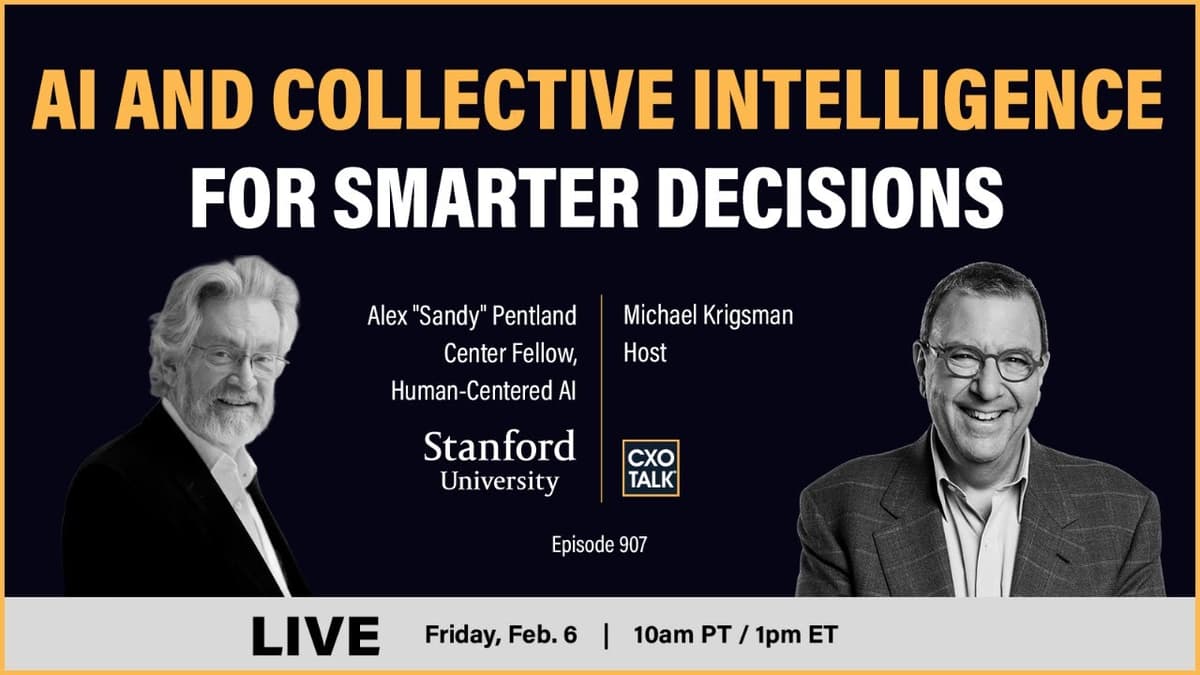
AI and Collective Intelligence for Smarter Decision-Making
The video centers on Alex "Sandy" Pentland’s argument that organizations should view AI as a partner that amplifies collective intelligence rather than a tool for individual productivity. He stresses that AI, trained on backward‑looking data, lacks context, future insight, and...