
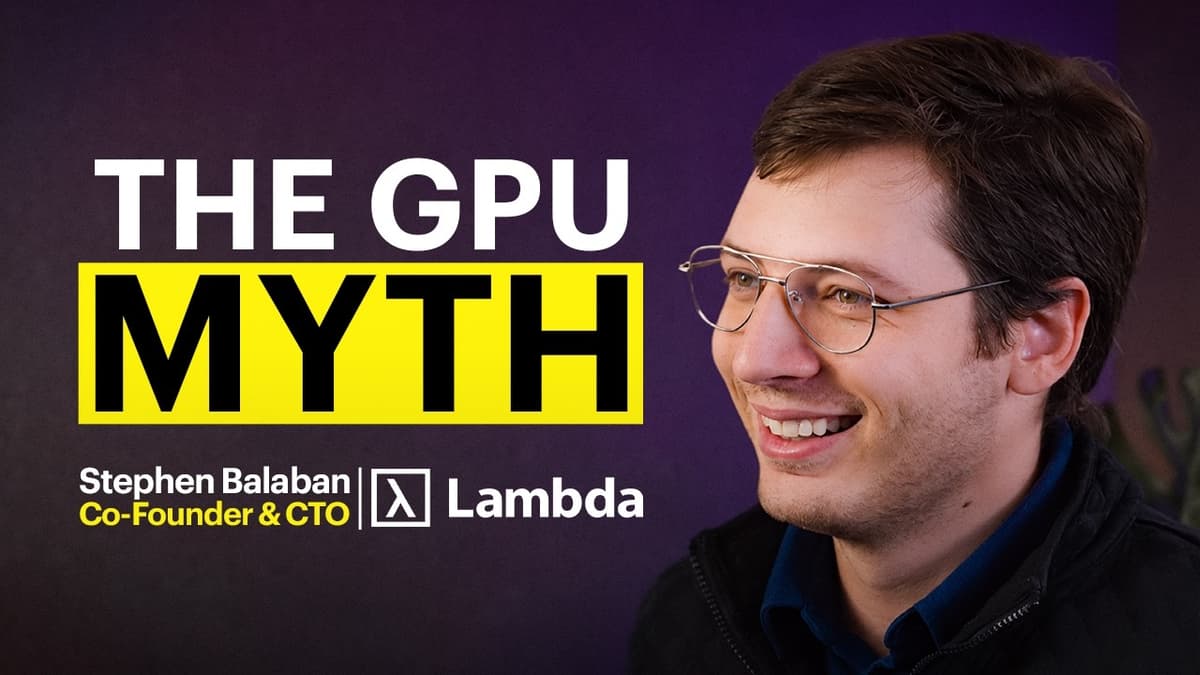
The Neocloud Boom: State of AI Compute 2026 | Stephen Balaban
The podcast with Lambda co‑founder and CTO Stephen Balaban examines the 2026 state of AI compute, debunking the notion that GPU power will become a commodity. Balaban argues that neo‑clouds—specialized AI‑focused data centers—are highly integrated operations that span land acquisition, construction, high‑performance computing design, software orchestration, and financing, making them a distinct business from traditional cloud services. Key insights include persistent under‑building despite soaring demand for large‑language models, a nuanced view of GPU rental pricing that shows both on‑demand and long‑term rates rising, and the importance of financing innovations to fund gigawatt‑scale factories. Lambda’s proprietary one‑click orchestration platform can spin up clusters ranging from 16 to 4,000 GPUs via a web interface, a capability most rivals lack. The primary bottlenecks are land entitlement, megawatt power commitments, and mechanical‑electrical‑plumbing (MEP) infrastructure, not the GPUs themselves. Balaban emphasizes that “we have an amazing system that can take in money and output software,” highlighting the relentless scaling laws that keep expanding the addressable AI market—from customer‑support bots to software‑engineering augmentation. He also addresses community concerns about data‑center water use, noting that modern deployments use closed‑loop liquid cooling with dry coolers, delivering negligible evaporation and even adding grid‑strengthening benefits. The implications are clear: investors and enterprises must treat neo‑clouds as strategic, capital‑intensive assets rather than commoditized services. Multiple large players can coexist, mirroring the oligopolistic structure of traditional cloud markets, but success will hinge on superior stack integration, rapid construction, and proactive community engagement.
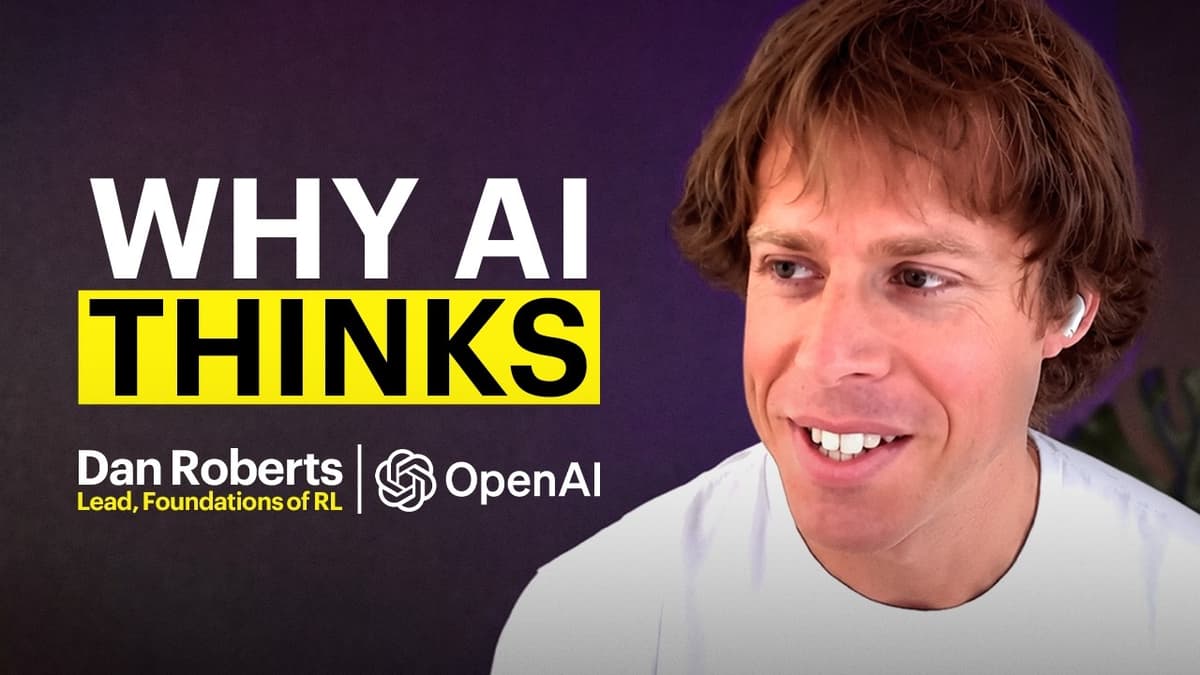
OpenAI's Dan Roberts: Why AI Can Now Make Discoveries
In this interview, OpenAI researcher Dan Roberts explains how reinforcement learning and test‑time reasoning are enabling AI systems to tackle deep scientific problems, highlighted by recent breakthroughs on long‑standing Erdős conjectures. Roberts outlines the distinction between OpenAI’s informal, language‑model‑based approach—where...

State of Enterprise AI 2026: Aaron Levie on Tokenmaxxing, Rise of Headless, and AI-Proofing Your Job
The podcast features Aaron Levie, CEO of Box, outlining the 2026 state of enterprise AI, with a focus on soaring token costs, the rise of headless architectures, and strategies to future‑proof jobs. Levie explains that AI model breakthroughs are arriving faster...
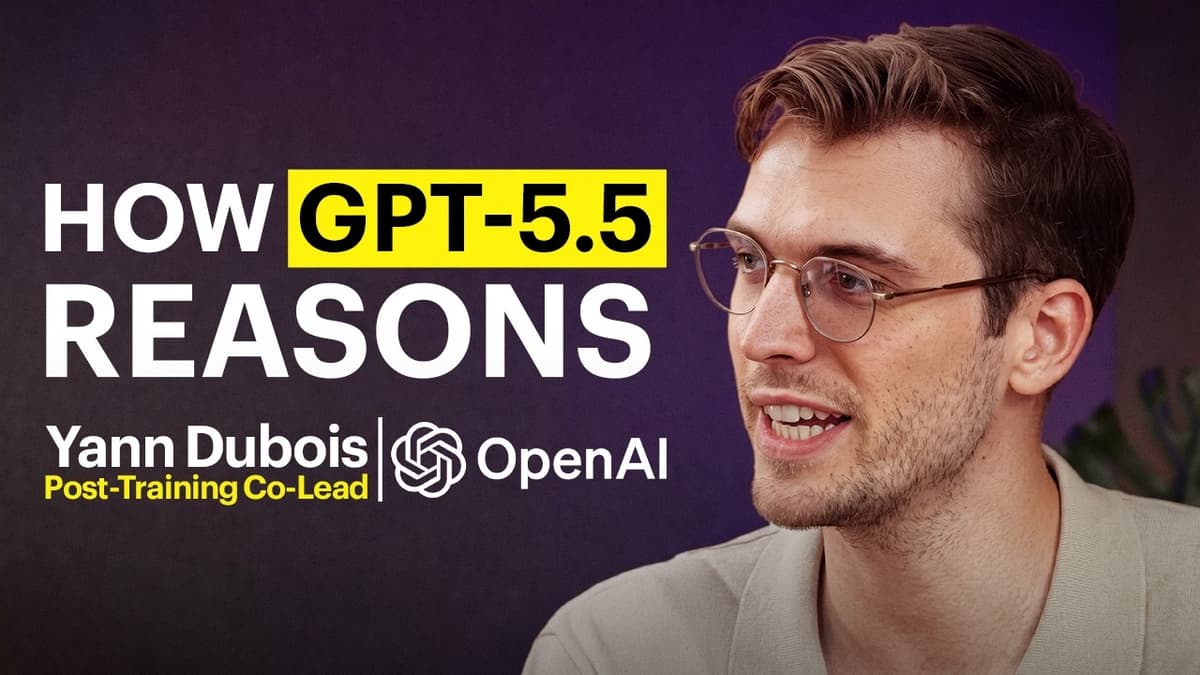
OpenAI's Yann Dubois: Why AI Progress Suddenly Feels Real
In a candid conversation on the Mad Podcast, OpenAI’s post‑training frontiers lead Yann Dubois explains why the release of GPT‑5.5 feels like a sudden step‑function in AI progress. He argues that a reliability milestone was reached around December 2023, after...
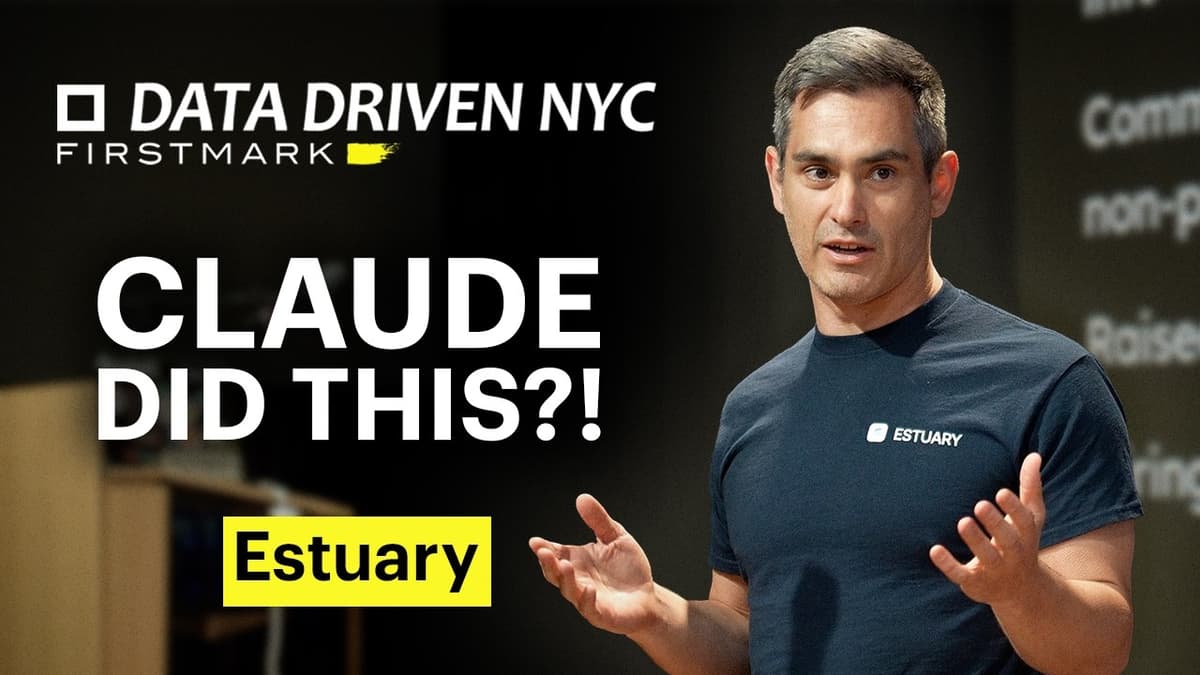
AI Is Building Our Data Pipelines Now (Estuary Live Demo)
The demo introduced Estuary’s “right‑time” data platform, a unified solution that processes both batch and streaming workloads without the traditional split between Kafka‑based streaming and separate batch pipelines. By abstracting the data movement layer, Estuary promises to deliver data at...
Why Every AI Agent Needs Its Own Computer | Ivan Burazin (Daytona)
The conversation centers on Ivan Burazin’s claim that every AI agent needs its own sandboxed computer – a dedicated, isolated environment that functions like a personal workstation. He frames agents as digital knowledge workers, arguing that without a full‑featured computer...

The True Danger of Agentic AI #ai #podcast
The video discusses emerging security challenges posed by agentic AI systems that autonomously fetch and incorporate third‑party data via tool calls. It explains how prompt injection—malicious instructions embedded in external data—can coerce an agent to perform harmful actions such as emailing...
OpenAI Board Member Zico Kolter on the Real Risks of Frontier AI
In this interview, Zico Kolter, chair of OpenAI’s Safety and Security Committee, explains how the board oversees model development and release. The committee functions like an audit board, meeting with internal safety teams, reviewing third‑party reports, and can delay a...
How Ramp Built Self-Maintaining Software
Alex from Ramp Labs explains how the team created a self‑maintaining software pipeline for Ramp Sheets using an internal AI agent called Inspect. Inspect runs code in isolated sandboxes, integrates with GitHub, Datadog, Sentry and other tools, and can...

AI Products Are Built for Humans, Not Computers #ai #podcast
The discussion highlights a fundamental shift in AI product development by 2026: designers are prioritizing human interaction over pure model optimization. Instead of adding features that mainly benefit the underlying algorithm, companies are crafting buttons, prompts, and workflows that directly...

AI Breaking Out of the Sandbox #ai #podcast
The video introduces Project Glasswing, an internal effort to probe Anthropic’s unreleased frontier model, dubbed Mythos. The initiative focuses on the model’s surprising aptitude for uncovering security vulnerabilities in code and its potential to exceed expected operational limits. Researchers observed that...
The Future of Voice AI Is Here: Real-Time Cloning, On-Device & Live Translation (Gradium CEO)
Gradium’s CEO outlined the company’s mission to power real‑time voice applications through a technology‑first approach, delivering speech‑to‑text, text‑to‑speech, and translation models that run at scale. The spin‑off from the nonprofit QI Lab builds production‑ready infrastructure rather than vertical‑specific products, leveraging...

Anthropic’s Felix Rieseberg: Claude Cowork, Mythos, and the SaaS Extinction
The interview with Anthropic’s Felix Rieseberg centers on two breakthrough announcements: the Claude Mythos preview, a frontier model with extraordinary security‑analysis abilities, and the rapid launch of Cloud Co‑Work, an agentic product that lets non‑technical users orchestrate complex tasks. Rieseberg...

AI Is Already Building AI — Google DeepMind’s Mostafa Dehghani
In this episode of the Matt Podcast, DeepMind researcher Mostafa Dehghani explains how the AI field is moving from human‑driven model design to a regime where models iteratively build the next generation of models. He frames the shift as a...

Can One Person Build a Billion-Dollar Startup? — The General Intelligence Company of New York
The General Intelligence Company of New York unveiled its vision of enabling one‑person, billion‑dollar startups by automating entire business functions with AI. Its flagship product, Co‑founder CTO, acts as a fully autonomous engineering department that creates, tests, deploys, and monitors software...