Domain-Driven Design Europe - Latest News and Information
Technology Pulse
EMAIL DIGESTS
Daily
Every morning
Weekly
Tuesday recap
EMAIL DIGESTS
Daily
Every morning
Weekly
Tuesday recap

At DDD Europe 2025, Tobias Goeschel explored whether modern large language models can move beyond code generation to actually replace business logic. He presented experiments that fine‑tuned LLMs with Domain‑Driven Design artifacts such as diagrams and ubiquitous language, testing their ability to reason about complex domains. The findings show promising alignment with deterministic rules but also expose reliability gaps in edge cases. The talk suggests a hybrid future where GenAI augments, rather than fully substitutes, traditional domain logic.
At DDD Europe 2025, Omphile Matheolane explained the modular monolith architecture, positioning it as a hybrid that retains monolithic deployment simplicity while embedding microservice‑style modularity. He highlighted that the system runs as a single deployable unit, yet its internal structure consists...
Omphile Matheolane’s presentation at DDD Europe centered on applying domain‑driven design to large‑scale financial applications. He argued that the first step is to delineate clear bounded contexts—such as accounts and loans—so each domain owns its data and logic without over‑reaching...
Speaking at DDD Europe 2025, Omphile Matheolane framed software architecture through the lens of essential versus accidental complexity, citing John Ozenhart’s A Philosophy of Software Design. He defined essential complexity as the inherent difficulty of solving a problem and accidental...

At DDD Europe 2025, Omphile Matheolane argued that modular monoliths—structured, well-partitioned single applications guided by Domain-Driven Design—offer a practical, scalable alternative to hastily adopted microservices. He outlined the common downsides of microservices (debugging complexity, high operational overhead, and distributed coupling)...
In his DDD Europe talk, Łukasz Reszke warns that poorly designed if statements can become a silent source of technical debt, undermining the reliability of any software system. He illustrates how the temptation to “just add another if” offers an immediate...
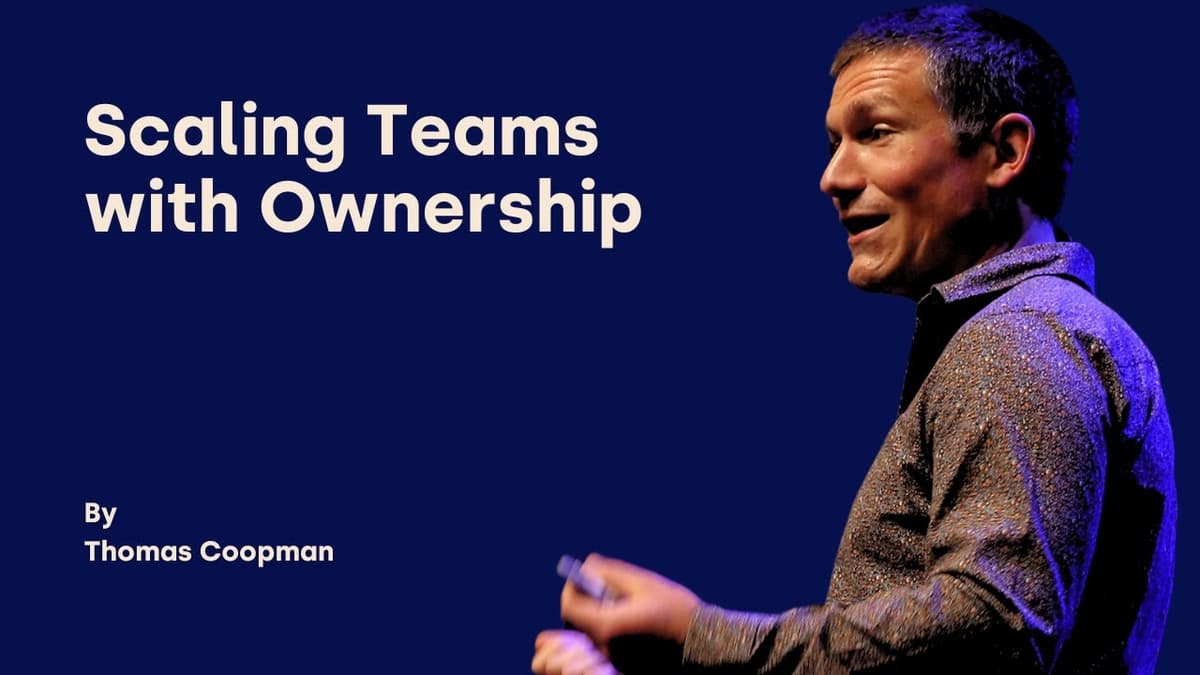
Thomas Coopman described his experience helping Protime scale its engineering organization, where an initial move to feature teams expanded from three to 12 teams and produced more than 40 deployable services. That rapid scaling eroded clear ownership: teams frequently touched...
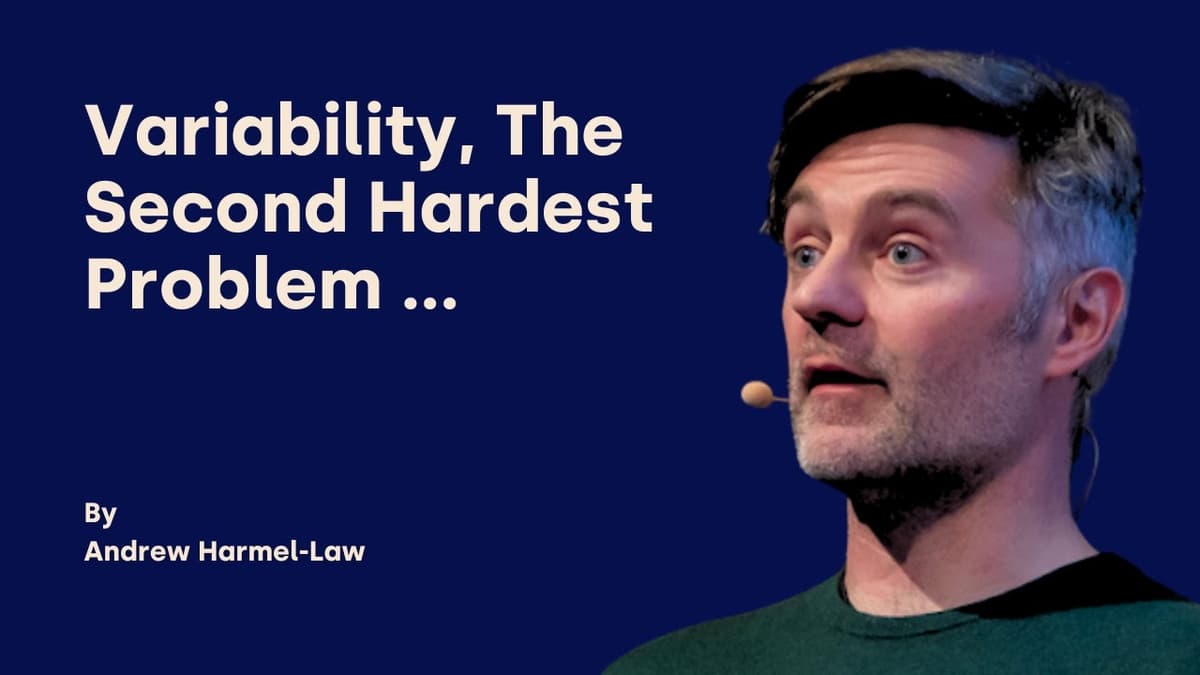
Andrew Harmel‑Law’s DDD Europe 2025 keynote spotlights variability as the second‑hardest problem in software architecture, after people. He explains how variability fuels both unpredictability and the immense power of software, shaping delivery pipelines and system design. The talk walks through...


