

Why You Need to Know About ‘Friction-Maxxing’ | FT #shorts
The video introduces the emerging workplace concept of “friction‑maxxing,” a deliberate counter‑trend to today’s ultra‑convenient, frictionless digital environment. While smartphones and AI tools streamline tasks—such as automated meeting notes—they also strip away the hands‑on learning and personal interaction that traditionally shape employee growth. Proponents argue that re‑adding modest obstacles—hand‑written notes, face‑to‑face meetings, or walking discussions—restores human connection and deepens cognitive engagement. By forcing workers to process information themselves rather than outsourcing it to AI, they retain better knowledge, develop critical thinking, and experience more authentic collaboration. The narrator cites concrete examples: taking meeting minutes by hand, opting for in‑person over virtual gatherings, and walking with colleagues instead of Zoom calls. He emphasizes that these small analog swaps make work “more fun” and “more human,” suggesting that even a single habit change can noticeably boost enjoyment and satisfaction. For leaders, the implication is clear: a balanced approach that mixes digital efficiency with intentional friction can enhance creativity, team cohesion, and employee retention. Organizations that embed friction‑maxxing into culture may see higher engagement metrics and a workforce better equipped to adapt as technology evolves.

The Rout in UK and European Bonds| FT #shorts
The video examines the sharp rout in UK and European government bond markets triggered by the Middle East conflict, which has injected a sudden inflation shock into the region. Rising oil and gas prices have driven short‑term inflation expectations higher,...

Why Is the UK Taxing Young Talent at a Higher Rate than Billionaires | FT #shorts
The Financial Times short explores why the United Kingdom is imposing higher effective tax rates on young, high‑earning talent than on its billionaires, and how this disparity is prompting a wave of tax‑motivated emigration. A recent FT reader survey reveals...

Why the Closure of the Strait of Hormuz Is About More than Just Oil | FT #shorts
The video examines how the shutdown of the Strait of Hormuz reverberates far beyond oil, highlighting disruptions to helium and fertilizer shipments that underpin critical sectors of the global economy. While oil dominates headlines, roughly a third of the world’s...

Could AI Chatbots Undo the Harms of Social Media | FT #shorts
The video argues that the next information revolution—AI chatbots—could reverse the corrosive trends of the past fifteen years, marked by populism, polarization, and dwindling trust in experts, by reshaping how people receive and discuss information. Researchers analyzed tens of thousands of...

Who's Backing Iran in the War? | FT #shorts
The video outlines the network of state and non‑state actors supporting Iran’s confrontation with the United States and Israel, focusing on the so‑called “axis of resistance” that stretches across Iraq, Lebanon and Yemen. Iranian‑backed Shia militias in Iraq are accused of...

Why Is Japan Losing Its Thirst for Vending Machines? | FT #shorts
Japan’s once‑ubiquitous vending‑machine landscape is rapidly contracting, with tens of thousands of units disappearing as rising inflation and chronic labor shortages erode their viability. For years, consumers paid premiums for the convenience of on‑the‑spot drinks, but three consecutive years of price...

The Investment Mistake Exposing You to Higher Risk | FT #shorts
Financial professionals warn that keeping employer‑issued bonus shares can expose investors to dangerous concentration risk. When a single stock dominates a portfolio, any price swing—especially a decline—can erode both investment value and future earnings. The video cites recent bank share...

Why Is the US Turning a Blind Eye to Illicit Oil Trading | FT #shorts
The video explains why Washington is allowing the so‑called “shadow fleet” – a loosely regulated network of aging tankers – to move sanctioned Iranian and Russian crude despite official bans. In recent weeks at least 15 Iranian vessels have slipped through...

Why This Small Iranian Island Is so Important | FT #shorts
The video explains why Kharg Island, a tiny outpost in the Persian Gulf, is critical to Iran’s economy, handling the bulk of its oil exports. The island’s oil terminal, built in the 1960s, ships nine‑tenths of Iran’s exported crude because the...

What Does SpongeBob SquarePants Have to Do with Trump's War on Iran? | FT #shorts
The White House has begun posting short propaganda clips that mash the cartoon character SpongeBob SquarePants with footage of U.S. missile strikes against Iranian jets and trucks, framing the conflict as a light‑hearted video‑game‑style operation. The videos, posted on...

Can Closer Alignment with the EU Boost UK Growth | FT #shorts
The video examines Chancellor Rachel Reeves' proposal to boost UK growth by aligning more closely with EU regulations, known as dynamic alignment, focusing on food, drink and carbon pricing. Analysts note the estimated GDP increase of only 0.24% versus the OBR’s...

Why the Strait of Hormuz Is the Crux of the Iran Conflict | FT #shorts
The Financial Times short explains why control of the Strait of Hormuz sits at the heart of the ongoing Iran‑U.S. confrontation, emphasizing Tehran’s intent to weaponize the narrow waterway to choke global energy flows. Tehran seeks to impose a cost so...

Who's Backing Iran in the War? | FT #shorts
The video examines the network of states and non‑state actors supporting Iran as it confronts the United States and Israel, focusing on the so‑called “axis of resistance” that links Tehran to a patchwork of regional proxies. Key actors include Iranian‑backed Shia...

Why China Isn't Going to Bail Trump Out | FT #shorts
Trump argues that China’s massive resources could unblock the Strait of Hormuz, positioning Beijing as a potential savior for his war‑time agenda. He contends that because China imports more Gulf oil than most nations, it shares America’s interest in ending...

How Markets Are Responding to Trump's War with Iran | FT #shorts
The short FT video examines how financial markets have been interpreting President Donald Trump’s rhetoric surrounding the escalating tensions with Iran. Rather than reacting to on‑the‑ground developments, traders have been pricing in Trump’s personal desire to see the conflict concluded,...
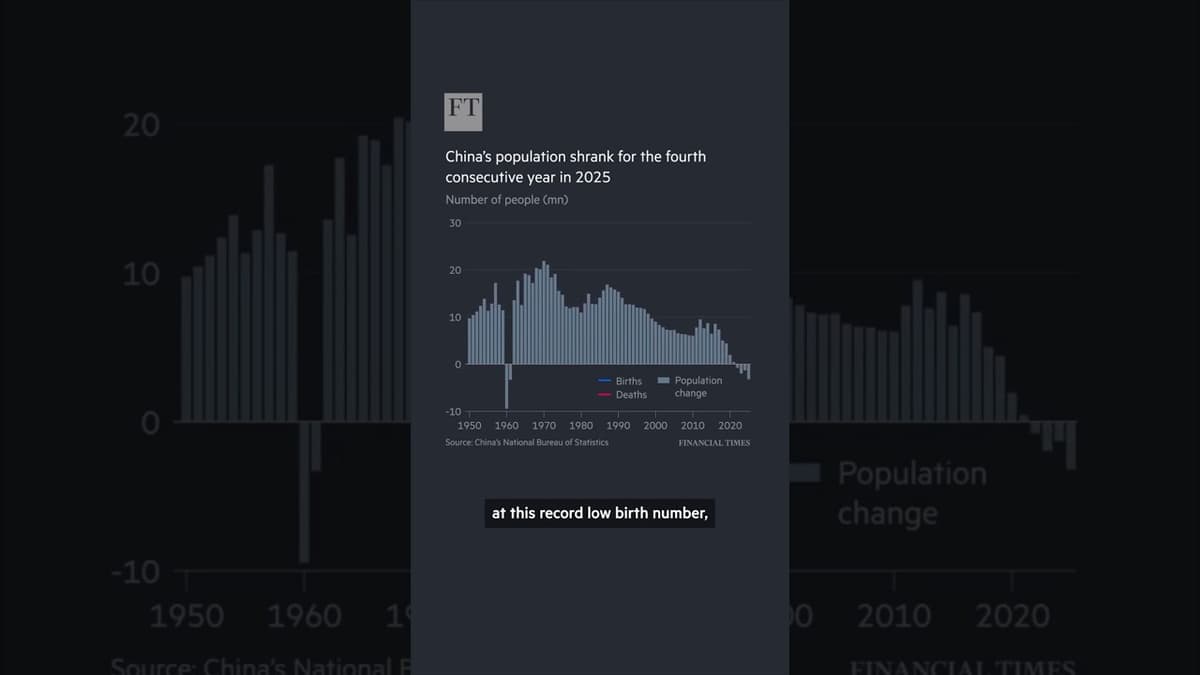
Why Is China's Birth Rate Declining | FT #shorts
The Financial Times short explains that China’s birth tally fell to just under eight million last year – roughly half the pre‑pandemic level – marking the lowest figure since the nation began keeping records in 1949. Demographers warn this plunge...