

Compilation Episode (Part 6): Where AI Surprises Us
The Parlor Room’s "Hello AI" compilation spotlights moments when artificial intelligence surprised even its most knowledgeable observers, illustrating how the technology is moving from hype to tangible impact. It frames AI as a new kind of tool—akin to the internet or fire—that can eliminate routine, hazardous work and unlock time for creative pursuits. Key insights include AI’s ability to automate drudgery, as exemplified by discussions of household chores and dangerous tasks, and its capacity to generate novel solutions, highlighted by AlphaGo’s unconventional moves that now inform human players. The episode also showcases how non‑technical founders like Christina Wallace are leveraging AI‑driven no‑code platforms to build investor onboarding flows and Broadway‑related agents, dramatically lowering development costs and speed. Notable anecdotes feature Oscar Wilde’s 19th‑century optimism about machines, AlphaGo’s self‑play training that produced previously unseen strategies, and Jake Cook’s observation that AI provides a fresh interface for expressing creativity, helping students overcome self‑doubt. These stories underscore AI’s role as both a catalyst for new thinking and a democratizing force. The broader implication is a shift in business economics: rapid AI experimentation reshapes cost structures, accelerates product cycles, and democratizes innovation, forcing companies to rethink talent, processes, and competitive advantage.
Managing in a Changing World of Work Event
The Harvard Business School Online event introduced a refreshed four‑week Management Essentials course, designed for both aspiring and experienced managers navigating a rapidly evolving work landscape. The cohort‑based program delivers five to six hours of self‑paced learning per week, costs...

Compilation Episode (Part 5): Will AI Take My Job?
The Parlor Room’s "Will AI Take My Job?" episode gathers four Harvard Business School faculty to dissect how artificial intelligence is reshaping work. Rather than asking whether AI will replace jobs, the panel urges leaders to ask how to redesign...

How to Gain Power & Use It to Lead Change | Business: Explained
The video reframes power in business as a tool for mobilizing people and resources rather than a means of domination. It outlines how leaders can deliberately acquire and wield power to drive organizational change. Three distinct sources of power are identified—personal...

Christina Wallace on AI and Entrepreneurship
The video features Harvard professor Christina Wallace discussing how AI, especially large‑language‑model agents, is fundamentally reshaping entrepreneurship and creative work. She notes that AI agents enable two‑ or three‑person startups to perform tasks previously requiring fifteen employees, allowing founders to...

Sunil Gupta on Marketing in the Age of AI
Harvard professor Sunil Gupta argues that AI is reshaping marketing, turning brand communication from a “seeing is believing” model into a data‑driven, generative landscape. He warns that the $200 billion search‑advertising ecosystem and the broader ad spend will be redefined as...

2026 Community Challenge Aims to Expand Access to Life-Saving Medical Supplies
The 2026 Community Challenge, launched by Partners for World Health, calls on innovators to create scalable solutions that increase the flow of in‑date medical supplies from U.S. hospitals to underserved populations worldwide. Founded in 2009 by nurse Elizabeth McClellan, the nonprofit...

What Are the Different Sources of Power Beyond Money and Resources? | Faculty Q&A
The video argues that power fundamentally derives from controlling access to resources that others value, extending far beyond mere financial assets. It frames power as a relational dynamic where each party’s influence hinges on the resources they can grant or...
Connext 2026: Opening Remarks & Keynote
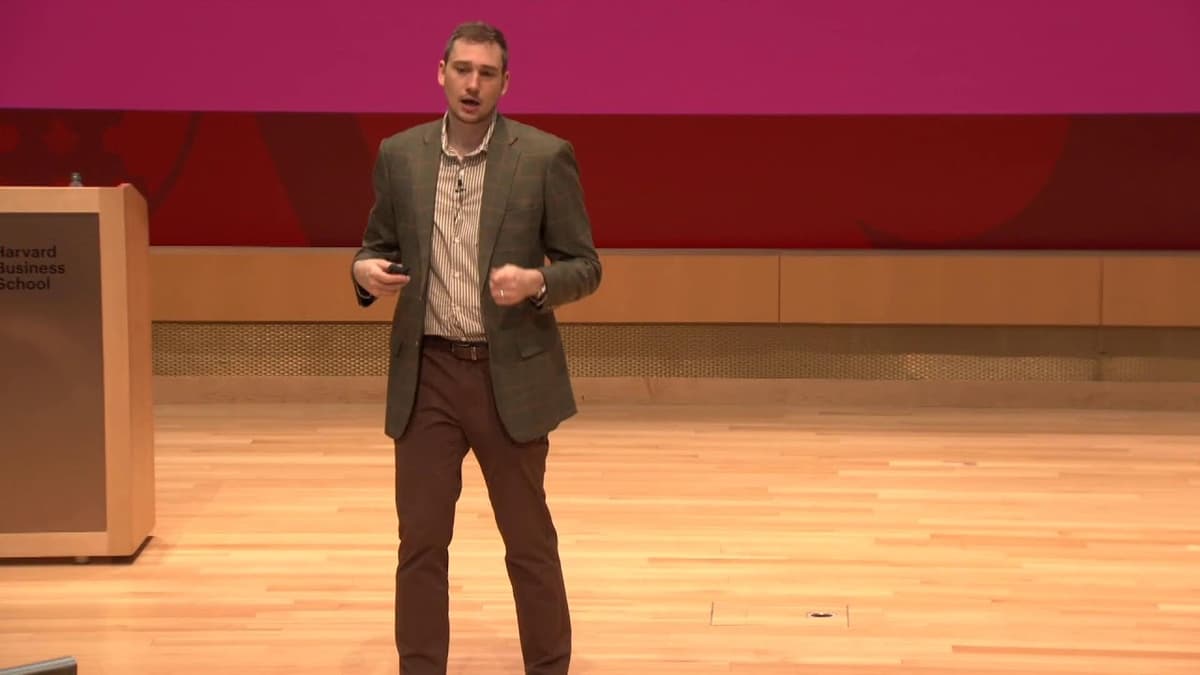
The opening remarks at Connext 2026 set the stage for Harvard Business School Online’s rapid evolution, highlighting a decade of growth from the original HBX platform to a portfolio of 36 courses spanning business fundamentals to cutting‑edge technology. Key data points...

What Are the Different Sources of Power Beyond Money and Resources? | Faculty Q&A
The video explains that power originates from controlling access to resources that others value, not merely from financial capital. It distinguishes monetary resources from psychological ones, arguing that influence can derive from moral authority, reputation, or shared values, which can be...

Compilation Episode (Part 2): Early Career Advice for Building AI and Human Skills
Faculty advised early-career professionals and first-time founders to learn AI tools hands-on, test legacy playbooks against the post-2023 reality, and build deep domain expertise where they can outperform both peers and AI. They emphasized that nontechnical founders must still get...

"I Won't Get In" | HBS Online Myths Vs. Reality
The video tackles a common misconception that Harvard Business School’s online CLIMB program is reserved for an elite few. The speaker admits to initially doubting their chances, only to discover that the application process is straightforward and open to anyone...

Linda Hill on Leading Through AI-Driven Change
In this interview, Harvard Business School professor Linda Hill explains why AI‑driven change cannot be treated as a simple technology plug‑in. She argues that leaders must rethink both the nature of work and the composition of their workforce, moving beyond...

Leadership Vs. Management: What's the Difference? | Business: Explained
Leadership vs. Management: What's the Difference? explores how vision‑setting and execution complement each other in organizations. The video defines leadership as the ability to craft a compelling future and rally people around it, while management is portrayed as the discipline...

Iavor Bojinov on AI Adoption, Trust, and Decision-Making
The video features Harvard Business School professor Iavor Bojinov discussing why many AI projects stall after development. He argues that organizations focus on protecting job descriptions rather than jobs, leading to a mismatch between powerful AI tools and actual user...