Mass General Hospital - Latest News and Information
Technology Pulse
EMAIL DIGESTS
Daily
Every morning
Weekly
Tuesday recap
EMAIL DIGESTS
Daily
Every morning
Weekly
Tuesday recap

The Healey Community Q&A webinar on March 12, 2026 featured Dr. Jinsey Andrews presenting interim results from the NIH‑funded CNM‑AU8 expanded access program (EAP) for amyotrophic lateral sclerosis (ALS). The program targets patients ineligible for traditional clinical trials, offering them investigational therapy while simultaneously generating real‑world data on safety, efficacy, and disease biomarkers such as neurofilament light chain (NfL). Key insights include the feasibility of remote enrollment, which attracted a demographically diverse cohort—half enrolled virtually, many from high area‑deprivation index regions and geographically isolated locations like Alaska. Using the Answer ALS database, the team created propensity‑matched controls to compare outcomes, revealing that CNM‑AU8 30 mg consistently reduced NfL area‑under‑the‑curve (AUC) at weeks 24, 36, and 48, with statistically significant reductions in the overall and bulbar‑onset subgroups. Additional exploratory biomarkers, including GFAP, were also evaluated, though results remain preliminary. Dr. Andrews illustrated the neurofilament analysis with a vivid analogy: a single NfL measurement is like a snapshot of smoke, whereas AUC reflects the total smoke over the night, offering a more comprehensive view of disease activity. She highlighted a remote participant in Alaska who required air transport for home assessments, underscoring the program’s reach and patient impact. The discussion also addressed why AUC was chosen, noting its superior correlation with survival amid the dynamic fluctuations of NfL levels. The findings suggest that expanded access programs can yield supportive efficacy signals and robust biomarker data, potentially accelerating future ALS trial designs and informing regulatory deliberations. By integrating research aims into access initiatives, the NIH model builds infrastructure, validates candidate biomarkers, and expands therapeutic options for underserved ALS populations.

The Blum Center’s spring edition of its well‑being series featured a live, recorded session titled “Reset and Renew: A Mindful Transition into Spring,” hosted by health‑education specialist Amy Sam and facilitated by certified mindfulness trainer Carmen Alvarez. Alvarez framed the...

The Shaun M. Healey and AMG Center for ALS at Massachusetts General Hospital unveiled ALS MyMatch, a precision‑medicine platform designed to overhaul early‑phase clinical trials for amyotrophic lateral sclerosis. By integrating a unified screening protocol that evaluates multiple biomarkers and...

The March 4, 2026 Geriatric Medicine Town Hall opened with Dr. Russell warning staff about the heightened outdoor fall risk as winter melt creates hidden ice, urging residents to limit trips outside and rely on delivery services or family help. He emphasized...

The webinar introduced Regimen I of the Healy ALS platform trial, the next phase of a community‑driven effort to evaluate new therapies. Led by Dr. James Barry and partners from New Horizon, the session focused on the investigational mTOR inhibitor NUZ001,...

The McCance Center seminar featured Dr. Jasmeer Chhatwal, an associate professor of neurology at Harvard Medical School, who outlined his translational neuroscience program’s focus on early‑onset, genetically driven Alzheimer’s disease and the use of cutting‑edge biomarkers and neuroimaging to detect...

The McCance Center seminar featured Dr. Nanda Kumar Navalpur Shanmugam presenting recent work on how intestinal inflammation influences Alzheimer’s disease (AD). Using a dextran sodium sulfate (DSS)‑induced colitis model in 5xFAD mice, the study examined whether acute gut inflammation can...

The McCance Center Seminar featured Dr. Ron, an associate professor at Harvard Medical School, discussing how physical activity protects the brain at the cellular level and mitigates Alzheimer’s disease risk. Drawing on her NIH‑funded research, she highlighted both human and...

The webinar, hosted by the Mass General Blum Center and the Cancer Institute, focused on practical strategies for managing diarrhea in patients undergoing cancer treatment. Clinical dietitians Martha Silva and Taylor Klein outlined how chemotherapy, radiation, surgical resections, and certain...
The Healey ALS Platform Trial webinar focused on neurofilament light chain (NFL) as a biomarker in amyotrophic lateral sclerosis. Clinician‑researcher Dr. James Barry and biostatistician Jenny Wing explained NFL’s biology, its detection in cerebrospinal fluid and blood, and why it...
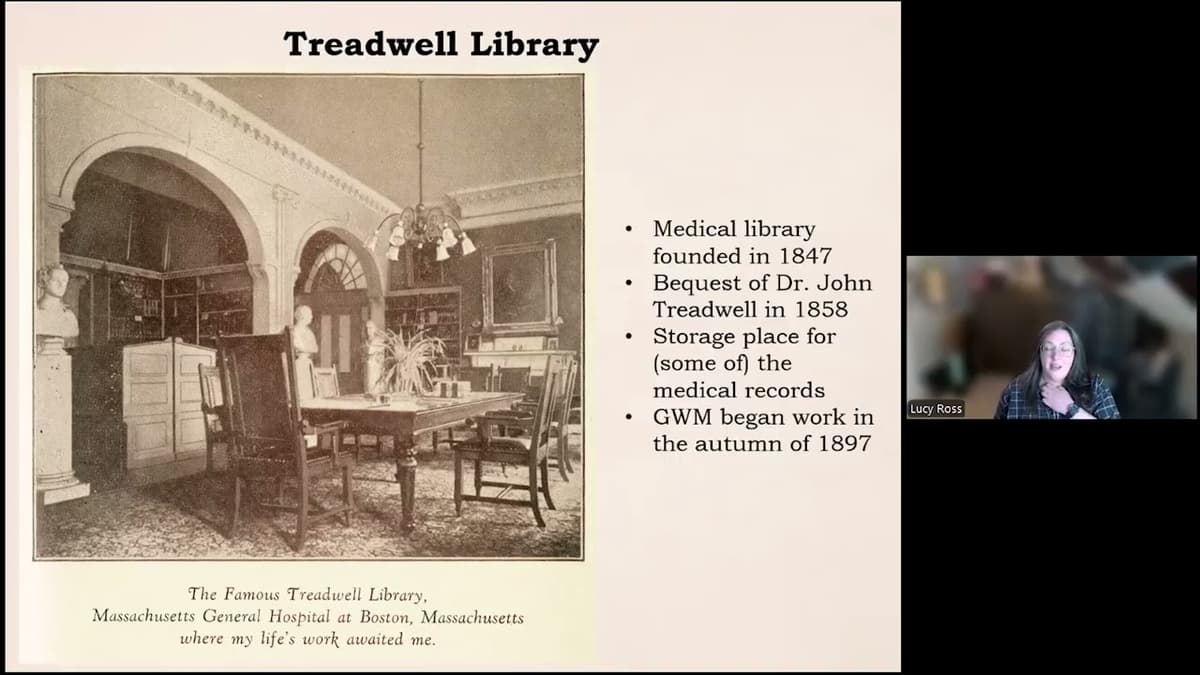
The presentation, delivered by Lucy Ross at Mass General’s Russell Museum, celebrated Grace Whiting Myers—often called the “fairy godmother” of health information management—who oversaw the Treadwell Library and the hospital’s clinical records for nearly three decades beginning in 1897. Myers arrived...
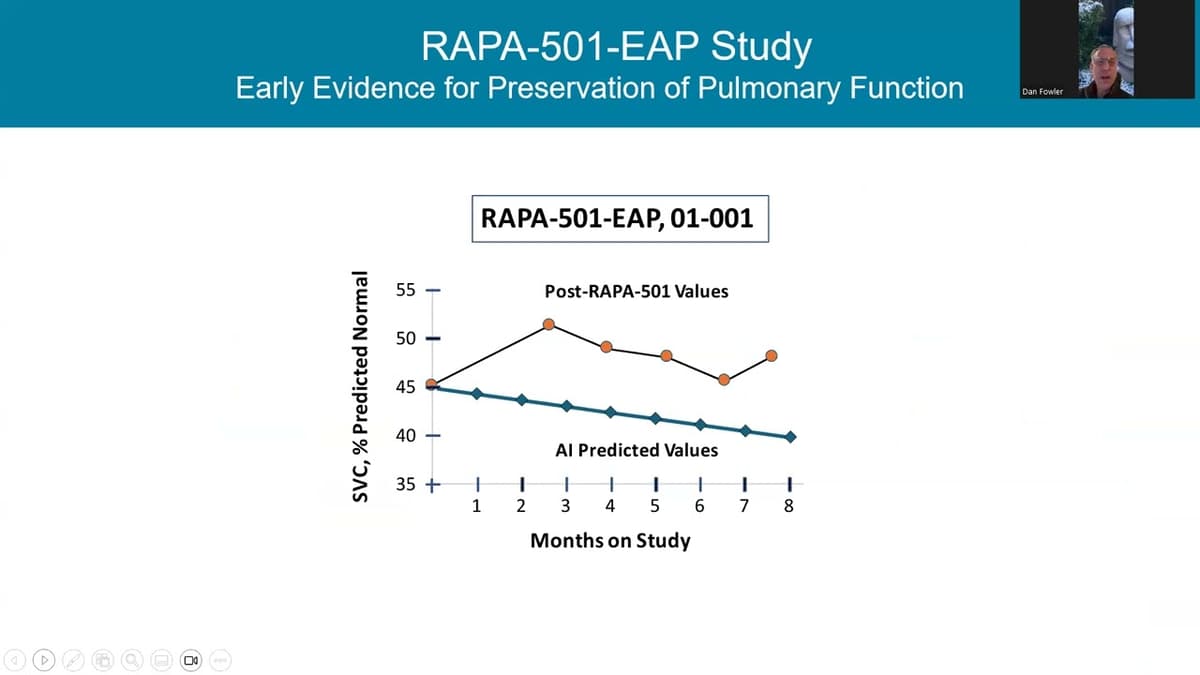
The Healey Community Q&A Webinar on February 12, 2026 featured Dr. James Berry of Massachusetts General Hospital alongside Rapa Therapeutics representatives. They reported that the RAPA-501 Expanded Access Protocol has successfully reached its enrollment goals, providing broader treatment options for...
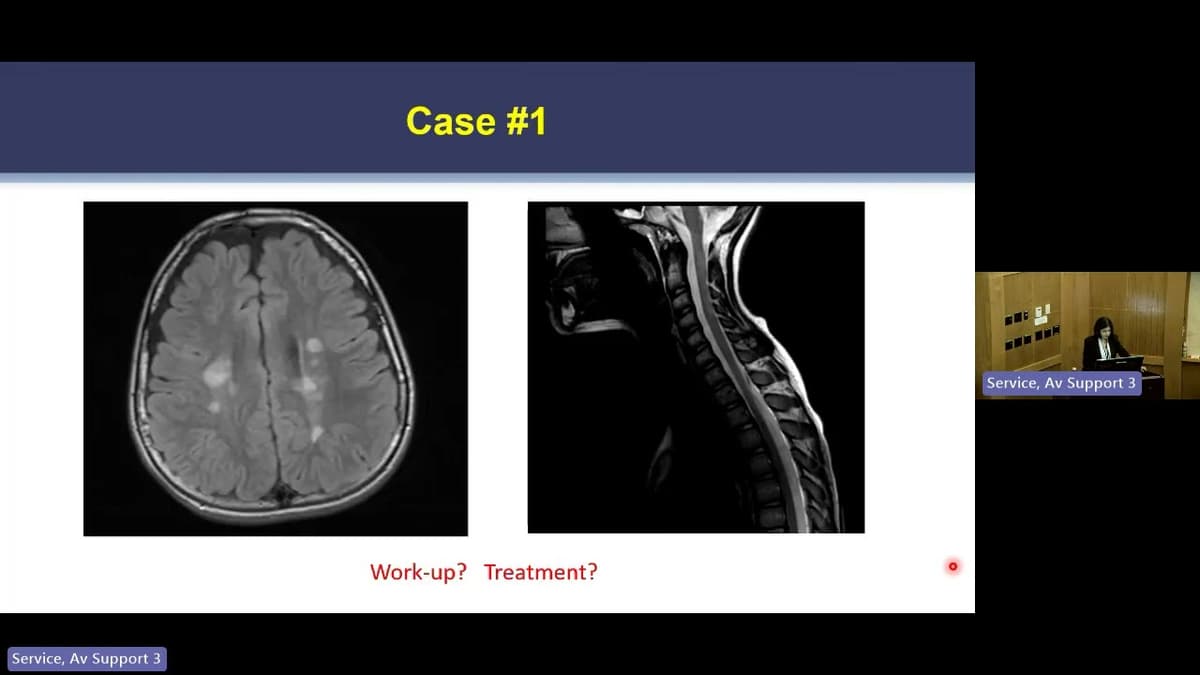
Dr. Tanuja Chitnis, a leader in neuroimmunology, argued that many cases of multiple sclerosis originate in childhood and reviewed advances in recognizing, diagnosing and treating pediatric MS. Using a representative 12-year-old case, she highlighted characteristic MRI features, the expanding diagnostic...

Amelia Henning, CNM, MSN, IBCLC, presented the Blum Center’s program aimed at creating a supportive environment for breastfeeding families. The presentation highlighted that infants who receive human milk experience fewer illnesses and that parents also gain health benefits, yet more...
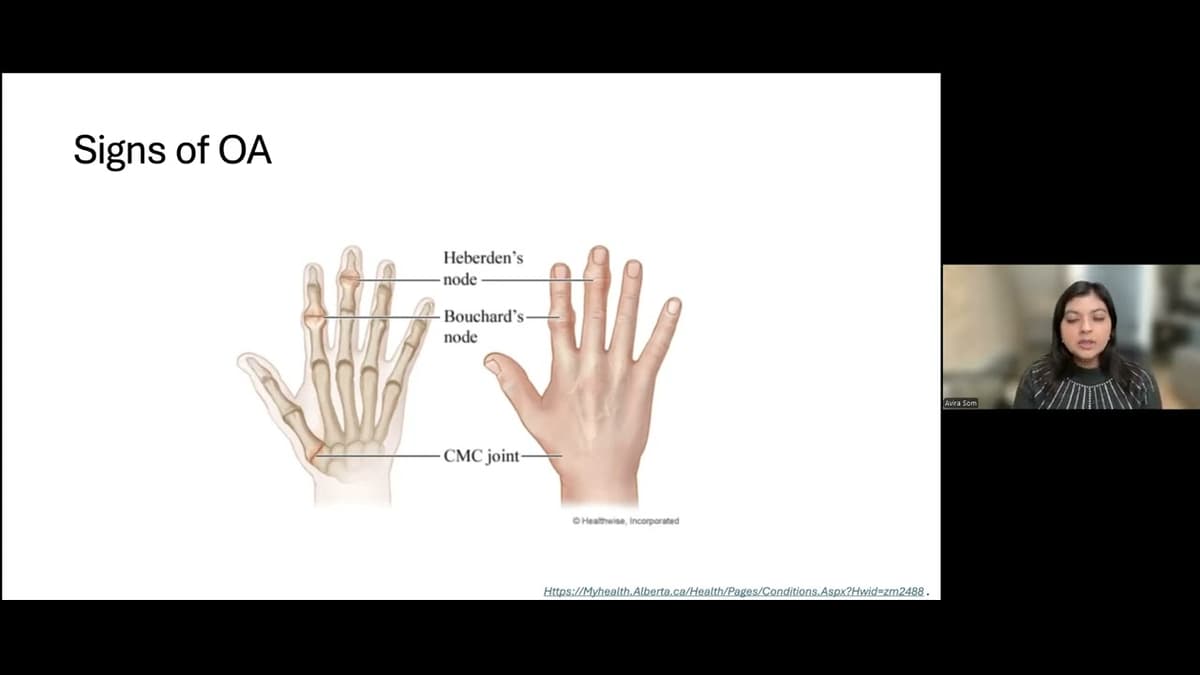
In a February 23 2026 presentation, Dr. Avira Som of Massachusetts General Hospital explained osteoarthritis fundamentals, highlighted common symptoms, and reviewed current treatment options ranging from NSAIDs to intra‑articular injections. She also introduced emerging research on glucagon‑like peptide-1 (GLP‑1) receptor agonists and...


