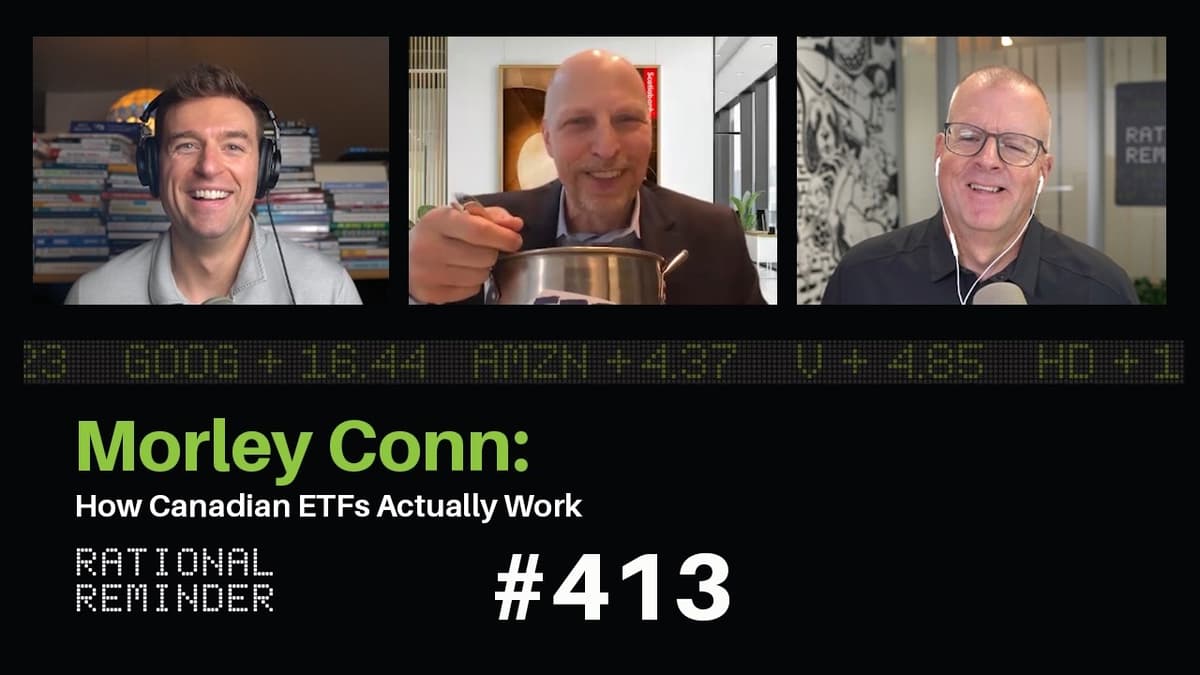
Morley Conn: How Canadian ETFs Actually Work | Rational Reminder 413
The Rational Reminder episode dives deep into the mechanics of Canadian exchange‑traded funds, outlining the roles of issuers, custodians, market makers, and authorized participants that keep the ecosystem running. Morley Conn explains how the creation‑redemption process—either in‑kind basket swaps or cash settlements—allows new ETF units to be issued or retired, aligning market prices with net asset value. Three tiers of liquidity are highlighted: primary creation/redemption, secondary dealer inventories, and the exchange‑floor trading where market makers post bids and offers. When an ETF’s price drifts from its NAV, authorized participants arbitrage the gap, buying undervalued units and selling overvalued ones, thereby rebalancing the fund’s holdings. The discussion also covers the tax‑efficient capital‑gains‑refund structure unique to Canadian mutual‑fund trusts that underpins ETFs. Conn references his early exposure to ETF arbitrage on the NYSE floor after 9/11 and cites the March 2020 fixed‑income market freeze as a real‑world stress test where ETFs supplied liquidity while cash markets stalled. He notes that U.S. ETFs see 20‑30 times more secondary trading than primary flows, whereas Canada’s ratio is roughly 6‑10 times, underscoring the importance of secondary market activity. For investors, these mechanics translate into lower expense ratios, tighter spreads, and tax advantages, while regulators and participants must monitor creation/redemption limits to prevent unintended capital‑gain events. Understanding the Canadian nuances helps advisors and traders optimize execution and risk management in an increasingly ETF‑centric landscape.
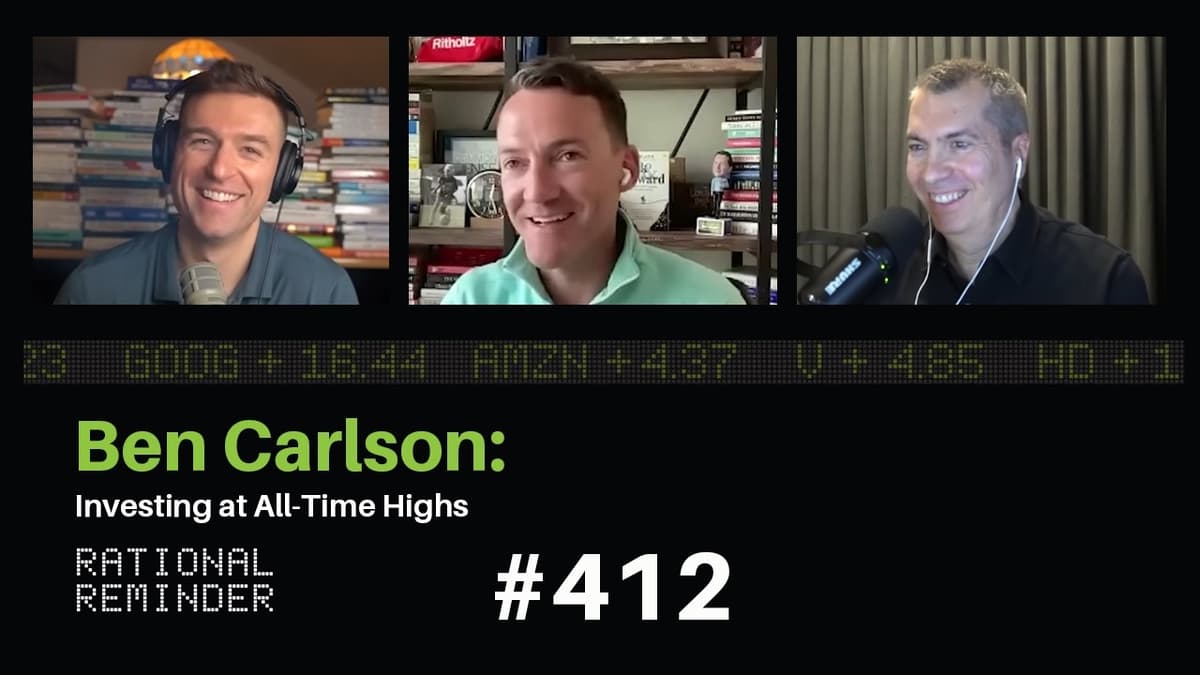
Ben Carlson: Investing at All-Time Highs | Rational Reminder 412
The Rational Reminder podcast hosts Benjamin Felix and Dan Bordotti sit down with Ben Carlson, director of institutional asset management at Rohlt Wealth Management, to discuss his new book “Risk and Reward” and the broader question of investing when markets...
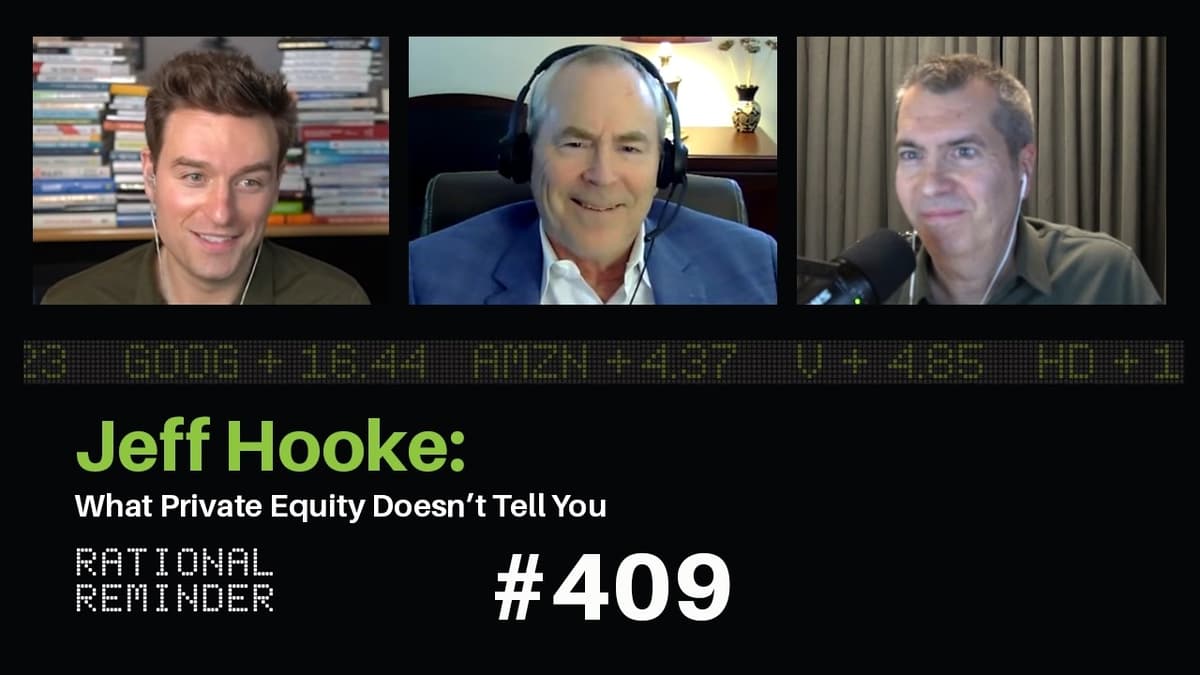
Jeff Hooke: What Private Equity Doesn’t Tell You | Rational Reminder 409
The Rational Reminder episode with Jeff Hook examines why private‑equity and private‑credit have become fashionable despite questionable returns. Hook, a former private‑debt executive and academic, argues that the allure stems more from career incentives and marketing hype than from superior...
Elroy Dimson: Investing & Optimism | Rational Reminder 408
The Rational Reminder podcast hosts sit down with Professor Elroy Dimson, the research director behind the Global Investment Returns (GIR) yearbooks and author of Triumph of the Optimists, to discuss why studying long‑run market history matters for today’s investors. Dimson explains...
Michael Kothakota: The Shape of Financial Planning | Rational Reminder 407
The Rational Reminder episode spotlights Michael Kothakota’s integrative financial‑planning theory, a mathematically rigorous framework that brings together six core planning domains—investment, tax, estate, insurance, cash flow, and client preferences—into a single decision‑making model. By treating financial planning as an...

When Massive Private Companies Go Public | Rational Reminder 406
The Rational Reminder episode opens with PWL Capital announcing a strategic acquisition in Vancouver and promoting a new advisor‑focused webinar series. After the brief firm news, hosts Ben Felix, Dan Bordotti, and Ben Wilson shift to the core discussion: the...

Timothy Edwards: Inside S&P DJ Indices | Rational Reminder 405
The Rational Reminder episode 405 features Tim Edwards, managing director of index investment strategy at S&P Dow Jones Indices, discussing the SPIVA (S&P Index versus Active) report – a semi‑annual, global scorecard that compares actively managed funds to their benchmark...

The Finance Paper that Changed Everything | Rational Reminder 404
The Rational Reminder episode revisits the landmark 1993 Fama‑French paper that introduced a three‑factor model—market beta, size (small‑minus‑big), and value (high‑minus‑low book‑to‑market)—as a superior explanation for cross‑sectional stock returns. By documenting how these factors capture the majority of return...

Patrick Adams: When Stock Crashes Matter for Long-Term Investors | Rational Reminder 403
The Rational Reminder episode features MIT PhD candidate Patrick Adams, who examines why stock market crashes can be perilous for long‑term investors when they are forced to sell. Using a novel data set drawn from individual tax returns covering 1998‑2023,...

The Problem with Private Markets | Rational Reminder 402
The Rational Reminder episode 402 examines the growing problems in private‑market investing, focusing on private equity, credit and real‑estate funds as they become increasingly accessible to retail investors. The hosts argue that the industry’s long‑standing claim of lower volatility and higher...

Eduardo Repetto & Caitlin Ebanks: Opening the Avantis CAGE | Rational Reminder 401
The Rational Reminder episode spotlights Avantis’ debut of Canadian‑listed exchange‑traded funds, launched in partnership with CIBC’s ETF platform. After rolling out U.S. and European products, the firm finally offers domestic ETFs that hold securities directly in Canadian dollars. The new lineup...

The Evolution of Index Fund Investing | Rational Reminder 400
The Rational Reminder’s 400th episode marks half‑century of index fund growth, featuring a NYSE‑hosted panel with Vanguard, S&P Dow Jones Indices, and the Investment Company Institute. Speakers traced how passive vehicles expanded from niche products to dominate more than half...

High Volatility + Reversals: The Real Reason Leveraged ETFs Underperform
The video examines why leveraged exchange‑traded funds (ETFs) tend to underperform during turbulent markets, focusing on the empirical link between volatility and serial correlation rather than volatility alone. The presenter challenges the common narrative that volatility is inherently detrimental, showing...
Hendrik Bessembinder: Constant Leverage & Measuring Investor Outcomes | Rational Reminder 397
Hendrik Bessembinder told the Rational Reminder hosts that leveraged single-stock ETFs have material costs and tail risks, finding long 2x/3x products underperform a frictionless leveraged benchmark by about 0.79% per month (roughly >9% annually) and short products by ~1% per...