

How the New SaaStr AI Benchmarking Tool Can Build Your 2026 C60 Plan in Seconds
Jason Lemkin introduces SaaStr.ai’s new AI‑powered benchmarking tool that generates a data‑driven C60 financial plan for 2026 in roughly a minute. The C60 model, based on the Last‑4‑Months (L4M) growth rates, provides realistic revenue, burn‑rate, and runway projections, replacing the labor‑intensive spreadsheet process many founders avoid. Lemkin highlights that only about 5% of SaaS founders maintain a living financial model, while the AI tool aims to lift that percentage dramatically. By delivering instant forecasts, the tool enables founders to build hiring, stretch (C10), and worst‑case (C90) scenarios quickly and make informed capital‑raising decisions.

Gartner: Enterprise Software Spend Will Grow a Stunning 15.2% Next Year. But Most Of That Will Go to Price Increases...
Gartner forecasts enterprise software spending to jump 15.2% in 2026, but roughly 9% of that growth will simply offset price hikes on existing products. The remaining expansion is concentrated in AI‑driven applications and infrastructure, with AI software spending expected to...

Is AI Support Perfect? No. But It’s A Lot Better Than No Support at All
Jason Lemkin argues that companies should deploy AI‑powered customer support now rather than wait for perfection. Well‑trained AI can resolve 60‑70% of tier‑1 queries instantly, delivering 24/7 coverage and cutting response times from hours to seconds. A hybrid model that...

Our 20+ AI Agents and Their Moats: Real But Weak
Jason Lemkin explains that while his company runs 20+ AI agents across its GTM stack, the core AI capabilities are largely interchangeable—prompts can be copy‑pasted between platforms with minimal tweaks and achieve comparable results. He argues that true moats lie...
Figma Is at $20B. Right Where Adobe Offered to Buy It. When Is Saying ‘No’ Worth It in A Strong...
Jason Lemkin examines Figma’s decision to reject Adobe’s $20 B acquisition offer, showing that while the headline numbers look similar, the time‑value‑adjusted cash and stock from the deal would have been worth roughly $22‑23 B today versus the post‑IPO market cap of...

How Our AI BDR Drove Inbound From 30% to 71% of Revenue From Inbound — By Letting AI Qualify 24/7
Jason Lemkin explains how deploying an AI Business Development Representative on their website, fully integrated with Salesforce, boosted inbound‑generated revenue from a historic 30% to 71% in just a few months. By qualifying visitors 24/7, instantly booking meetings, and feeding...

Gemini 3 Solves One of the Biggest Headaches With Vibe Coding: Now Your Site Doesn’t Have to Look Like It...
Jason Lemkin explains how Gemini 3, especially when used in design‑first tools like Replit’s new design mode, breaks the uniform look of AI‑generated “vibe‑coded” sites that have been dominated by Claude’s default aesthetics. By letting developers define their own design system...

AI App of the Week: Aurasell – The AI-Native CRM That’s Actually Replacing 15 Tools
Aurasell, launched in August 2025, is positioned as the first AI‑native CRM that consolidates 15+ sales tools into a single platform, promising to cut GTM tech‑stack costs by half and reduce reps' admin time by 30‑40%. Built from the ground...

Dear SaaStr: What Types of Customers Should Be Avoided and How Do I Recognize Them?
The post challenges the common SaaS advice to weed out “bad” or overly demanding customers, arguing that these clients often serve as the most valuable teachers for product improvement and growth. It outlines how to differentiate truly problematic customers—those who...

The First $100,000,000 ARR at Ramp: How CEO Eric Glyman and CTO Karim Atiyah Built a $30B+ Finance Platform Through...
Jason Lemkin’s post breaks down how Ramp’s founders used asymmetric risk thinking—backed by a large seed fund—to chase high‑barrier, high‑upside problems in business spend management, leading to $100M ARR and a $32B valuation. Key takeaways include hiring for spiky, high‑growth...

Crunchbase: We’re At The Highest Level of Unicorn Production in 3+ Years
Jason Lemkin reports that October 2025 saw the highest influx of unicorns in over three years, with 20 new companies adding $44.5 billion in valuation, signaling a resurgence driven by AI‑native startups. He explains that while overall funding is normalizing to...

The #1 Clear Sign a VP Will Fail. Be Honest With Yourself When You See It
Jason Lemkin argues that the single best predictor of a VP or C‑level executive's failure is whether they have stopped doing the core work of their function—selling, coding, marketing, or meeting customers. He illustrates how hands‑on involvement preserves market insight,...
5 Interesting Learnings From Valve at $17 Billion in ARR
Jason Lemkin highlights Valve’s Steam platform as a model of ultra‑lean, high‑margin profitability, generating over $17 B in revenue with just 330‑360 employees and $50 M+ per Steam staffer. He extracts five lessons: charge premium commissions when you deliver outsized value; automate...

Cursor Hit $1B ARR in 24 Months: The Fastest Scaling SaaS Ever?
Jason Lemkin highlights Cursor’s unprecedented growth, reaching over $1 B ARR in just 24 months and a $29.3 B valuation after a $2.3 B Series D—making it the fastest‑scaling B2B SaaS ever. The post attributes this speed to a product‑led strategy with zero marketing...

Yes, The IPO Market Came Back in 2025. But It Still Has a Long Way to Go.
The post argues that while the IPO market for software and AI companies has revived in 2024‑2025, it remains a fraction of its 2019‑2021 boom. Data shows only eight IPOs so far in 2025—about 17% of the 2021 peak and...
Stop Building Financial Plans on Hope and Prayer: Why Your C-60/C-90/C-10 Planning Is Backwards
Jason Lemkin warns founders that many financial plans are built on hopeful Q4 spikes rather than realistic data, leading to cash crises. He advocates using a C‑60 revenue plan—about 60% confidence with linear growth—and a conservative C‑90 cash plan that...

The Hard Truth About Fundability: What 2,000+ Pitch Decks on SaaStr AI VC Taught Us
Jason Lemkin analyzes over 2,000 SaaStr AI VC pitch decks and finds that only about 23% of companies meet top‑quartile growth benchmarks that make them fundable for elite VCs, with just 12% truly elite. The data reveals a massive gap between founder...

20VC X SaaStr This Week: Why Most VCs Need to Step Aside, What’s Really Defensible Today, and How to Actually...
In a candid 20VC × SaaStr episode, Jason Lemkin, Harry Stebbings and Rory O’Driscoll argue that the traditional VC playbook is obsolete, urging most VCs, executives and founders from the past decade to step aside for AI‑savvy talent. They outline three viable...

Stop Looking For Sales Magicians
Jason Lemkin argues that the idea of a "sales magician" is a myth—only a handful ever exist and even they falter when market conditions change. The real breakthrough comes from hiring a first sales rep who can quickly internalize and...

The Single Biggest Mistake You’ll Make as a Founder. Again and Again.
Jason Lemkin argues that the single biggest mistake founders make is tolerating mediocrity in senior team members—co‑founders, VPs, and partners—because it silently drains time, resources, and momentum. He breaks down three deadly forms of mediocrity, quantifies their hidden costs, and...

Yes, AI Native Wins Today. But It’s Not Too Late. You Can Change. See, E.g., Clio and Gamma
The post argues that while AI‑native companies dominate today, legacy firms can still catch up by fundamentally redesigning their products to "do the work" rather than merely support workflows, as demonstrated by Clio and Gamma. It highlights that true AI‑native...
Traditional SaaS May Be Dying. But It Might Also Be Your Fault.
Jason Lemkin argues that traditional SaaS models are collapsing because vendors are exploiting existing customers with aggressive price hikes, mandatory AI bundles, and hostile renewal tactics, turning customer success into a sales funnel. He illustrates the fallout—lost advocacy, higher churn,...
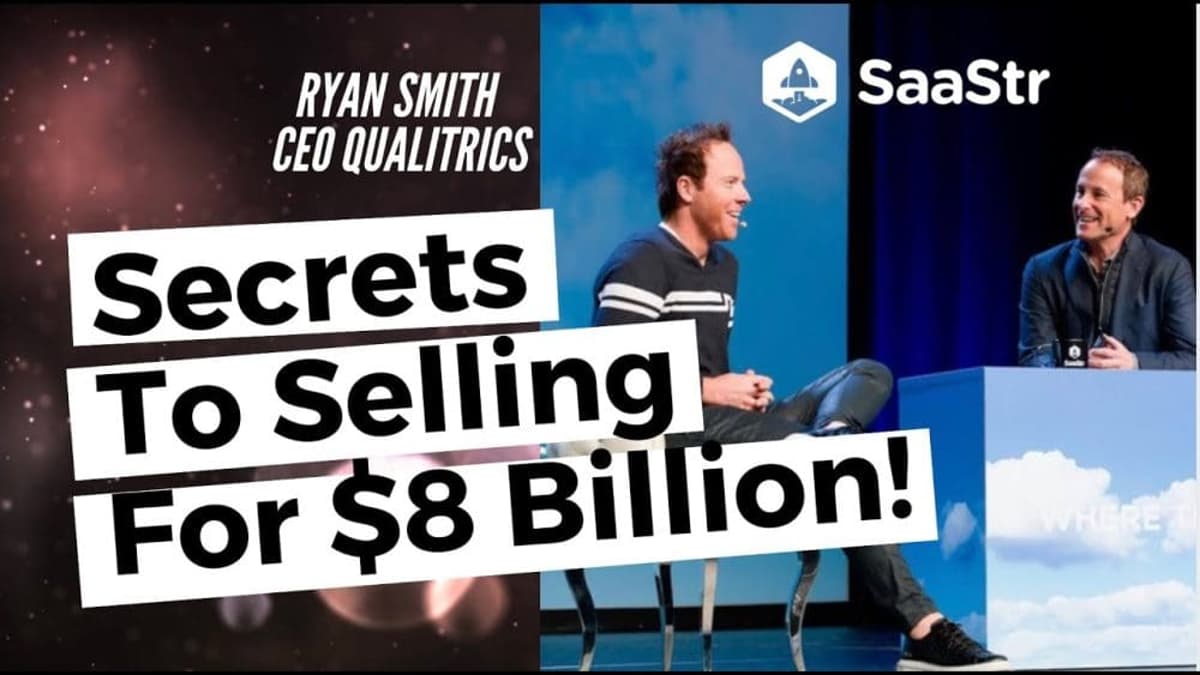
When Competitors Come Calling: 6 Questions That Will Help You Make the Right M&A Decision
Jason Lemkin outlines a six‑question framework for founders to objectively assess acquisition offers, emphasizing gut instinct validation, understanding the acquirer's strategic motives, honest economic analysis, and the founder's own growth trajectory. He stresses timing, opportunity cost, and the importance of...

SaaStr AI App of the Week: Dust – Build Custom AI Agents That Actually Know Your Company’s Data
Jason Lemkin highlights Dust, a no‑code platform that lets any employee build specialized AI agents tightly integrated with a company’s own tools and data, achieving remarkable 70%+ weekly adoption at firms like Doctolib and Qonto. The key differentiators are its...

You Can Hide From a Lot of Things as a Founder. Cash Burn Isn’t One of Them.
Jason Lemkin warns founders that while many operational issues can be postponed, cash burn is unforgiving and must be faced head‑on. He stresses calculating true runway using actual burn, adding a substantial buffer, and making decisive, deep cuts early rather...
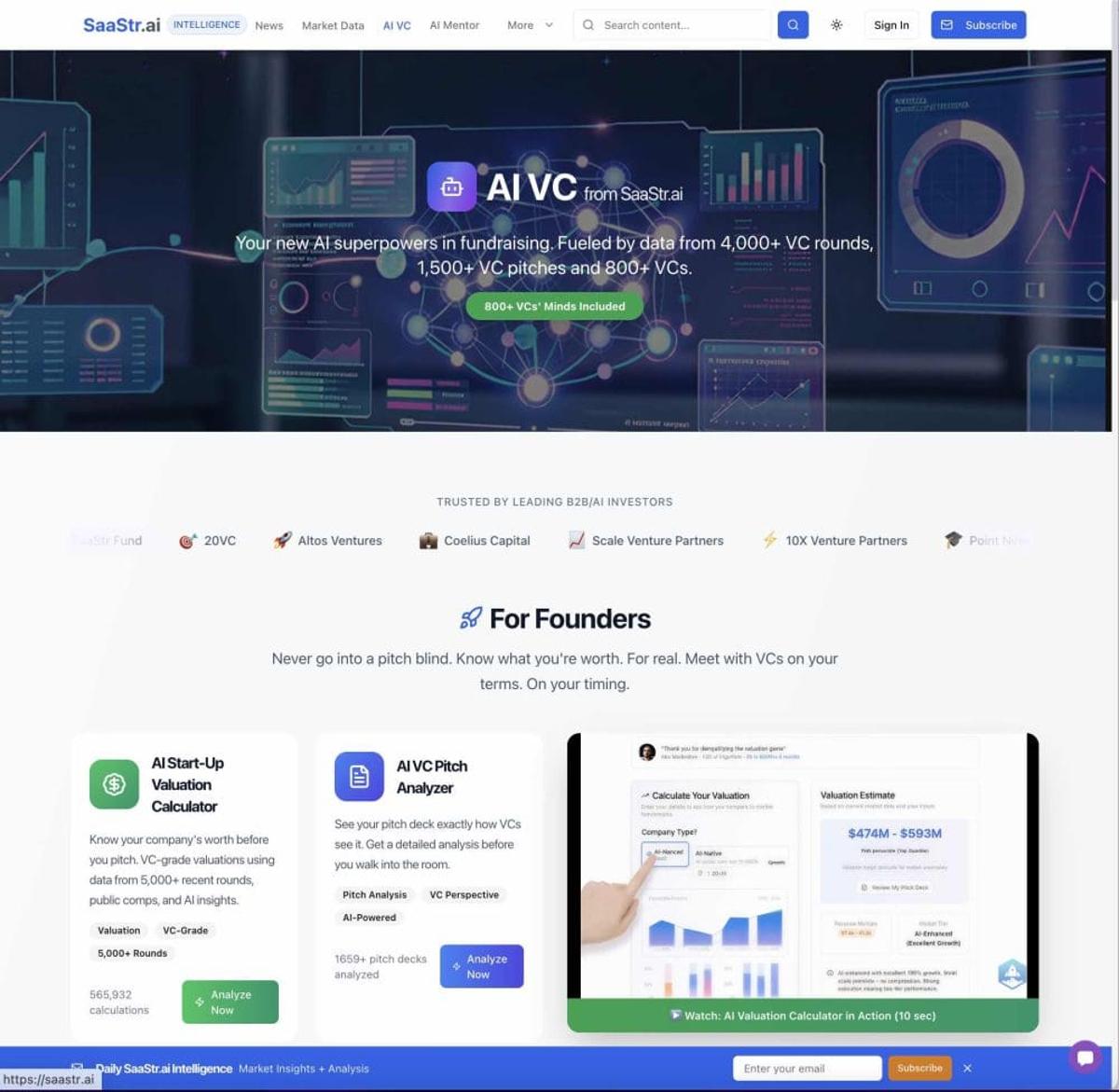
10 Coolest Things You Can Do on the New SaaStr.ai
Jason Lemkin showcases the ten live features of the revamped SaaStr.ai, from the AI‑powered valuation calculator and pitch‑deck analyzer to VC matchmaking, market benchmarking, and a suite of purpose‑built AI agents for SaaS founders. He highlights concrete usage metrics—500,000+ valuations,...

Dev Steps Down as CEO of MongoDB: The Beginning of the End of an Era?
MongoDB announced that long‑time CEO Dev Ittycheria will step down after 11 years, with former Cloudflare executive CJ Desai named as his successor. The transition comes as the company beat Q3 expectations, saw its stock rise and reported re‑accelerated growth,...
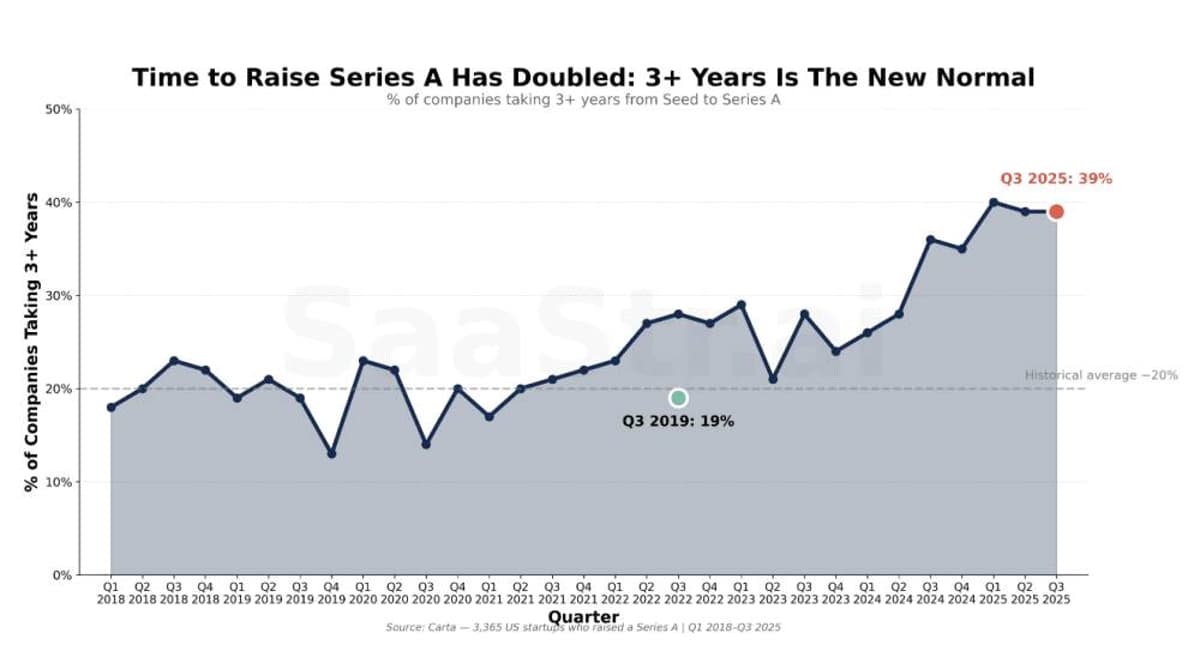
Your Seed Round Now Needs to Last 3+ Years: What 3,365 Startups Tell Us About the New Series A Timeline
Carta’s analysis of 3,365 U.S. startups shows the median time from seed to Series A has more than doubled, with 39% now taking three or more years—up from 19% in 2019. The shift reflects higher VC expectations, now demanding 5× growth...

AI Wins When It Does The GTM Work … People Won’t
Jason Lemkin reports that SaaStr’s AI‑driven SDR booked a six‑figure sponsor meeting at 6:02 PM on a Saturday, a task virtually no human rep would perform. He argues AI’s value lies in handling the low‑energy, time‑sensitive GTM work that humans avoid,...
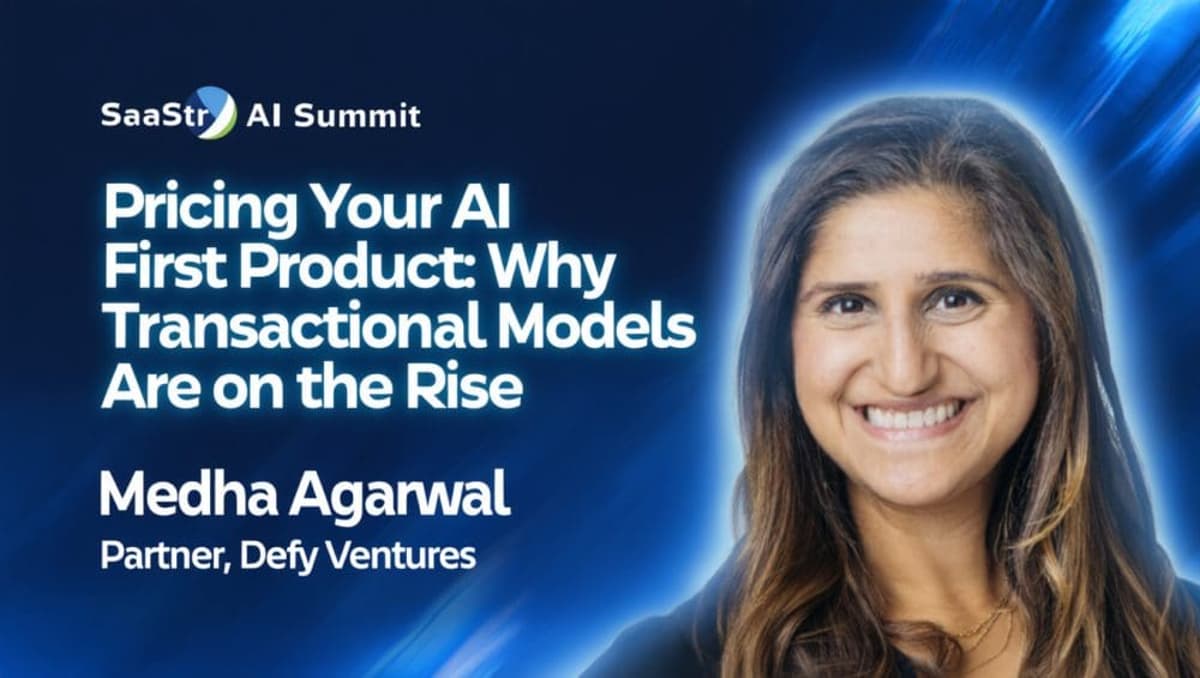
How to Price Your AI-First Product: The Death of SaaS Pricing and the Rise of Transactional Models with Defy Ventures’...
Medha Agarwal of Defy VC warned that traditional seat‑based SaaS pricing is being eclipsed by transactional models as AI‑first products can replace or augment labor, allowing companies to sell into larger labor budgets. Transactional pricing—either input‑ or output‑based—captures more value...
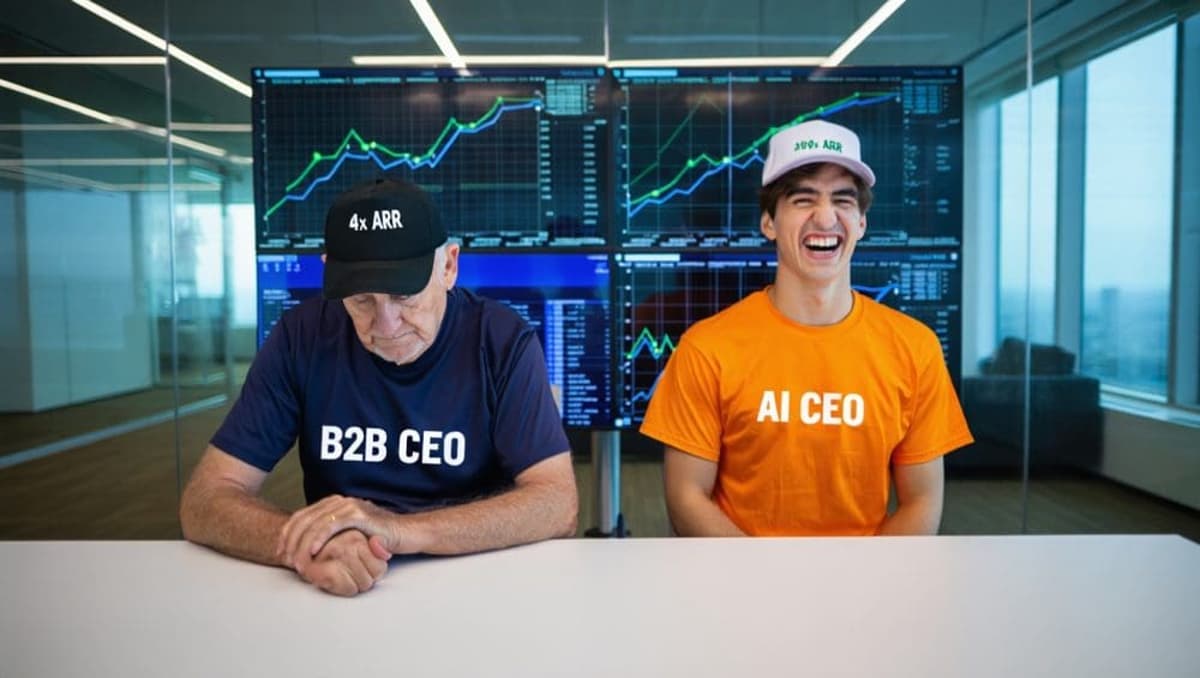
Nasdaq Reaches Another ATH. Nvidia Tops $5T. But Navan’s IPO and JAMF’s $2B Exit Show B2B Still Isn’t Easy.
Nasdaq reached a new all‑time high and Nvidia topped a $5 trillion market cap, underscoring the AI‑driven rally in public markets. Yet the week’s two B2B SaaS exits—Navan’s IPO at a $4.7 billion valuation (7.7× 2024 revenue) after a 20% opening‑day drop,...
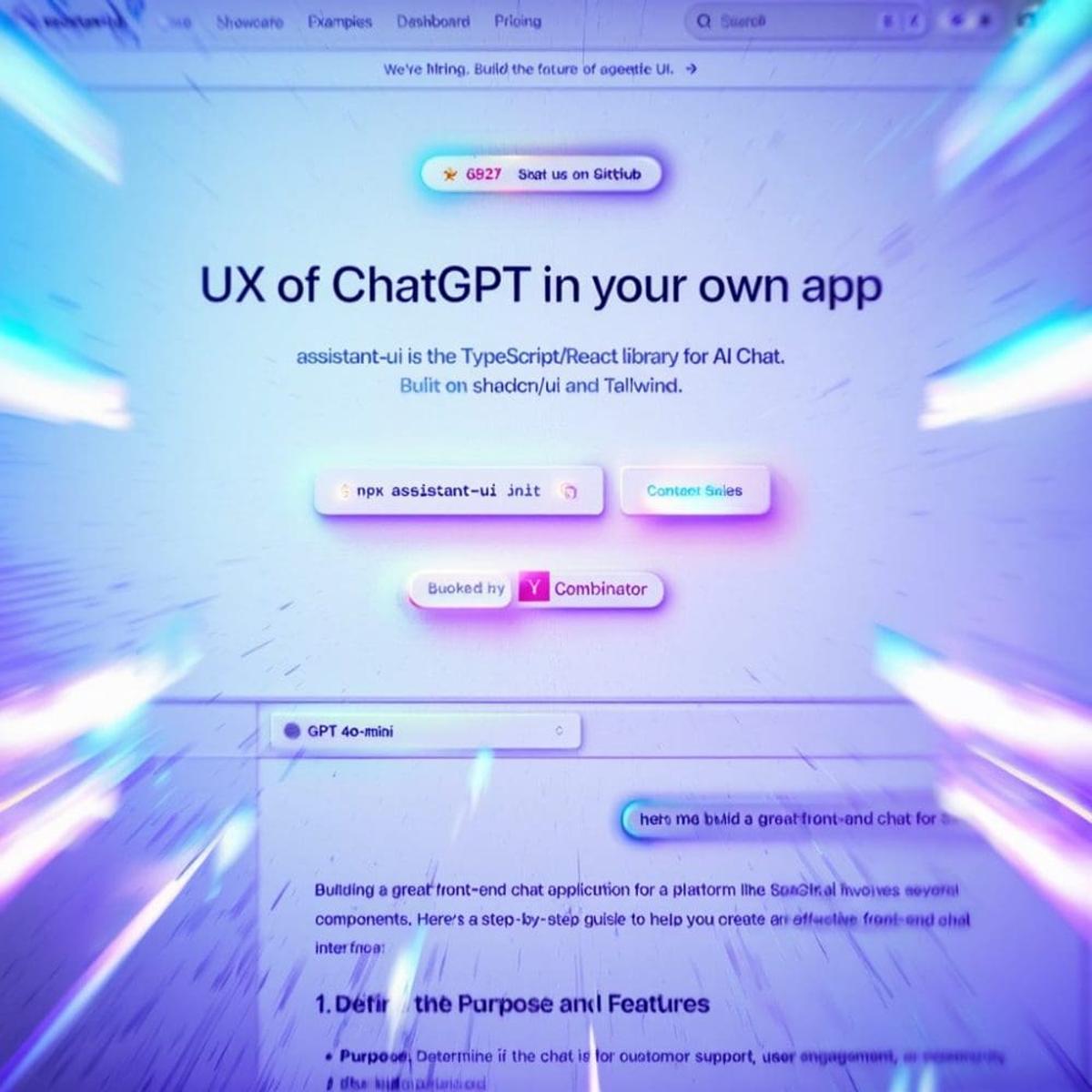
AI App of the Week: Assistant UI – The React Library That’s Eating the AI Chat Interface Market
Assistant UI, a TypeScript/React library backed by Y Combinator, has become the de‑facto standard for AI chat interfaces, pulling in over 200,000 monthly downloads and adoption by firms such as LangChain, Athena Intelligence, and Stack AI. The library offers composable...
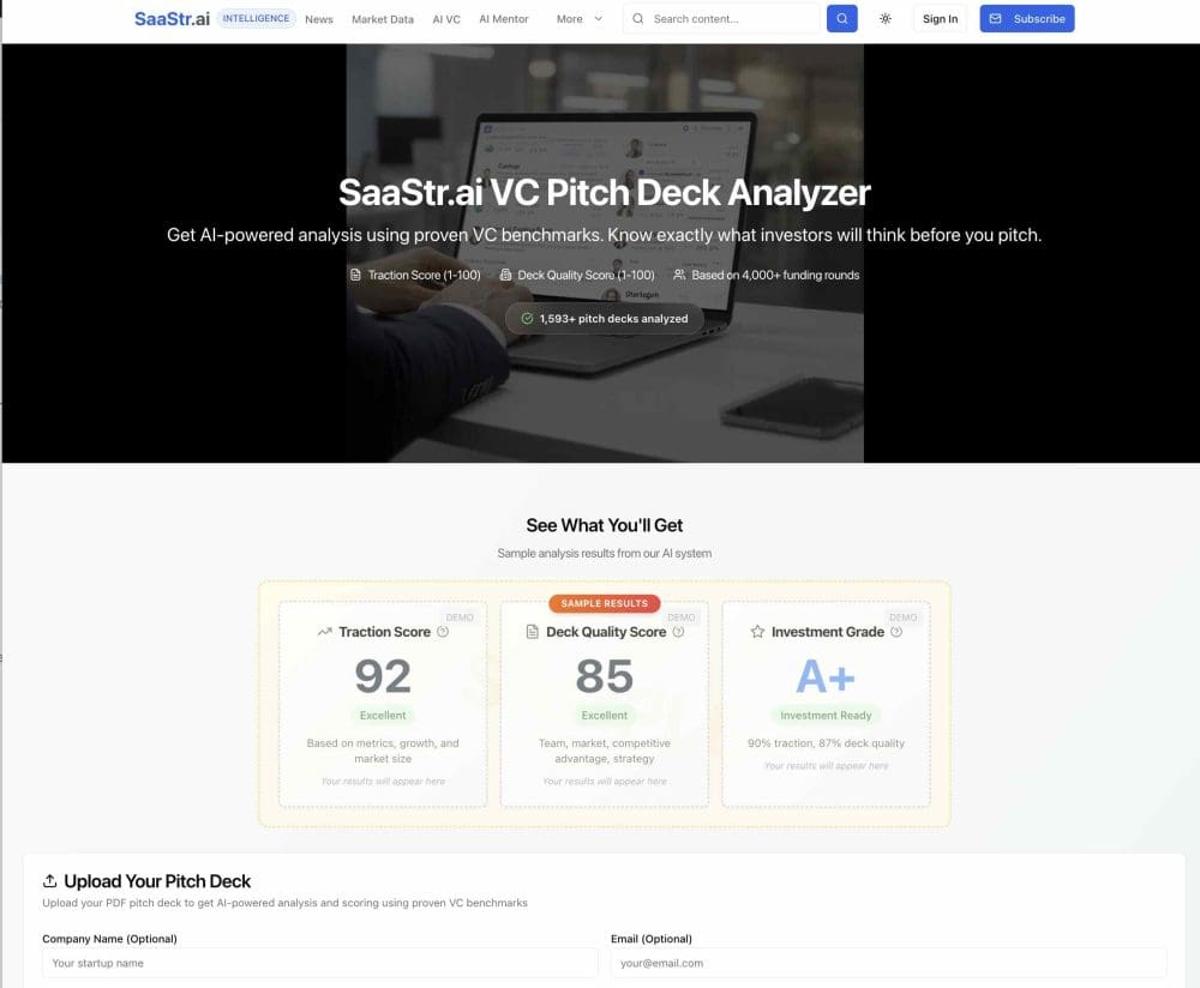
Why The Top Quartile in Venture Is Brutal Today: When “Doing Great” Isn’t Enough to Raise Money
SaaS founder Jason Lemkin reports that SaaStr’s AI‑driven pitch‑deck analyzer, after reviewing over 1,600 decks, shows a stark shift in VC expectations for companies with $2‑10 million ARR. While a 200% YoY growth rate at $3 M ARR once guaranteed a Series A,...

VCs: Want More Dealflow? Sign Up for SaaStr’s AI Dealflow
SaaStr has launched an AI‑driven deal‑flow platform that lets founders upload their pitch decks directly to a centralized hub. In its first weeks the service has collected more than 1,542 decks and performed over 556,387 AI‑generated startup valuations. The platform...
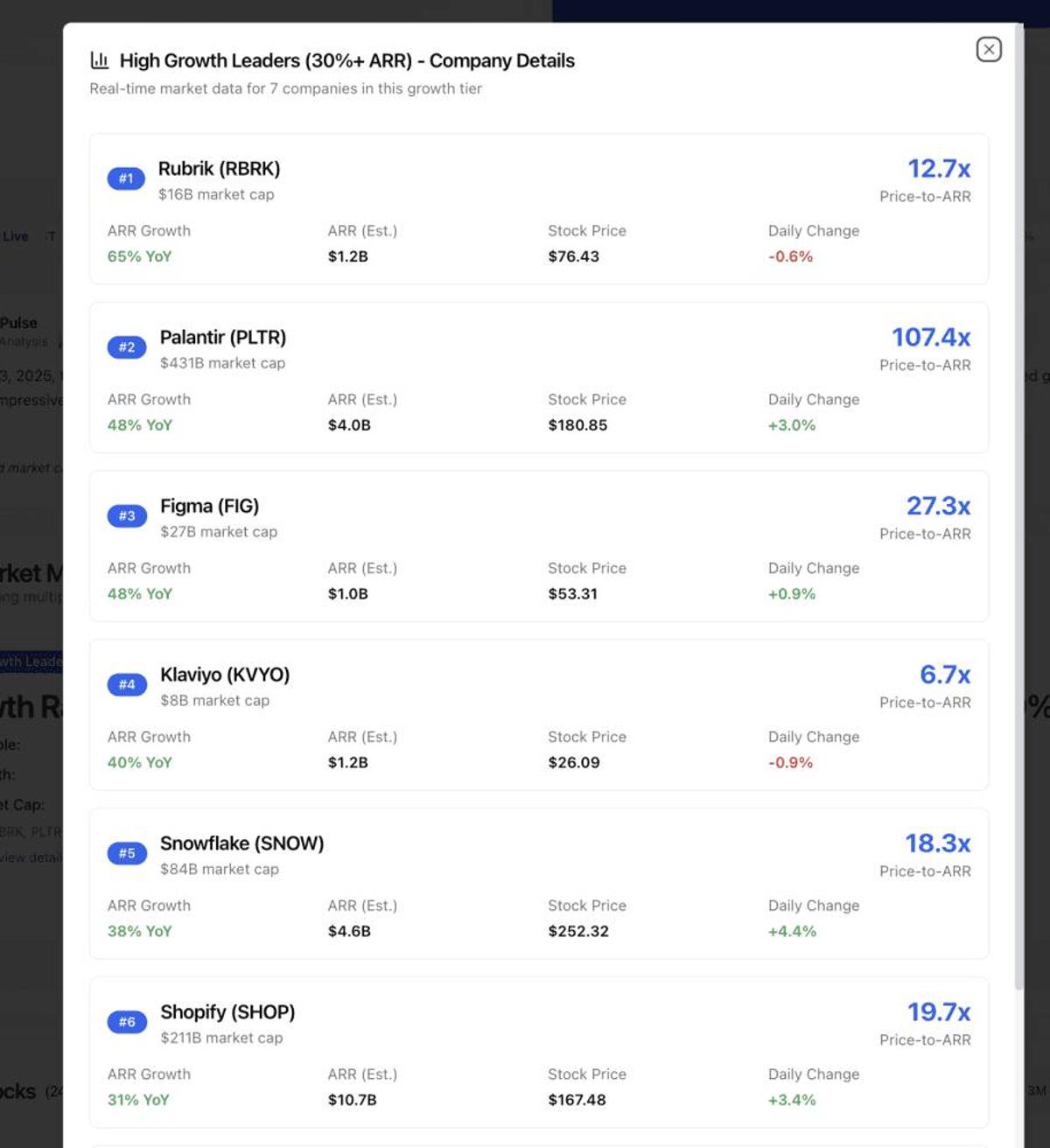
Who’s Just Crushing It in SaaS Today: Palantir, Rubrik, Figma, Klaviyo, Snowflake and Shopify
Seven public SaaS firms—Palantir, Rubrik, Figma, Klaviyo, Snowflake, and Shopify—are each growing ARR faster than 30% while surpassing the $1 billion threshold. Palantir accelerated to 48% YoY growth at $4 billion ARR, earning a 107× price‑to‑ARR multiple, while Rubrik’s subscription ARR rose...
JAMF Goes Private for $2.2 Billion. That’s 3.3x ARR. Why B2B Can Be a Long, Hard Road
Private‑equity firm Francisco Partners agreed to acquire JAMF for $2.2 billion, a 50% premium to its recent share price but less than half the $4.6 billion market cap the company commanded on its 2020 IPO. The deal values JAMF at roughly 3.1×...
The Great VC Reshuffle: OpenAI’s $500B Restructuring, A16z’s $10B Mega-Fund, and Why Two-Thirds of Series B Investments Fail
OpenAI completed a landmark restructuring into a public‑benefit corporation, separating its for‑profit arm valued at roughly $500 billion and leaving CEO Sam Altman with no equity while Microsoft’s $13 billion stake positions it for a near‑10× return. Andreessen Horowitz announced a $10 billion...
What To Expect From a New VP of Customer Success in The First 30-60-90 Days
The article outlines a 30‑60‑90 day plan for a new VP of Customer Success, emphasizing immediate customer engagement, internal alignment, and data analysis in the first month. In weeks 31‑60, the focus shifts to refining onboarding, establishing health scores, piloting...

If Your CRO, CCO or CPO Doesn’t Meet With Customers Their First Week On The Job … Move On. ...
SaaStr founder Jason Lemkin warns that a newly hired CRO, CCO or CPO must meet with customers in their first week, or the company should apologize for the mis‑hire and let them go. He says skipping direct customer interaction signals...

5 Interesting Learnings From MongoDB at $2.4 Billion in ARR
MongoDB reported $2.4 billion in ARR, with revenue growth rebounding to 24% and its stock up about 45% year‑to‑date. Seventy percent of Atlas ARR now comes from customers that use at least one additional platform capability, and those multi‑product users generate...

AI in Tech Isn’t So Much About Laying Off Humans. It’s About AI Backfills
Jason Lemkin explains that SaaStr has replaced departing employees with AI agents as a routine backfill, not as a cost‑cutting layoff, and now runs over 20 agents covering sales, marketing, support, RevOps and operations. He notes that AI agents require...
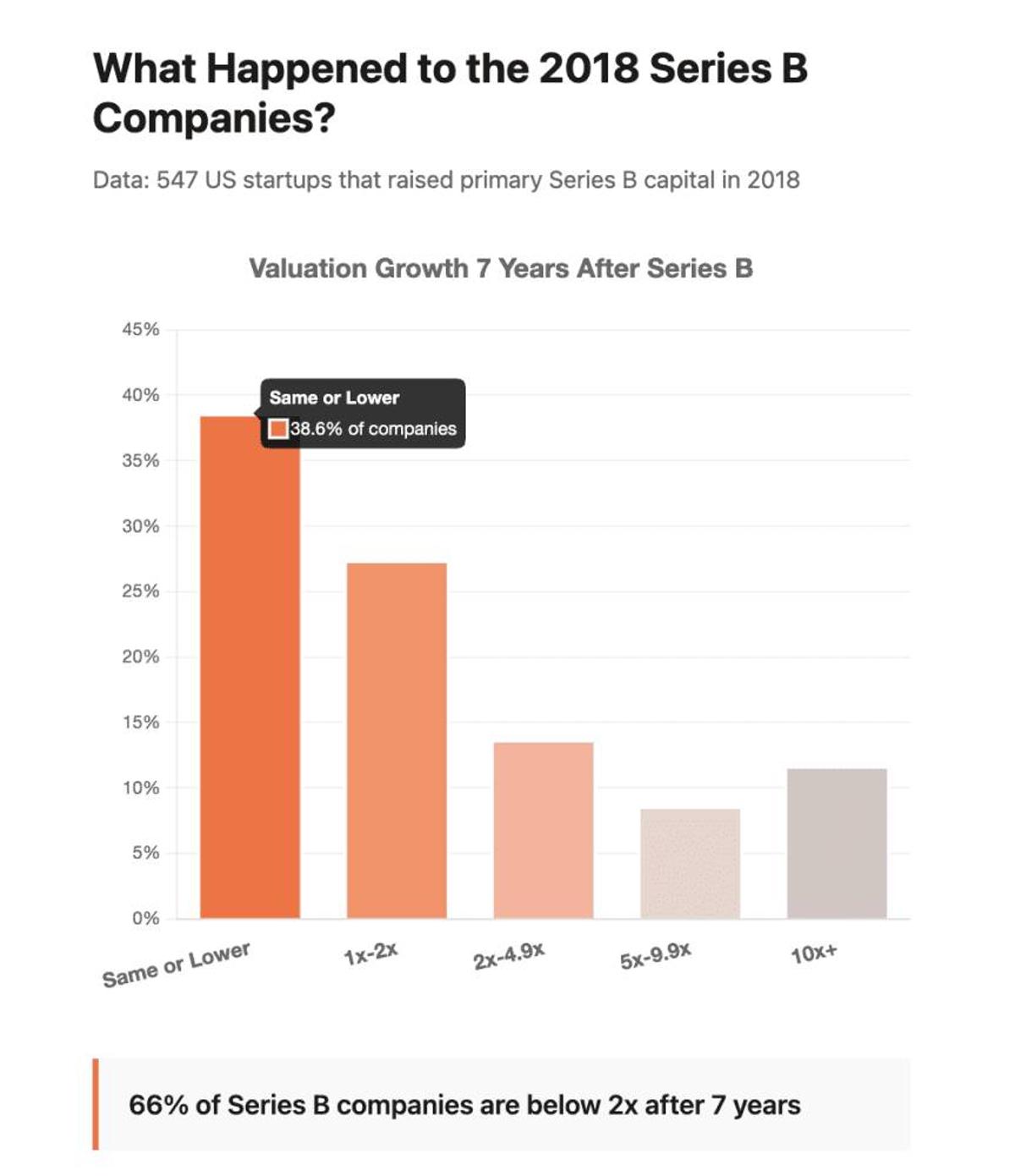
The Brutal Truth About Series B: Only 1 in 3 Deals Even Double Investors’ Money, Per Latest Carta Data
Carta’s analysis of 547 U.S. startups that raised primary Series B rounds in 2018 shows that only about one‑third of those investments doubled investors’ money, while 66% delivered two‑times or less – including 38.6% that are now worth the same or...

The Change Economy with Bonfire Ventures’ Brett Queener: Why Your Product Must Ship Every 30 Days or Die
Bonfire Ventures partner Brett Queener warns that AI‑driven “agentic” software forces a new SaaS playbook: companies must ship major product updates roughly every 30 days or risk being outcompeted. He advises starting small with demos and rapid trials, embedding continual...
SaaStr AI App of the Week: Higgsfield — The Video AI Platform That’s Crushing It Where Everyone Else Is Still...
Higgsfield, a mobile‑first AI video and image platform, is gaining rapid traction with a “click‑to‑video” UX that eliminates prompting and produces cinematic short clips via curated presets. The startup has attracted over 11 million users and 1.2 billion social impressions...
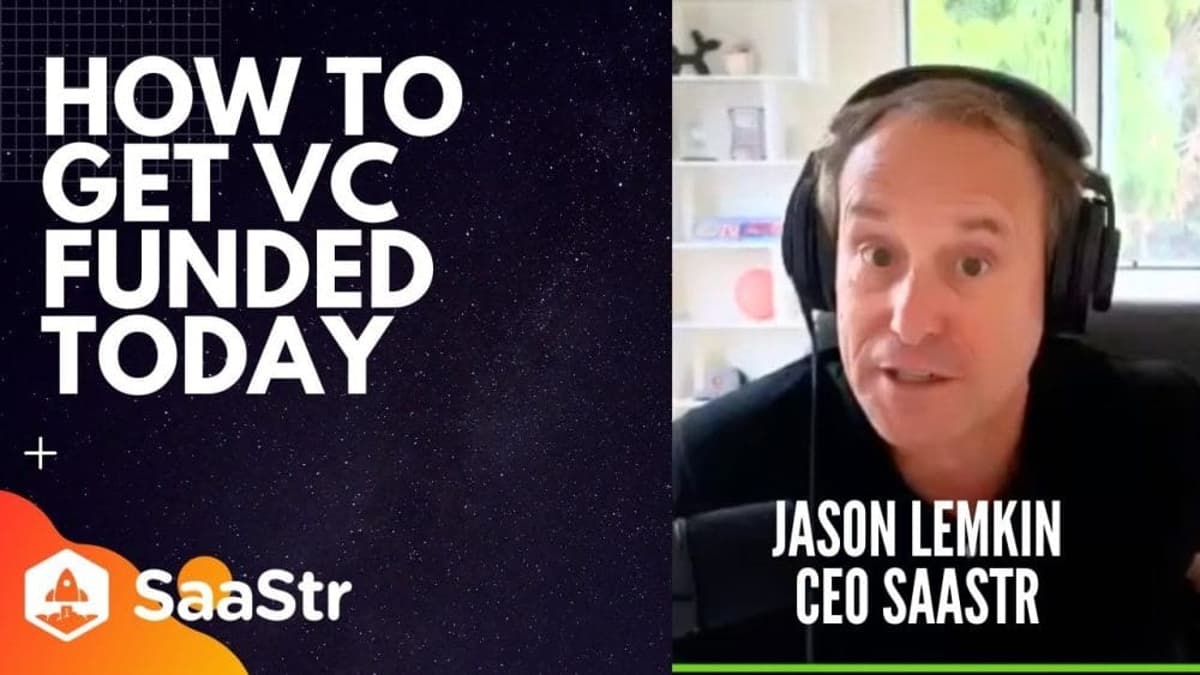
5 Tips For Pitching VCs for The Very First TIme
Veteran founder Jason Lemkin offers practical advice for first‑time founders pitching VCs: rehearse with experienced founders, craft a compelling opener that highlights your top growth metrics, be candid about weaknesses without leading with them, and deliver a strong product demo....
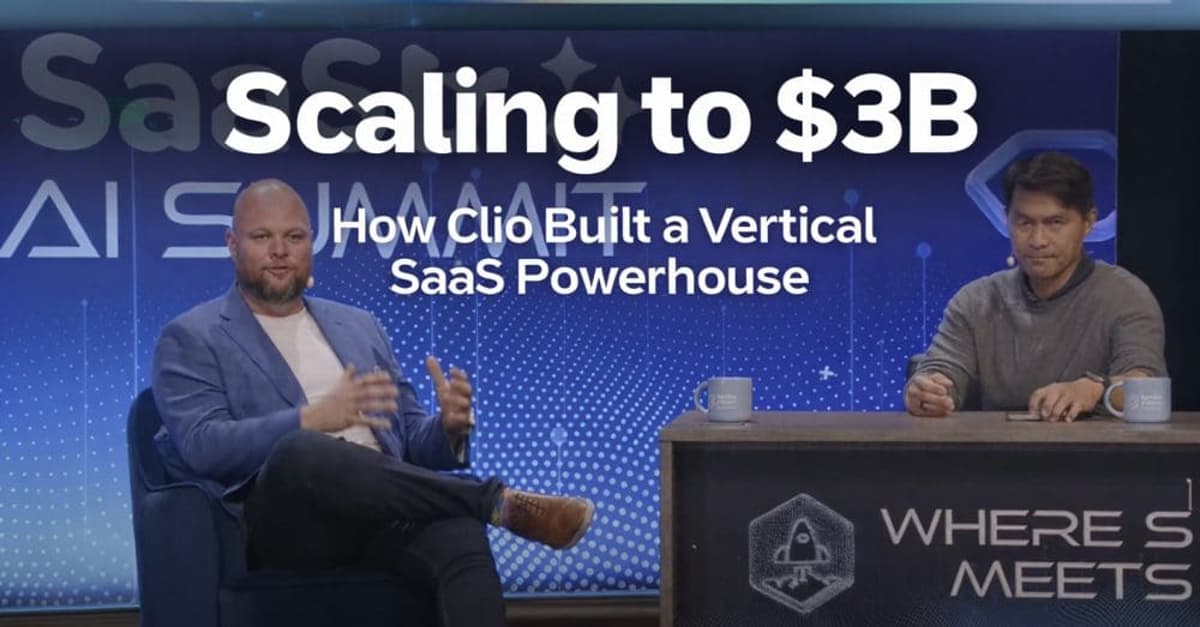
Scaling to $3B: How Clio Built a Vertical SaaS Powerhouse with AI and Innovation with CEO Jack Newton
Clio has grown over 17 years from the first cloud practice‑management tool for lawyers into a $3 billion vertical‑SaaS platform with about $300 million in ARR, 1,500 employees and a $900 million Series F. The company built a multi‑product stack...

5 Interesting Learnings From Klaviyo at $1.2 Billion in ARR
Klaviyo is emerging as an undervalued SaaS leader after hitting $1.2B in ARR, trading at just 6.1x ARR despite 32% YoY growth and top‑7% Rule of 40 performance. The firm is driving durable expansion via multi‑product adoption (54% of ARR),...

Why SaaStr AI London 2025 Is Where You Learn AI + GTM From The People Actually Doing It. At...
SaaStr AI London 2025 (Dec. 1–2 at Park Plaza Westminster Bridge) positions itself as a hands‑on conference for B2B leaders to learn AI‑powered go‑to‑market playbooks directly from operators—over 100 speakers including OpenAI, Intercom, Databricks and Wiz are slated to present....
10 Things To Know About Raising Venture Capital for The First Time
Raising venture capital is a disciplined, sales‑like process that founders should treat as a long-term relationship-building exercise rather than a one-off transaction. Investors prize timing, clear traction and unit-economics (ARR, growth rate, CAC, LTV, burn multiple), and founders are advised...
Dear SaaStr: What Are The Top 10 Metrics Series A Investors Look At?
Jason Lemkin outlines the top 10 metrics seed‑stage SaaS startups must prioritize to secure a Series A, led by rapid ARR growth (ideally 7–15% month‑over‑month toward $1M ARR) and strong retention signals like 100%+ NDR and 90%+ GRR. He emphasizes...