
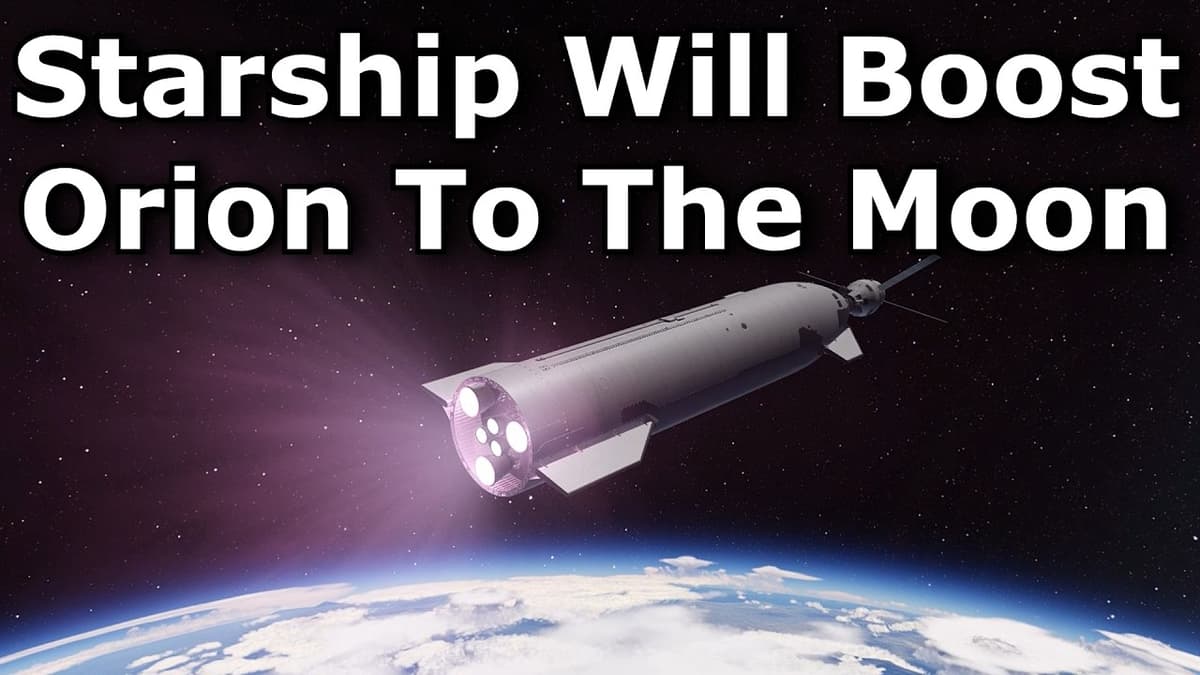
Artemis III Won't Use Real Landers.... And That's OK.
The video breaks down NASA’s Artemis III announcement, highlighting the all‑male crew and the unconventional hardware choices for the low‑Earth‑orbit test flight. Scott Manley explains that the mission will launch Orion on the SLS without an upper stage, using a dummy second stage to preserve vehicle dynamics, while a Blue Origin “Mark 1.5” lander—essentially a mock‑up without cryogenics—will serve as the lunar‑landing system surrogate. Key details include the selection of seasoned test pilots and specialists—Andre Douglas, Luca Parmaratano, Frank Rubio, and commander Randy Breznik—chosen for their EVA and proximity‑operations experience. The SLS stack is being modified with a spacer to replace the missing upper stage, and a wet‑dress rehearsal will verify umbilical seals. After launch, Orion will perform a series of phasing burns to rendezvous with the Blue Moon mockup, dock, and allow the crew to board the pressurized capsule for a two‑week endurance test. Manley notes several supporting elements: Prada’s collaboration on the liquid‑cooling garment for the suit, the 90‑day orbital endurance of the Blue Moon vehicle, and SpaceX’s plan to affix a docking port to an existing Starship V3 for future lunar transfer. He also references the public reaction to the lack of women on the crew and the broader outreach potential via ISS astronauts. The mission functions as a critical stepping stone for both NASA and commercial partners, providing real‑world data on life‑support loads, docking dynamics, and suit performance before committing to a full lunar landing architecture. It also signals a shift toward flexible, commercial‑driven HLS solutions and underscores the importance of crew composition for public engagement.
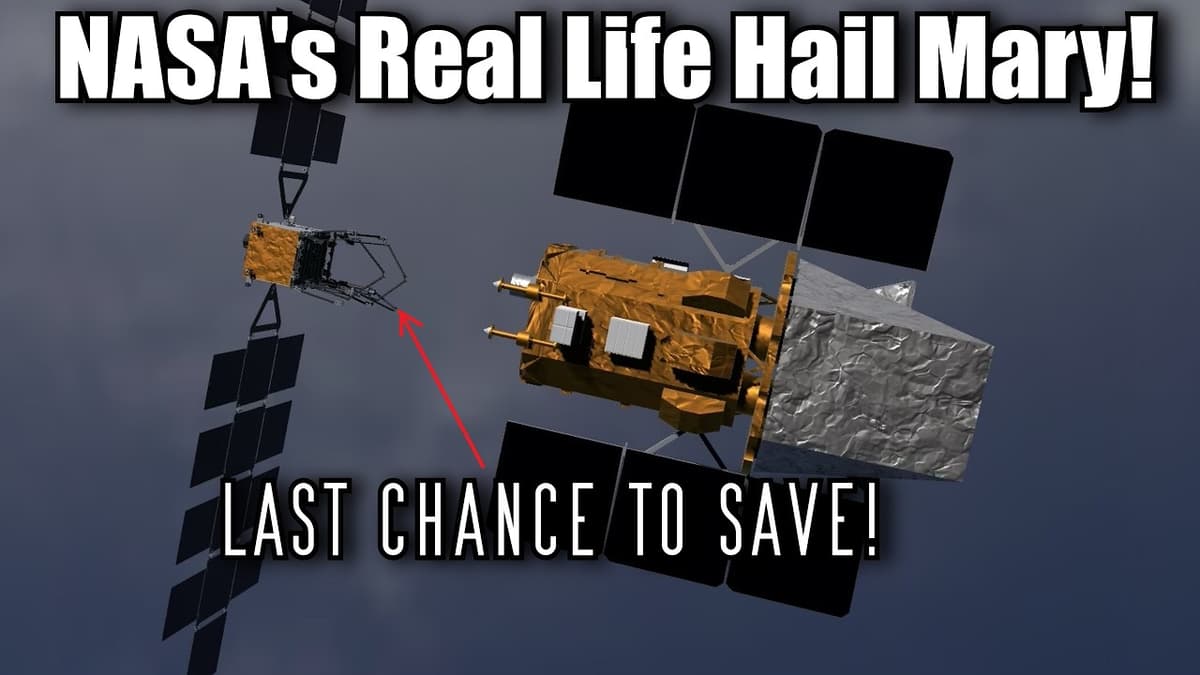
NASA's Project Hail Mary - Last Minute, High Risk, High Reward Rescue Mission
NASA is mounting a last‑minute, high‑risk rescue mission to extend the life of the Swift Gamma‑Ray Burst Observatory, a 20‑year‑old space telescope that has been continuously detecting cosmic explosions. The agency awarded a $30 million contract to Catalyst Space, a small Flagstaff...

Blue Origin's Rocket Explosion - How Bad Is It?
The video examines the catastrophic explosion of Blue Origin’s New Glenn booster during a static‑fire test on Cape Canaveral, detailing a massive fireball and confirming that all personnel remained unharmed. Scott Manley explains that a rapid rupture of the liquid‑oxygen and...

Starship Flight 12 - V3 Debuts with Max Power, Fatal Flips, Fast Landings and Exploding Raptors
The video reviews SpaceX’s first flight of the upgraded Starship Super Heavy V3, highlighting its new 33‑engine hot‑staging start‑up, larger propellant tanks and integrated‑shield Raptor V3 engines. Scott Manley notes that the vehicle lifted off faster than previous versions, reaching...
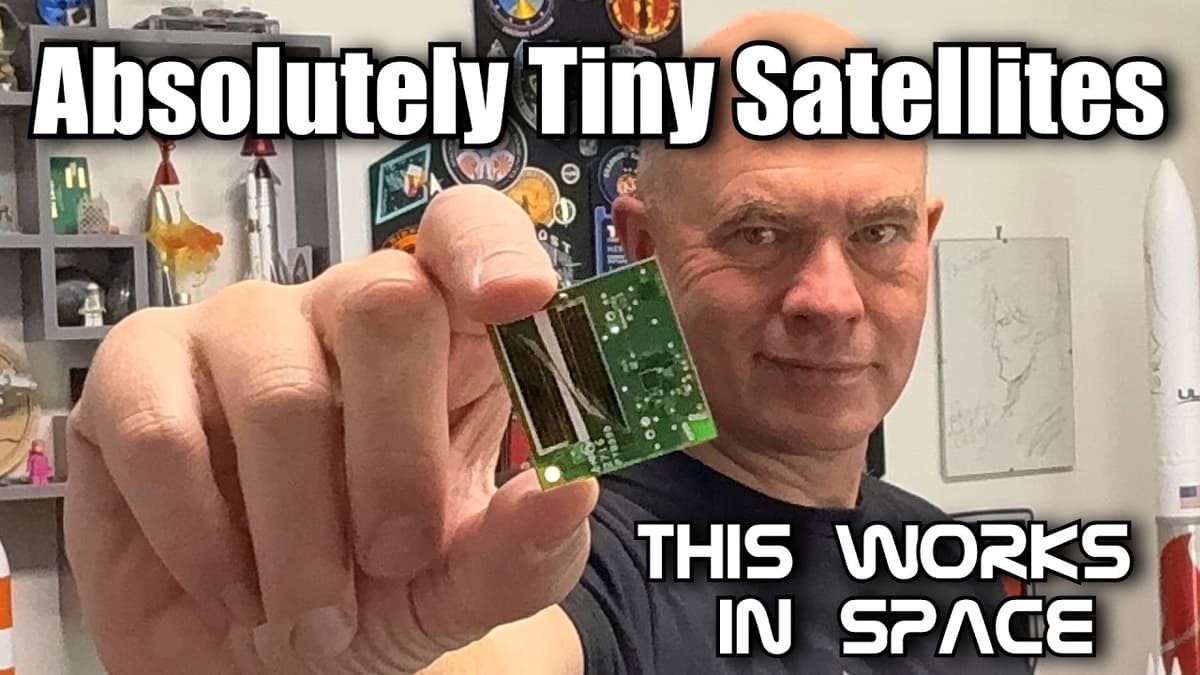
Satellites That Can Fit In Your Pocket - Amazing Spaceships In Small Packages
The video spotlights pocket‑size satellites—so‑called pocket cubes—that shrink the traditional 1U CubeSat to a 2 × 2 × 2 in (50 mm) form factor. Scott Manley explains how the format originated from Bob Twiss’s effort to halve the CubeSat standard and how companies such as Alba...
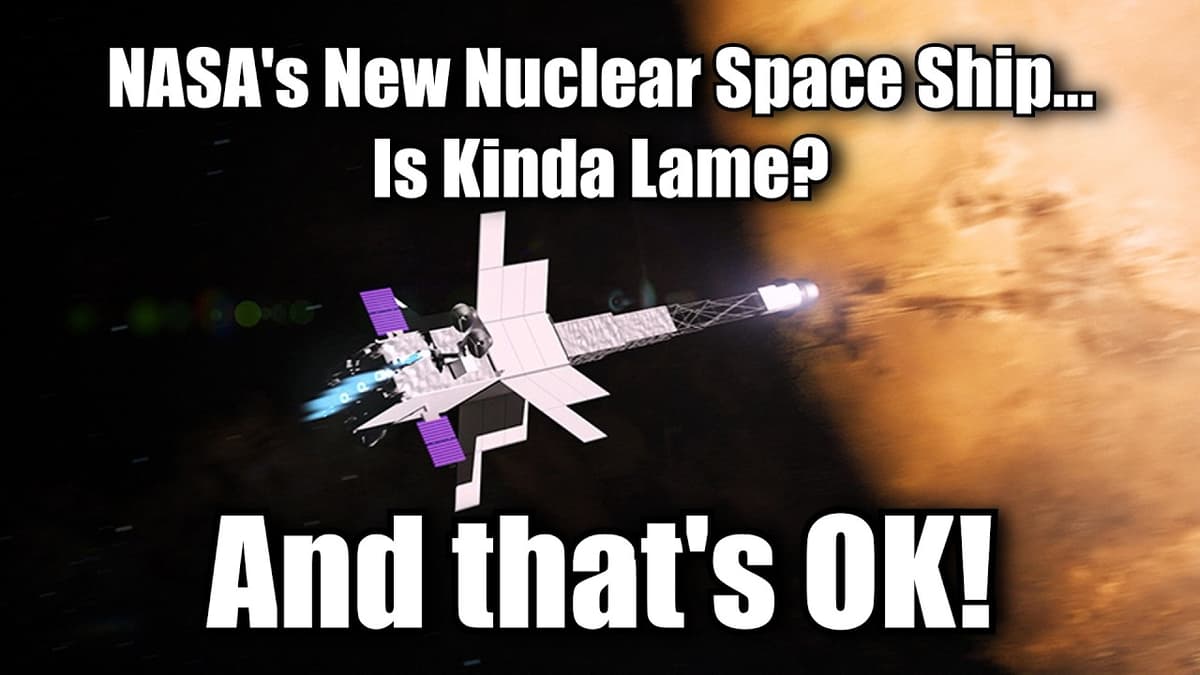
Will NASA's Nuclear Powered Spacecraft Revolutionize Space Exploration?
NASA announced Space Reactor 1 Freedom (SR1F), the first nuclear‑electric interplanetary mission, targeting a December 2028 launch to Mars. The spacecraft repurposes the cancelled Gateway Power and Propulsion Element, pairing its solar electric bus and Hall thrusters with a compact...
What America Did After Reaching Space?
In the spring of 1958, months before the Soviet Sputnik launches, the United States initiated Operation Argus—a series of nuclear detonations high above the Earth’s atmosphere. The program marked one of the earliest attempts to weaponize space during the opening...
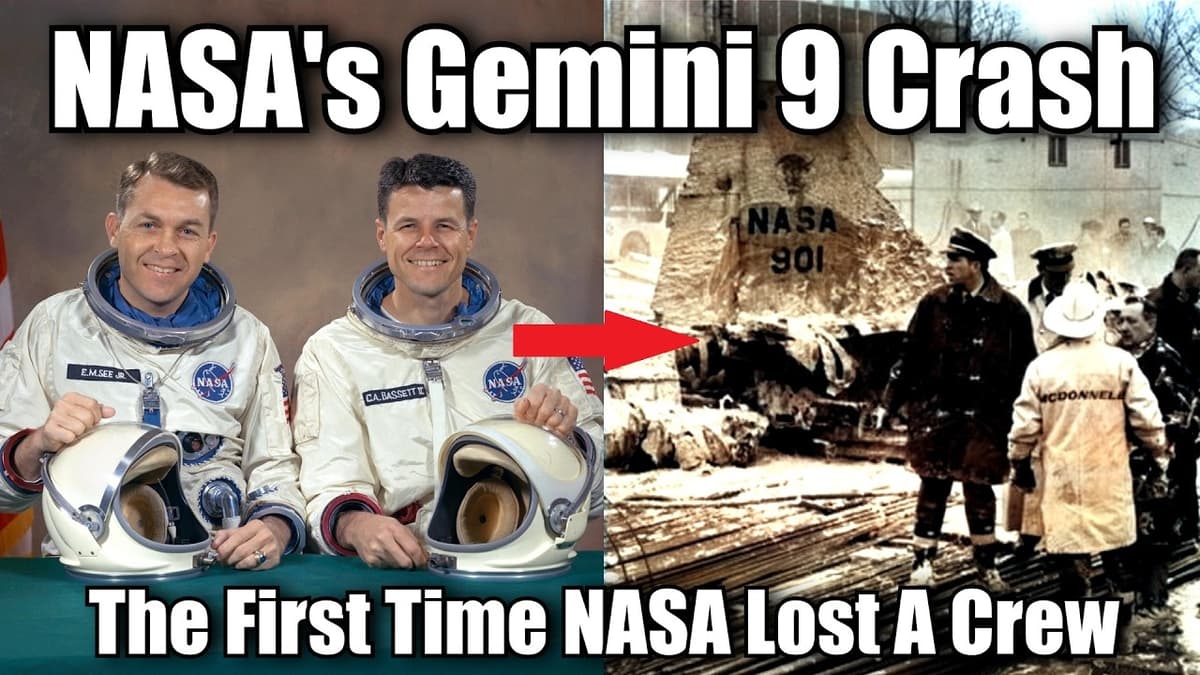
NASA Gemini 9 Tragedy - How NASA Lost Its First Crew
The video recounts the February 28, 1966 Gemini 9 tragedy, when primary astronauts Elliot C. and Charles Basset were killed in a T‑38 jet crash during a low‑visibility approach to St. Louis. Their deaths forced NASA to promote the backup crew—Thomas Stafford and Gene...

The Artemis II Distance Record Calculated Exactly!
The video explains how the Artemis II crew set a new distance record during their lunar flyby, reaching a precise 413,145 km from Earth’s geocenter, according to astrophysicist Jonathan McDow. Because the spacecraft was on the far side of Earth, people on the opposite...

Holes In Spaceships - How Long Can You Survive?
Scott Manley examines how quickly a spacecraft loses atmosphere after a hull breach, a question that has become urgent as Artemis 2 prepares for a lunar flyby. He explains that the leak rate can be estimated by multiplying the hole’s cross‑sectional...

New Hyperspectral Satellites See 'Impossible' Color Details
The video introduces a new generation of hyperspectral imaging satellites that record hundreds of narrow spectral bands for every pixel, moving the technology from secret military use into the commercial arena. Companies such as Planet Labs and Pixel (formerly Two‑X)...

Can My First Computer Control A Spaceship?
Scott Manley revisits the 1982 Sinclair ZX Spectrum, using an emulated version to pilot a lunar lander in Kerbal Space Program. By loading a BASIC “lander” program via the classic tape interface and attaching the Interface 1 RS‑232 add‑on, he connects...

Is It Really Impossible To Cool A Datacenter In Space?
Scott Manley examines whether a data center can be cooled in space using only radiation. He models a Starlink V3 satellite that dissipates roughly 20 kW of GPU power and shows that, under Stefan‑Boltzmann physics, a flat radiator operating at about...

Could Life On Earth And Life On Mars Be The Same Thing?
Scott Manley discusses a new laboratory experiment that slams the extremophile bacterium Deinococcus radiodurans with gigapascal‑scale shock pressures, showing that microbes can survive the extreme conditions of a planetary impact. The study found near‑100 % survival at 1.4 GPa and about 40 % survival...
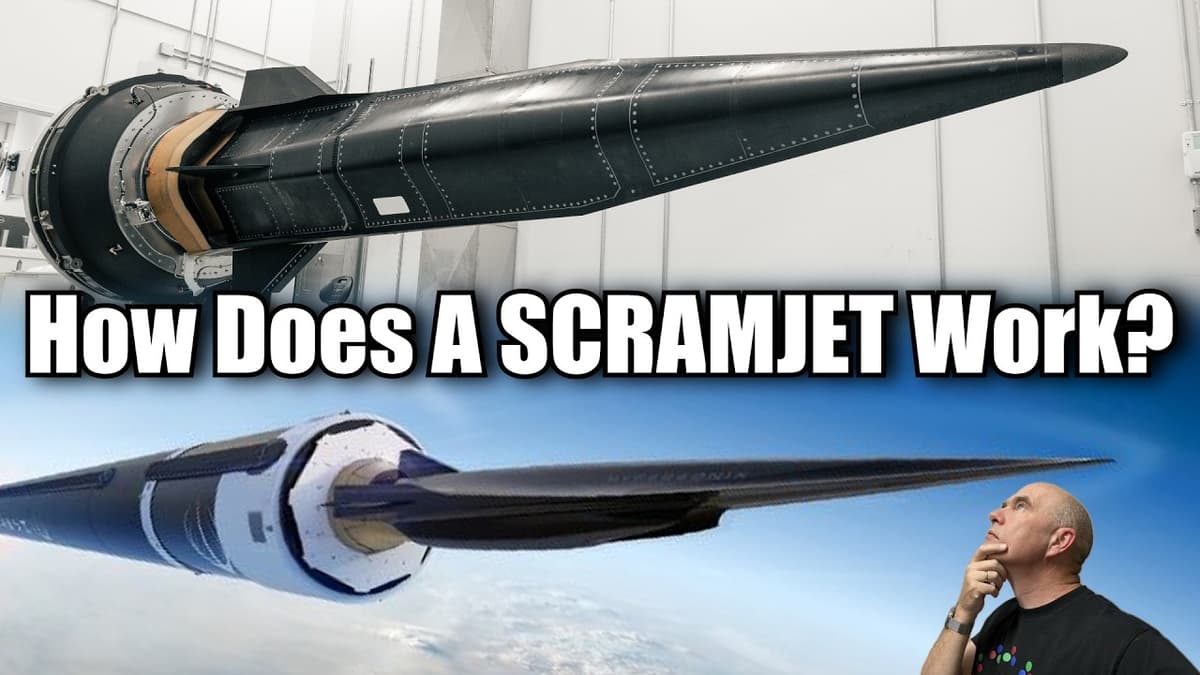
Scramjets - The Fastest Jet Engines
Rocket Lab conducted a hypersonic test launch out of Wallops carrying an Australian-built Dart AE vehicle — a largely 3D-printed, hydrogen-fueled demonstrator developed with the U.S. Defense Innovation Unit and intended to validate a scramjet-powered flight above Mach 7. Public...