Video•Feb 17, 2026
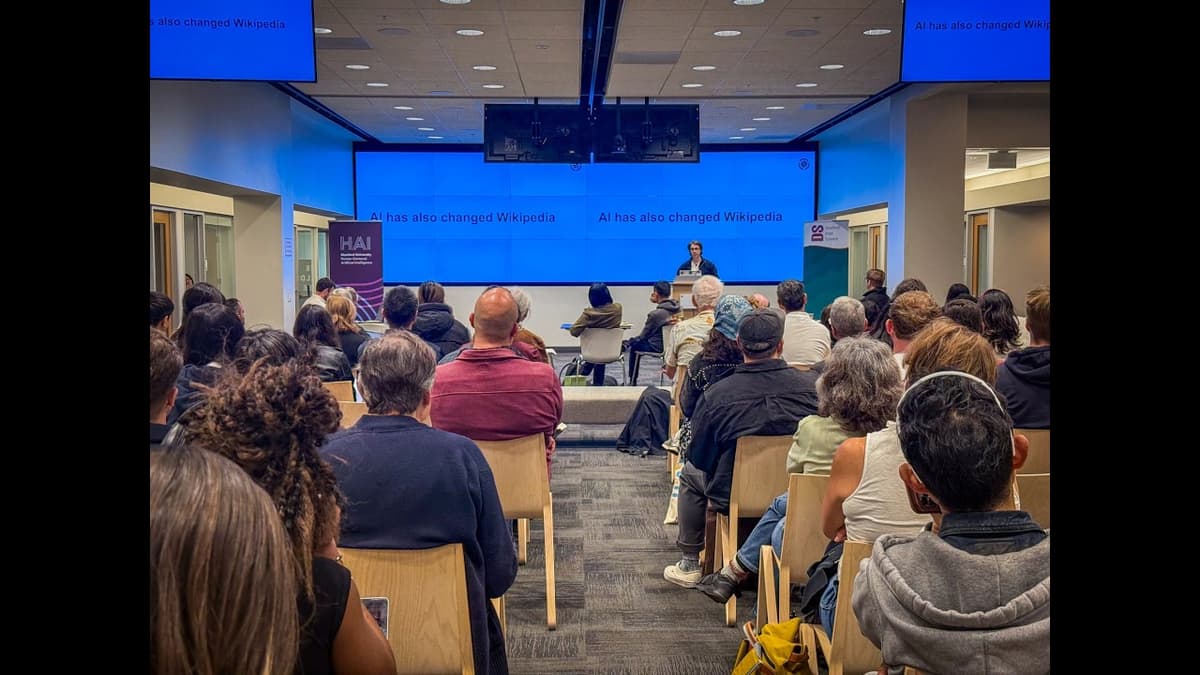
HAI Seminar: Wikipedia in the Age of AI and Bots
The HAI seminar examined how Wikipedia is adapting to the rapid rise of large language models and automated bots. Speakers highlighted that bot‑generated traffic now accounts for a sizable share of page views, overwhelming image‑serving infrastructure and driving up operational expenses for the nonprofit. At the same time, AI‑assisted drafting tools have flooded volunteer editors with machine‑written article drafts, forcing the foundation to draft new policies governing LLM use and to implement rate‑limits and attribution standards for commercial partners.
Historical context was provided, noting early bots like Rambot, which created 98% of U.S. city entries in 2002, and later CluebotNG, which used a rudimentary neural network to flag vandalism. Since the 2017 release of Google’s Perspective API and the 2022 launch of ChatGPT, Wikipedia content has become a cornerstone of training data for countless AI products, appearing in search knowledge panels, chat assistants, and even TikTok videos. The surge in multimedia bandwidth and page‑view graphs since 2022 underscores the scale of this external demand.
The talk also showcased concrete responses: the Wikipedia Enterprise team now offers commercial licensing, attribution guidelines, and higher‑level rate limits to protect servers. Partnerships with large organizations aim to monetize usage while preserving the core principle of human‑generated knowledge. Yet a critical question remains—how to convert readers who encounter Wikipedia via AI interfaces into active contributors, ensuring the encyclopedia’s long‑term vitality.
Overall, the seminar underscored that Wikipedia must balance open access with sustainable infrastructure, tighter governance of AI‑generated content, and innovative pathways to recruit new editors. These shifts will shape the encyclopedia’s role as both a public good and a foundational data source for the AI economy.