Tax Foundation - Latest News and Information
Technology Pulse
EMAIL DIGESTS
Daily
Every morning
Weekly
Tuesday recap
EMAIL DIGESTS
Daily
Every morning
Weekly
Tuesday recap

Taxing AI is increasingly part of policy debate, but Tax Foundation analysts argue many proposed levies are premature and potentially redundant because profits from AI are already generally captured by existing corporate taxes. The discussion frames AI’s impact through economic history—Baumol’s cost disease versus Jevons Paradox—showing productivity gains can either shrink or expand employment depending on demand and new market creation. Current labor-market indicators do not point to a sweeping wave of automation, though certain white‑collar hiring patterns reflect a post‑2021 hiring boom and slowdown rather than clear AI-driven displacement. Analysts warn bespoke AI taxes targeting data centers, investment, or AI revenue risk unintended consequences and should be weighed carefully against uncertain future labor effects.

Property taxes, though unpopular, are the backbone of local government finance—accounting for about 70% of local tax revenue nationwide and up to 95% in some states. Eliminating them would create a large fiscal hole that must be filled; for example,...

The Supreme Court issued a 6‑3 decision striking down President Trump’s use of the AIPA law to impose tariffs, effectively nullifying the broad tariff regime introduced earlier this year. The ruling reveals that importers have paid an estimated $160 billion in...

The video critiques a recent proposal to issue tariff rebates, arguing that the approach fails to address the core problem of consumer and business costs imposed by existing tariffs. The speaker notes that while officials portray tariffs as payments made by...
The Tax Foundation’s State Tax Policy Boot Camp video explains that corporate income taxes, while historically modest, now generate about five percent of state revenues and roughly two percent of overall general funds. Rates differ dramatically across the nation, ranging...
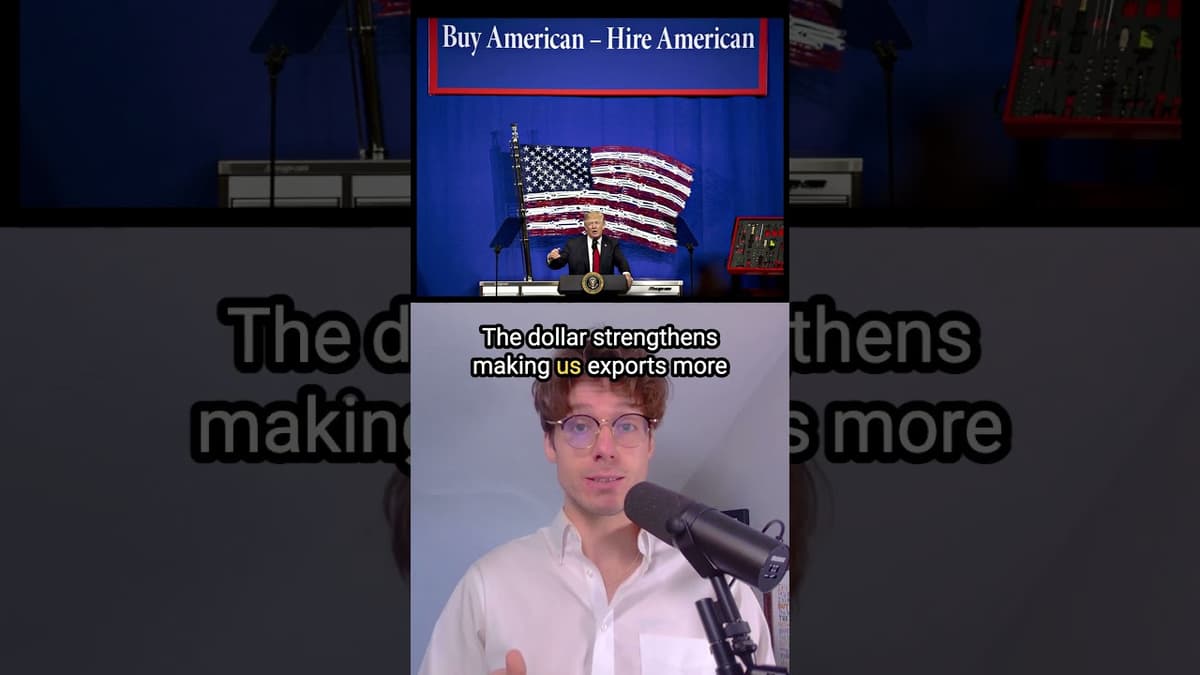
Donald Trump argues that tariffs inflict short‑term pain but will ultimately benefit the United States, a claim he repeats while defending “Buy American” policies. However, a 50‑year study covering 151 countries finds higher tariffs consistently depress wages, eliminate jobs and...


