We Study Billionaires (The Investors Podcast) - Latest News and Information
Technology Pulse
EMAIL DIGESTS
Daily
Every morning
Weekly
Tuesday recap
EMAIL DIGESTS
Daily
Every morning
Weekly
Tuesday recap

The episode explores how long‑term value investors can borrow strategic principles from venture capital, focusing on the starkly non‑linear nature of returns and the importance of capital allocation across financing rounds. Grieve emphasizes the power‑law reality: a tiny fraction of investments drive most outcomes. He cites Horsley Bridge, where 60% of returns came from just 5% of deployed capital, and his own portfolio, where two positions contributed 45% of gains. The discussion also covers preserving downside—avoiding total loss so capital can be redeployed—and the role of modest contributors that may evolve into future winners. Concrete examples illustrate these ideas. ARD’s 20‑year hold in Digital Equipment generated 80% of its market‑cap gains, while Metcalfe’s law and Moore’s law highlight scalable, network‑driven businesses such as Amazon, Meta, and Google. The Atari story shows the VC habit of de‑risking through distribution partnerships before committing larger sums. For value investors, the takeaway is to adopt a VC‑style lens: accept low hit rates, protect capital against catastrophic loss, nurture mid‑tier holdings, and prioritize businesses with network effects or exponential technology curves. This mindset can sharpen portfolio construction, improve long‑term returns, and align risk management with the realities of modern markets.

The Investors Podcast episode with François Rochon centered on the accelerating AI landscape and its ripple effects across equity markets. Rochon dissected his 2025 annual letter, highlighting how AI‑centric holdings such as Constellation Software, Nvidia, Alphabet and Meta are...

The video opens by emphasizing that knowing who you’re speaking to is the foundation of any successful venture, whether a product launch, marketing campaign, or broader business strategy. Kyle Grieve stresses that audience insight drives decision‑making and reduces costly missteps. He...

In this episode of the Investors Podcast, host Clay Finck provides a comprehensive deep‑dive into Nintendo Co., tracing its evolution from an 1889 playing‑card maker to today’s hybrid‑console powerhouse. The discussion frames Nintendo’s enduring appeal as a branding asset comparable...
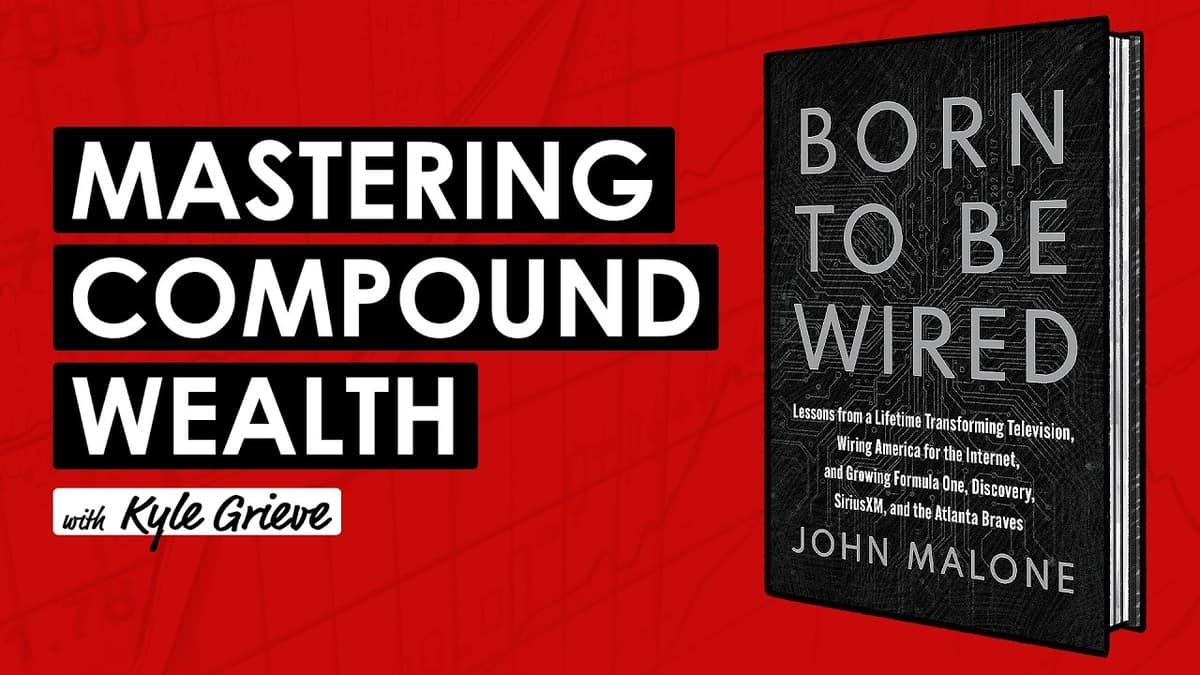
The video dissects John Malone’s capital‑allocation playbook, illustrating how the media mogul turned complex financial engineering into a disciplined wealth‑building engine. Starting with his early stint at General Instruments, Malone identified fraudulent accounting at Gerald, a cable‑equipment supplier, and was...
The episode blends two distinct themes: Bill Perkins’ book "Die with Zero," which urges readers to treat money as a vehicle for memorable experiences rather than a lifelong scorecard, and an analysis of Linde PLC, the world’s largest industrial‑gas producer,...


